




Brand growth support
Brand-owner services
OEM/ODM custom development
Branded production management
Product upgrade support
Online


Send email





End-to-end customer service system
From product customization to project delivery, we provide professional, efficient, one-stop environmental services for brand owners, distributors, and end users.
Brand-owner services
Brand growth support
OEM/ODM custom development
Branded production management
Product upgrade support
Distributor services
Channel and marketing support
Market and product-selection support
Sales and technical training
Reliable supply

End-user services
Process analysis and tailored solution
Complete equipment and project delivery
Full-lifecycle technical service
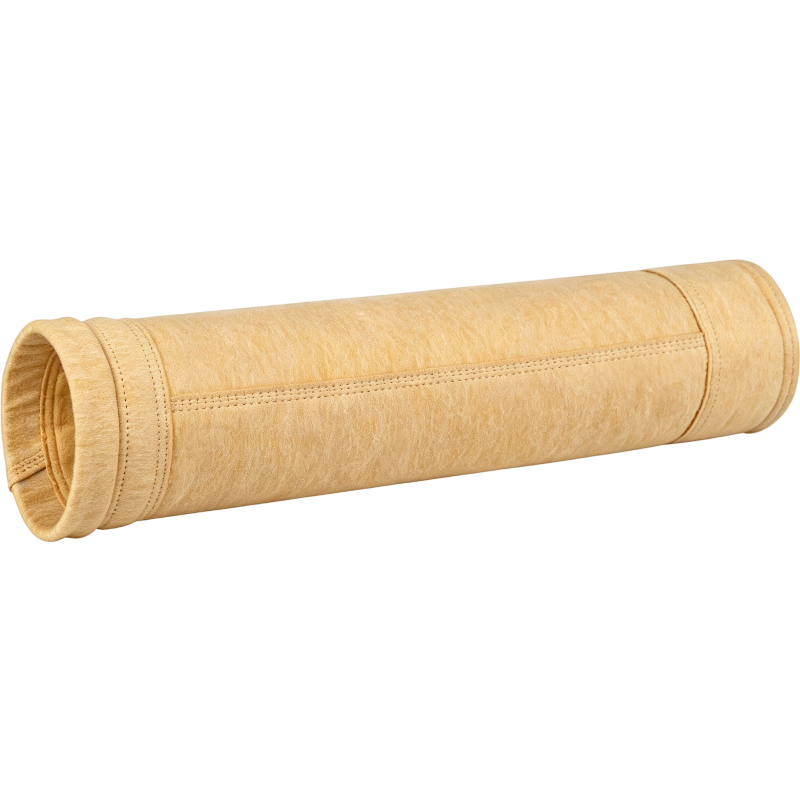
PI filter bag
Dust filter bags (also known as filter sleeves) serve as the core filtration components in fabric-filter dust collectors, directly determining dust removal efficiency, operational resistance, and service life. Manufactured from needle-punched felt or woven filter media using specialized sewing techniques, these bags capture dust particles through a combination of mechanisms—including inertial impaction, interception, diffusion, electrostatic attraction, and filtration via an initial dust layer—making them essential components for achieving ultra-low emission levels.
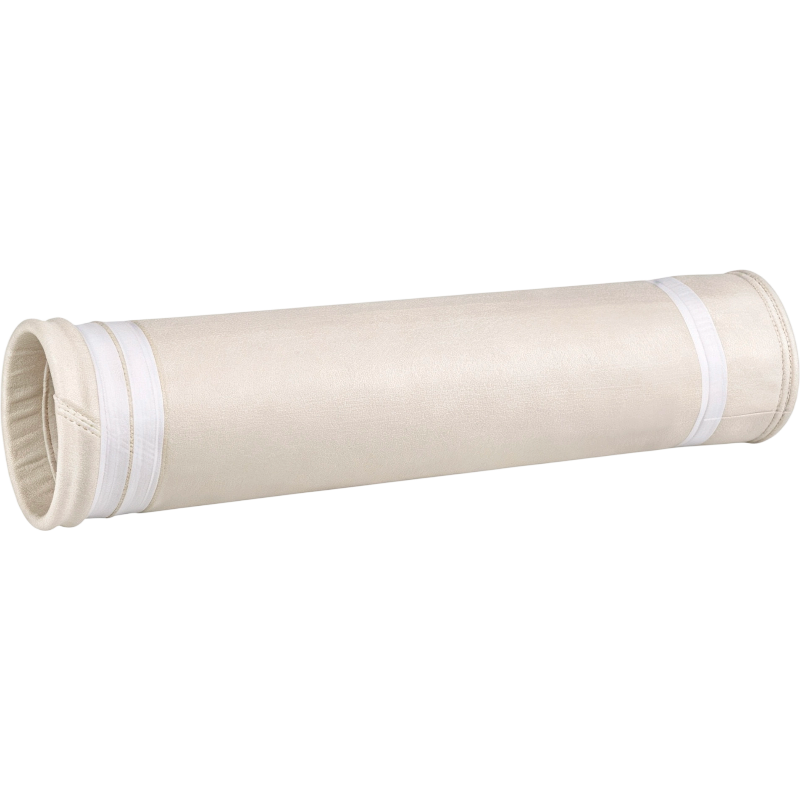
PPS filter bag
Dust filter bags (also known as filter sleeves) serve as the core filtration components in fabric-filter dust collectors, directly determining dust removal efficiency, operational resistance, and service life. Manufactured from needle-punched felt or woven filter media using specialized sewing techniques, these bags capture dust particles through a combination of mechanisms—including inertial impaction, interception, diffusion, electrostatic attraction, and filtration via an initial dust layer—making them essential components for achieving ultra-low emission levels.
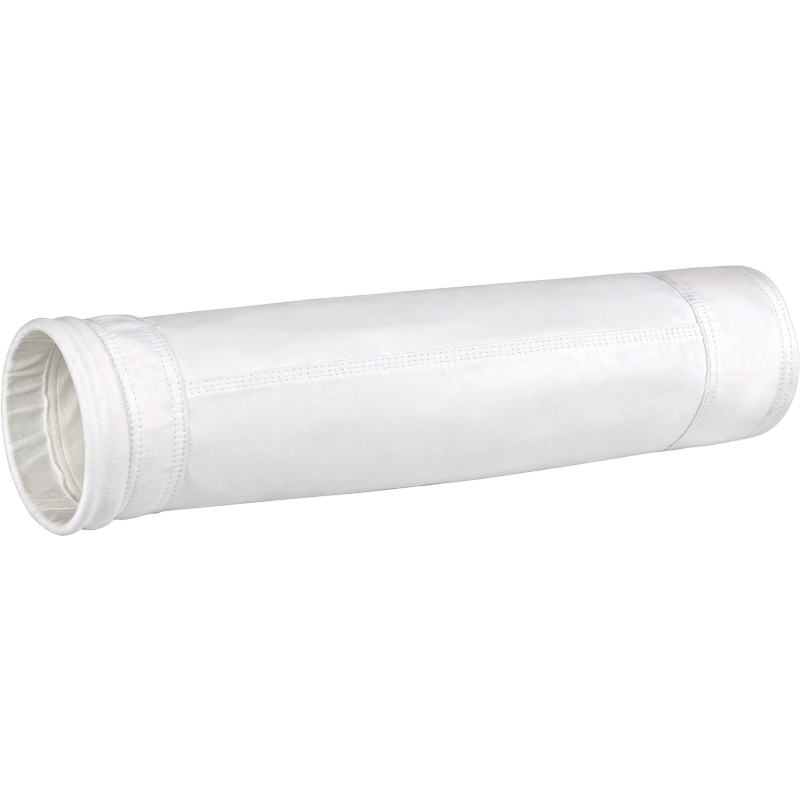
PTFE filter bag
Dust filter bags (also known as filter sleeves) serve as the core filtration components in fabric-filter dust collectors, directly determining dust removal efficiency, operational resistance, and service life. Manufactured from needle-punched felt or woven filter media using specialized sewing techniques, these bags capture dust particles through a combination of mechanisms—including inertial impaction, interception, diffusion, electrostatic attraction, and filtration via an initial dust layer—making them essential components for achieving ultra-low emission levels.
.png)
Fiberglass composite filter bag
Dust filter bags (also known as filter sleeves) serve as the core filtration components in fabric-filter dust collectors, directly determining dust removal efficiency, operational resistance, and service life. Manufactured from needle-punched felt or woven filter media using specialized sewing techniques, these bags capture dust particles through a combination of mechanisms—including inertial impaction, interception, diffusion, electrostatic attraction, and filtration via an initial dust layer—making them essential components for achieving ultra-low emission levels.
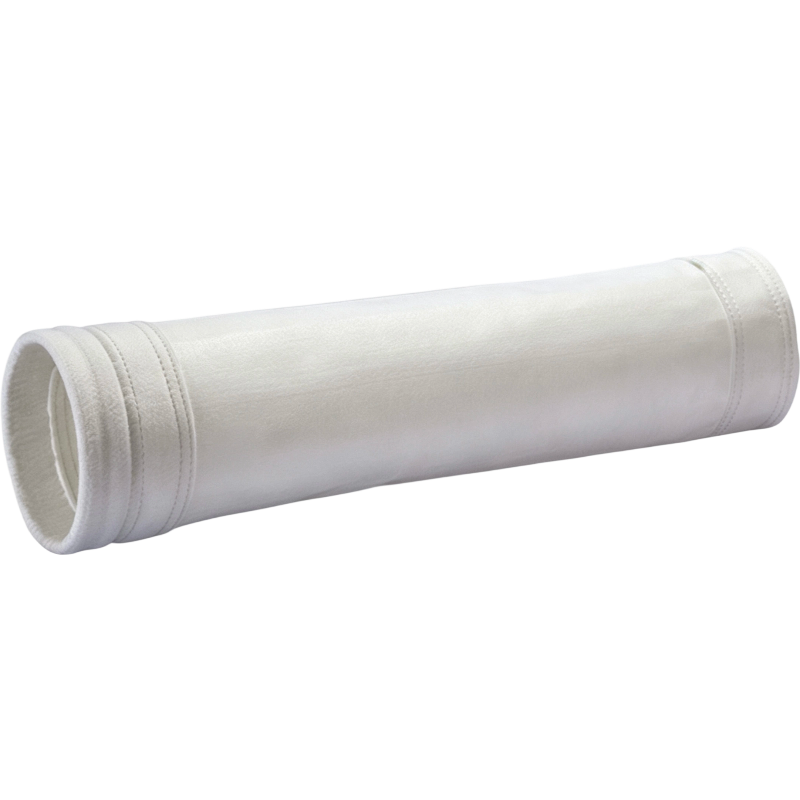
Polyester Laminated Filter Bag
Dust filter bags (also known as filter sleeves) serve as the core filtration components in fabric-filter dust collectors, directly determining dust removal efficiency, operational resistance, and service life. Manufactured from needle-punched felt or woven filter media using specialized sewing techniques, these bags capture dust particles through a combination of mechanisms—including inertial impaction, interception, diffusion, electrostatic attraction, and filtration via an initial dust layer—making them essential components for achieving ultra-low emission levels.
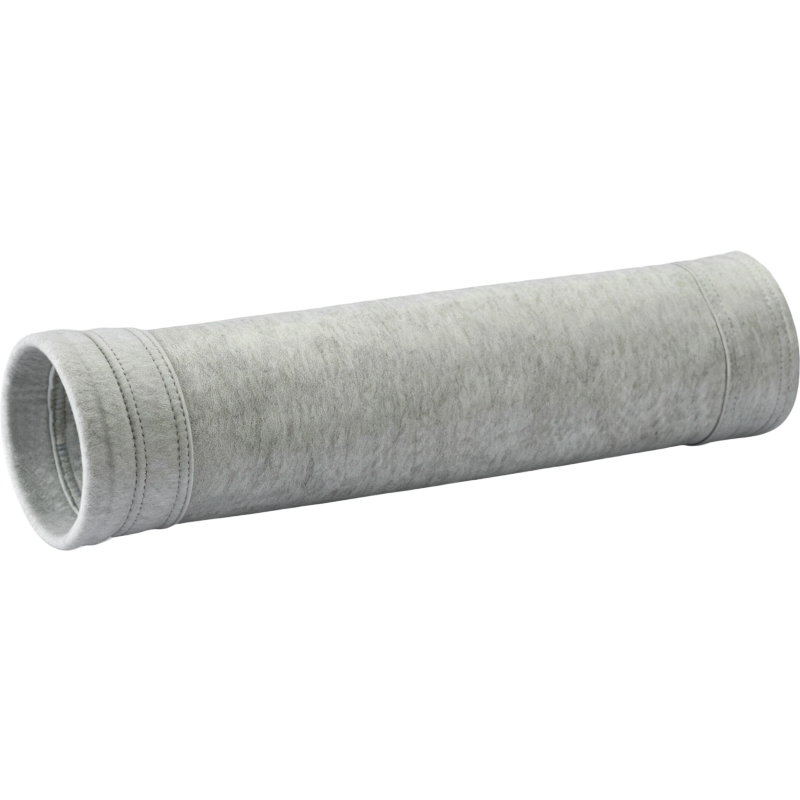
Polyester-blend conductive filter bag
Dust filter bags (also known as filter sleeves) serve as the core filtration components in fabric-filter dust collectors, directly determining dust removal efficiency, operational resistance, and service life. Manufactured from needle-punched felt or woven filter media using specialized sewing techniques, these bags capture dust particles through a combination of mechanisms—including inertial impaction, interception, diffusion, electrostatic attraction, and filtration via an initial dust layer—making them essential components for achieving ultra-low emission levels.
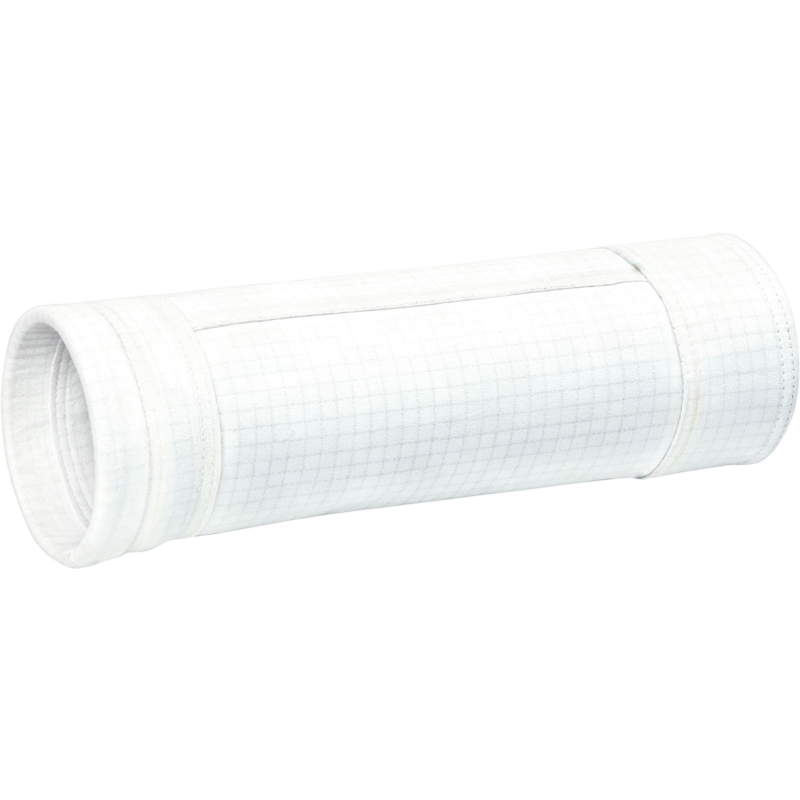
Grid-pattern anti-static filter bag
Dust filter bags (also known as filter sleeves) serve as the core filtration components in fabric-filter dust collectors, directly determining dust removal efficiency, operational resistance, and service life. Manufactured from needle-punched felt or woven filter media using specialized sewing techniques, these bags capture dust particles through a combination of mechanisms—including inertial impaction, interception, diffusion, electrostatic attraction, and filtration via an initial dust layer—making them essential components for achieving ultra-low emission levels.
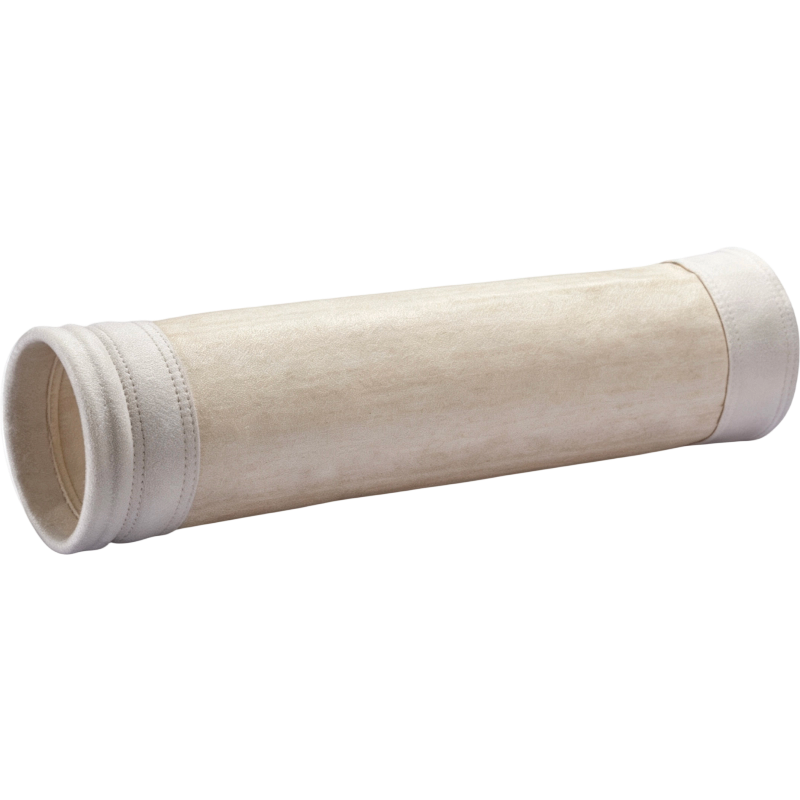
Aramid filter bags
Dust filter bags (also known as filter sleeves) serve as the core filtration components in fabric-filter dust collectors, directly determining dust removal efficiency, operational resistance, and service life. Manufactured from needle-punched felt or woven filter media using specialized sewing techniques, these bags capture dust particles through a combination of mechanisms—including inertial impaction, interception, diffusion, electrostatic attraction, and filtration via an initial dust layer—making them essential components for achieving ultra-low emission levels.
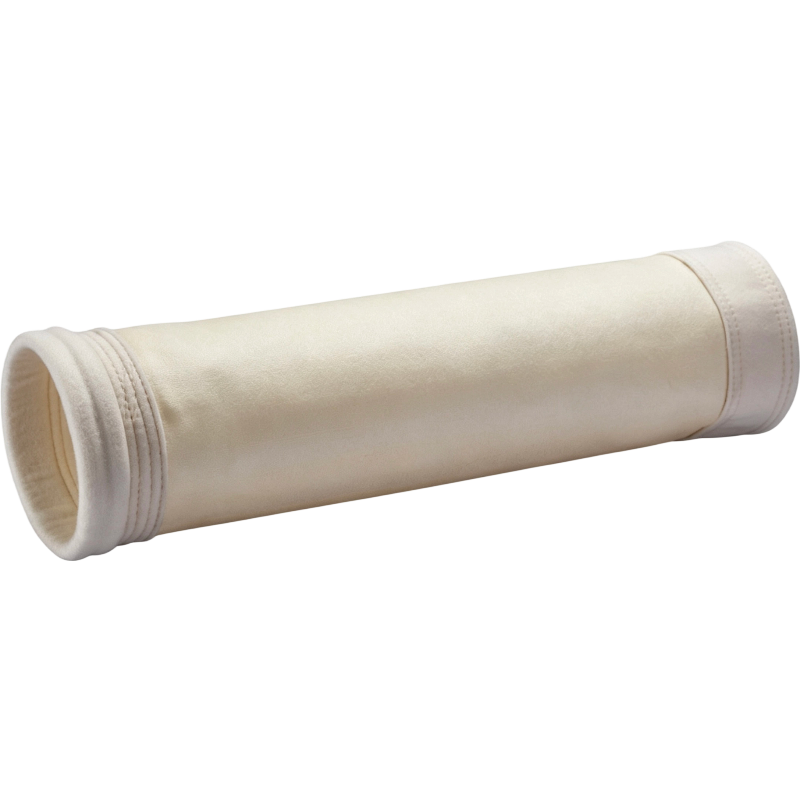
Acrylic filter bag
Dust filter bags (also known as filter sleeves) serve as the core filtration components in fabric-filter dust collectors, directly determining dust removal efficiency, operational resistance, and service life. Manufactured from needle-punched felt or woven filter media using specialized sewing techniques, these bags capture dust particles through a combination of mechanisms—including inertial impaction, interception, diffusion, electrostatic attraction, and filtration via an initial dust layer—making them essential components for achieving ultra-low emission levels.
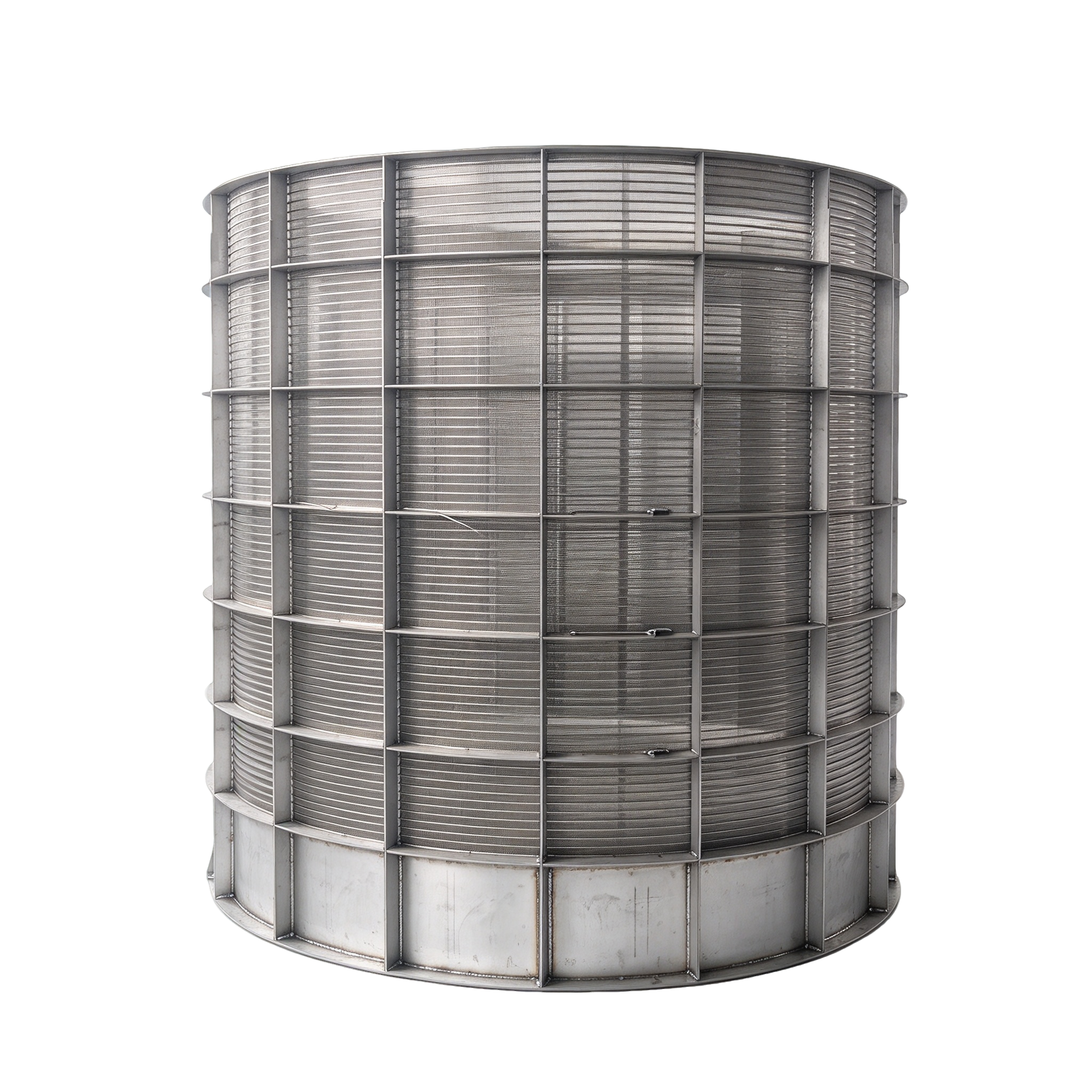
sieve tube
Wedge-wire screen cylinders are fully welded, cylindrical filtration elements. They are constructed by continuously wrapping a V-shaped (trapezoidal) profile wire around a series of axial support rods and securing it via resistance welding. This process creates a uniform, continuous slot that is wider on the outside and narrower on the inside. These screens are primarily used within tanks, pressure vessels, and filter towers for applications such as water collection and distribution, resin retention, sand control, fluid flow distribution, and solid-liquid separation. They are widely integrated into equipment such as resin tanks, adsorption towers, water treatment filters, and distillation column internals, serving as a core cylindrical filtration component in chemical processing, water treatment, and environmental protection systems.
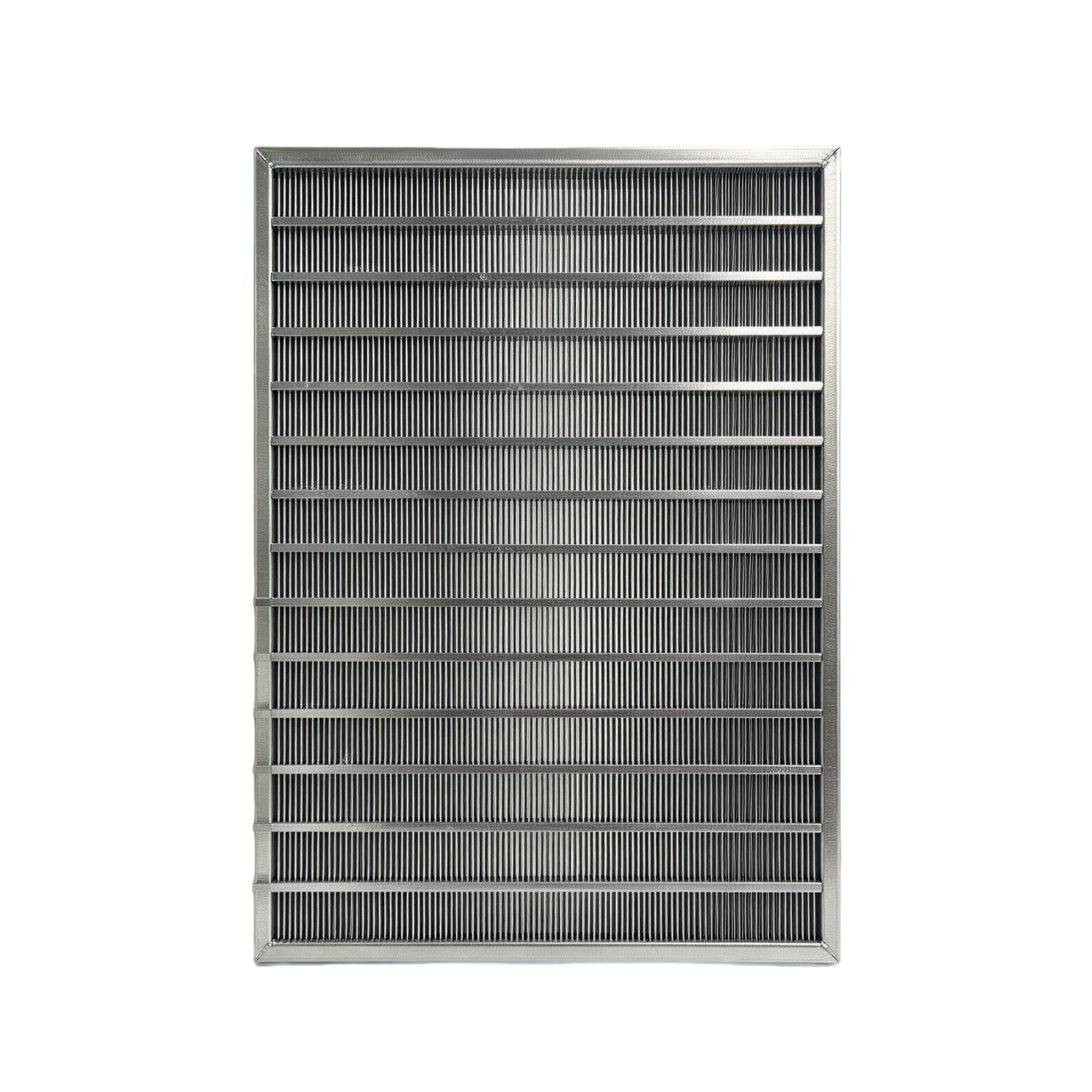
Sieve plate
Wedge-wire screen panels are constructed by arranging V-shaped profile wires transversely and welding them onto longitudinal support rods, forming a flat (or alternatively, curved or bent) screening and filtration component. These panels are primarily used for applications such as planar water or gas distribution, material dewatering, solid-liquid separation, packing support, base plates for filtration equipment, and curved screens. They are typically employed for flat-surface filtration and screening within tanks or vessels, distinguishing them from cylindrical wedge-wire screen tubes.
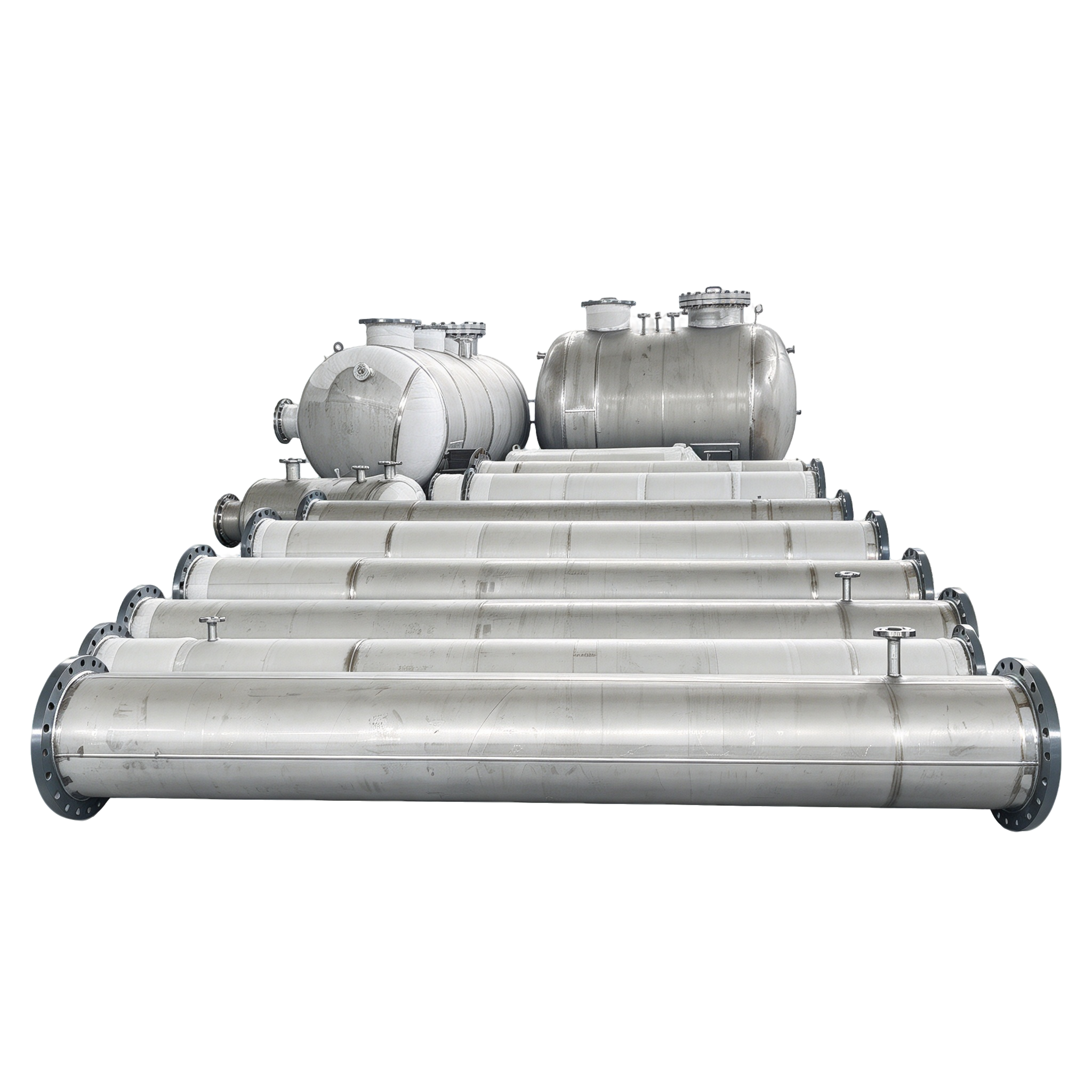
Distillation column
A distillation column is a core mass-transfer device used in chemical separation. It leverages differences in the volatility (boiling points) of components within a mixture, employing repeated partial vaporization and partial condensation—occurring throughout the column—to achieve the high-purity separation of liquid mixtures. Distillation columns are widely utilized across sectors such as petrochemicals, fine chemicals, pharmaceuticals, food processing, and environmental solvent recovery. They enable continuous, large-scale, high-purity separation processes, with separation efficiencies reaching over 99%.
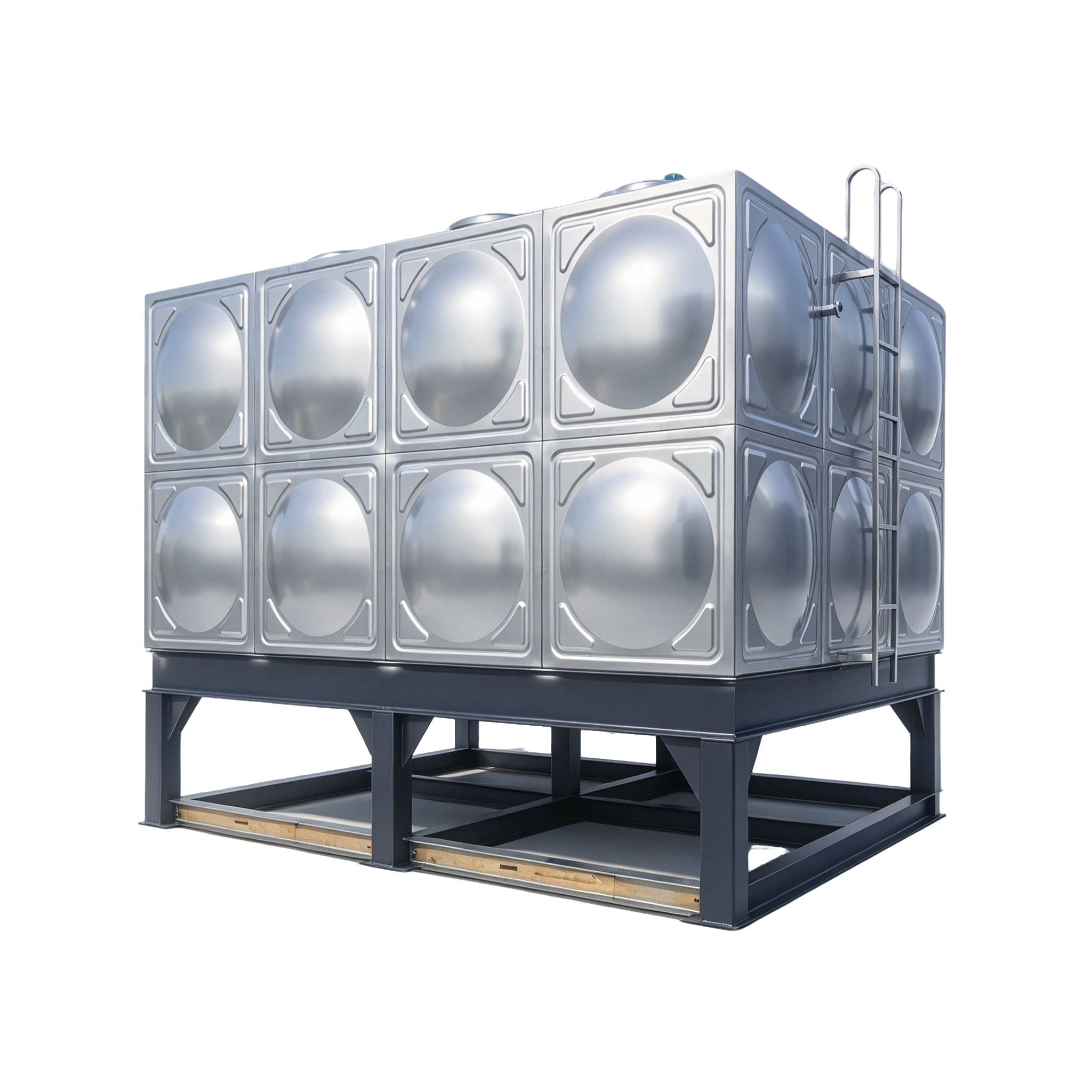
Fire water tank
Fire water tanks are specialized storage facilities within a fire water supply system designed to hold water for use during the initial stages of a fire. They provide a supply of water for firefighting before the fire pumps are activated, ensuring that initial fire-suppression efforts can begin promptly. Our product range includes four main series: stainless steel assembled/welded tanks, SMC (sheet molding compound) modular fiberglass tanks, steel tanks with enamel/powder-coated/galvanized finishes, and BDF (bolted/composite) stainless steel composite tanks. With capacities ranging from 0.125 to 2,000 m³, these products comply with the national standard GB 50974, "Technical Code for Fire Water Supply and Hydrant Systems."
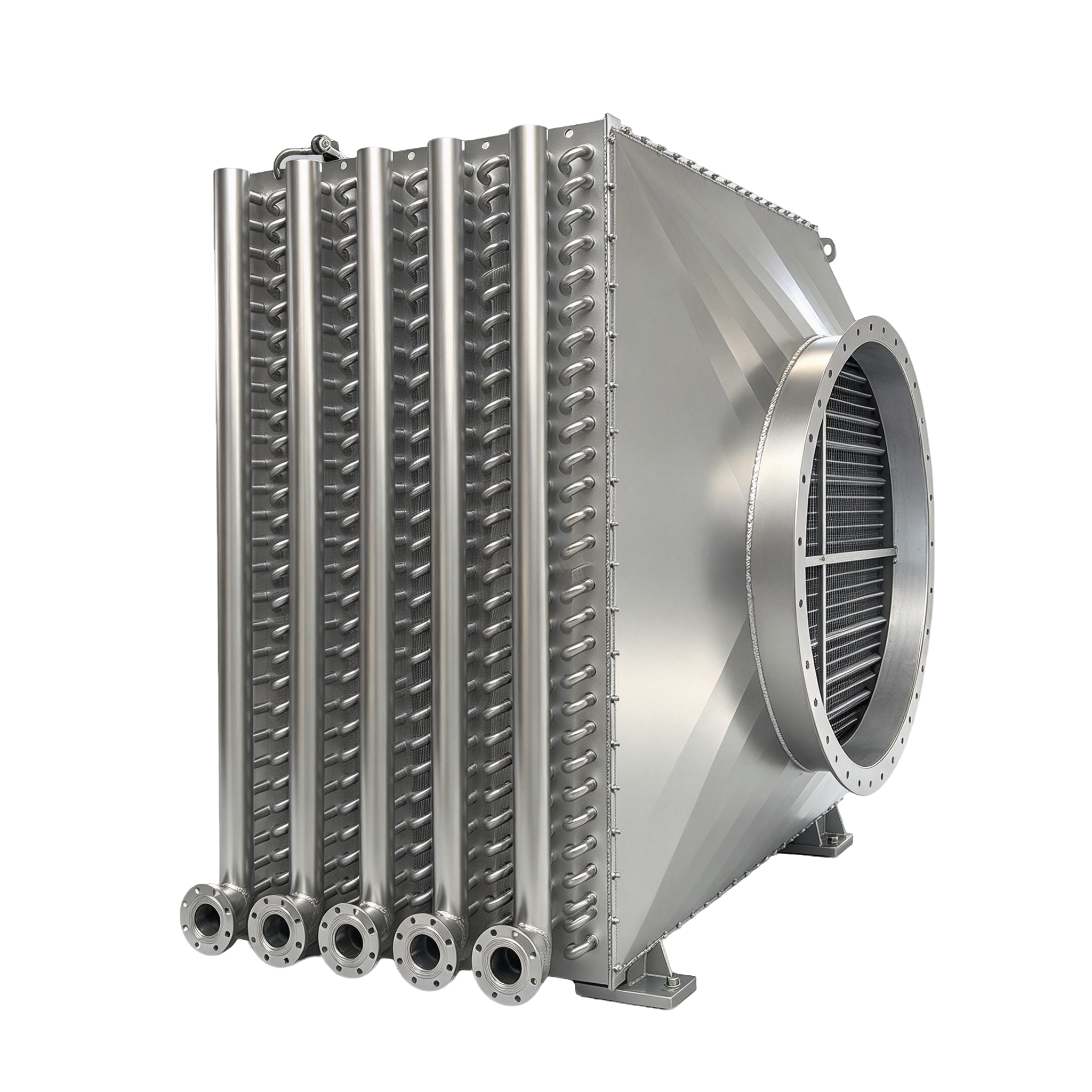
Finned heat exchanger
A finned heat exchanger is a highly efficient heat exchange device that increases heat transfer surface area and enhances convective heat transfer on the air side by incorporating fins onto the outer surfaces of heat exchange tubes. Primarily used for heat exchange between gas and liquid or gas and vapor, it facilitates air heating, air cooling, or the recovery of waste heat from flue gases. It serves as a core heat exchange component in fields such as industrial drying, HVAC (heating, ventilation, and air conditioning), and waste heat utilization.
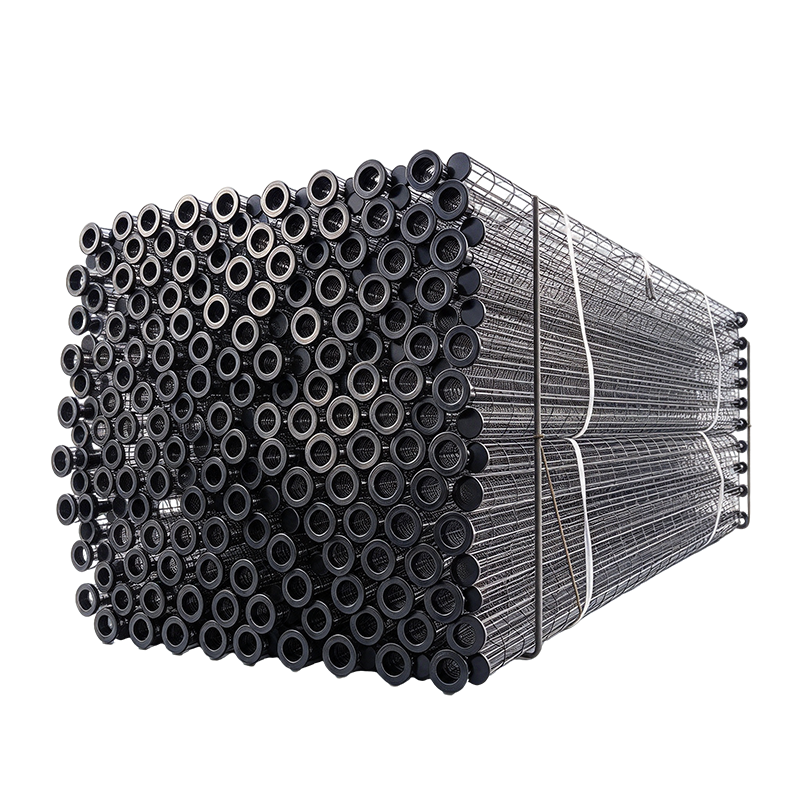
Filter cage
A filter cage (dust collector skeleton) is a metal framework used inside a fabric filter dust collector to support the filter bags. It maintains the shape of the bags and ensures the effectiveness of pulse-jet cleaning. Constructed by welding longitudinal ribs and circumferential rings, the cage is treated with an anti-corrosion coating. These cages are available in single-piece or multi-section (interlocking) designs and serve as a core component of fabric filter dust collectors.
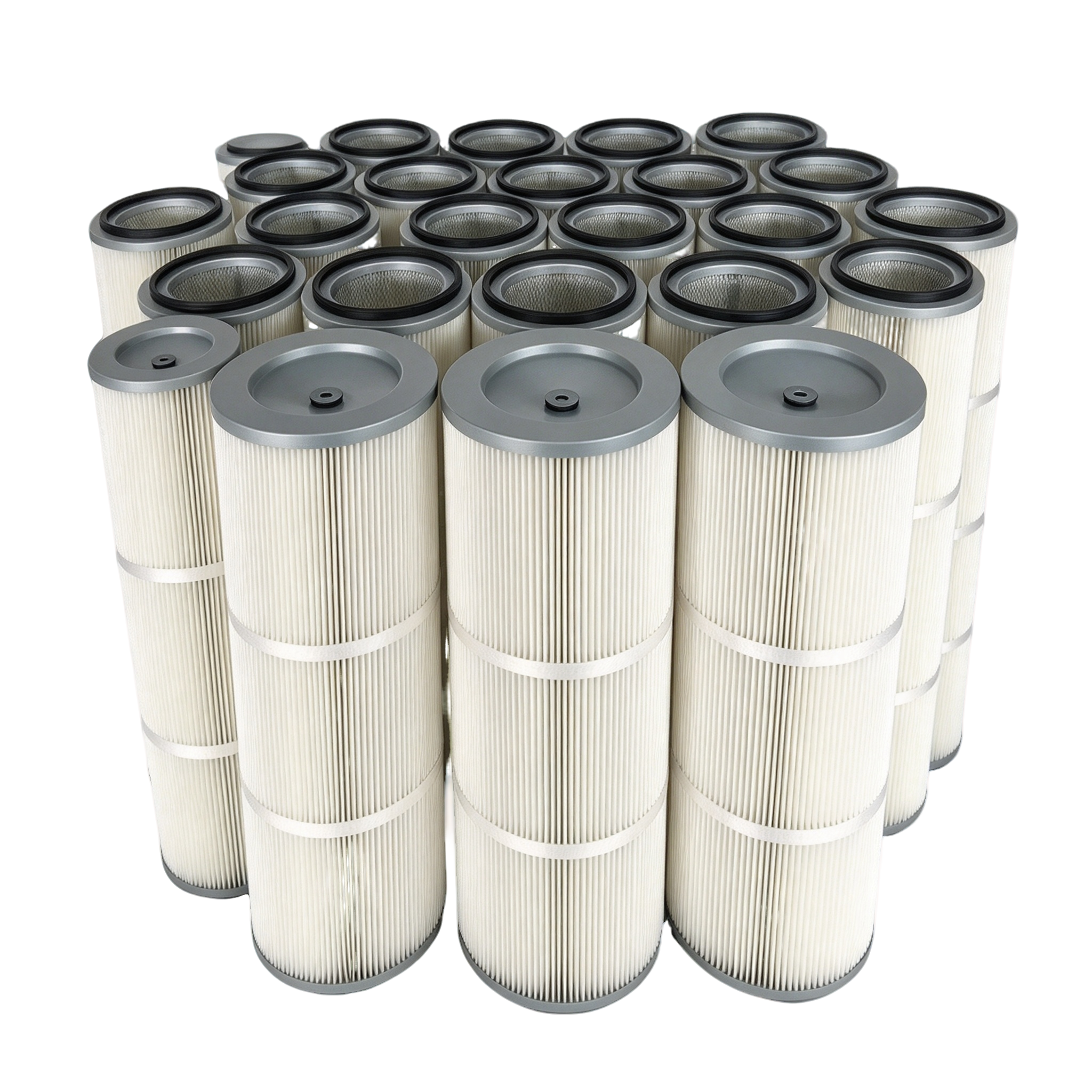
Filter cartridge
Filter cartridges serve as the core filtration components in pulse-jet cartridge dust collectors. Constructed with pleated filter media formed into a cylindrical shape, these cartridges utilize their folds to significantly expand the effective filtration area, enabling highly efficient gas-solid separation within a compact space. Widely used in equipment such as cartridge dust collectors, grinding dust extraction benches, and welding fume purifiers, these cartridges achieve dust removal efficiencies exceeding 99.5% and can reduce outlet emission concentrations to below 10 mg/m³. They are essential consumables for industrial dust control, welding fume purification, and the recovery of powdered materials.
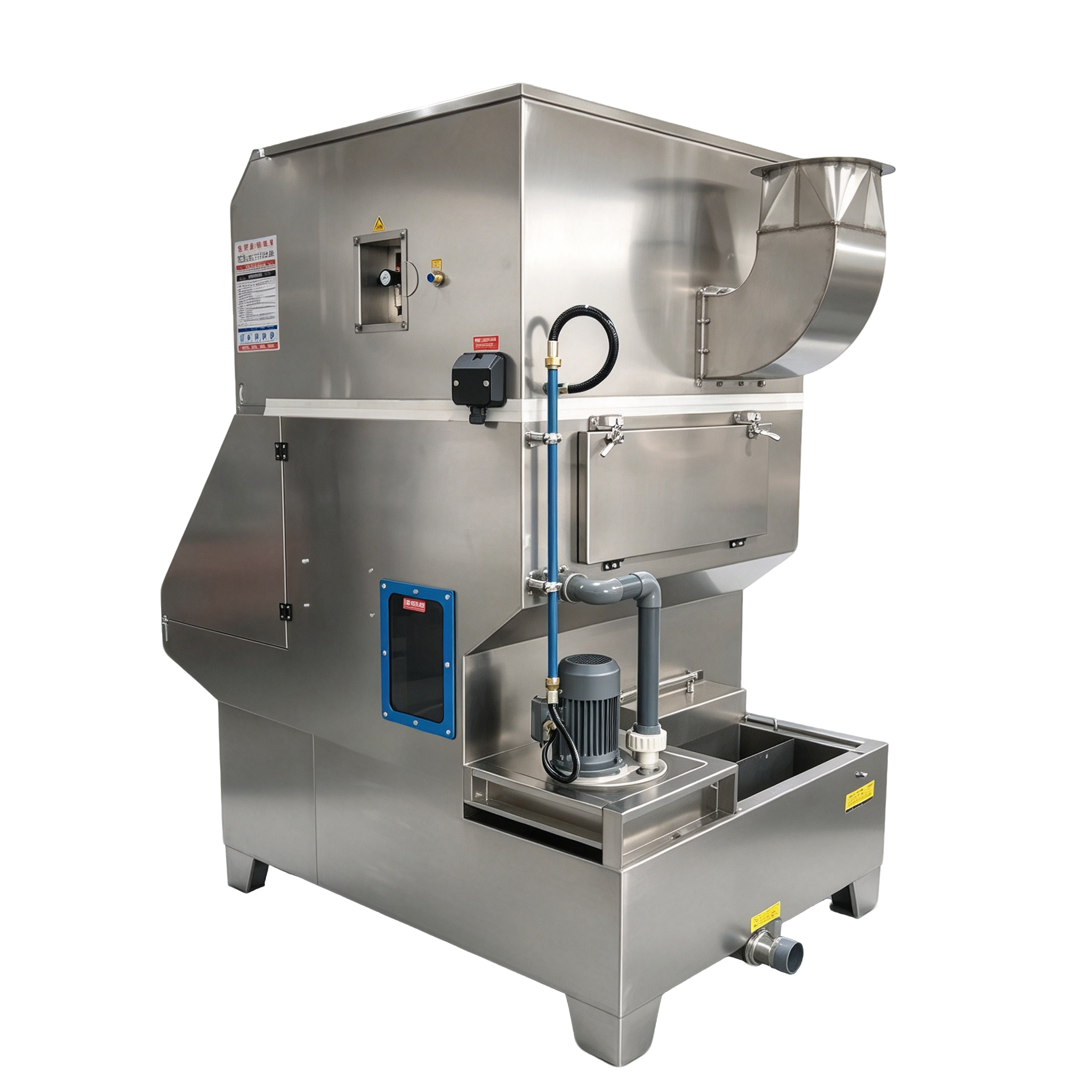
Grinding and Dust-Extraction Workstation
The grinding and dust-extraction workbench is an integrated, dry-type dust-removal system that combines a workstation, dust capture, purification/filtration, and automatic dust discharge. It is specifically designed for dry-process operations that generate dust, such as grinding, polishing, cutting, and deburring. The workbench surface features built-in suction inlets, allowing dust generated during operations to be captured on-site via negative pressure. The dust is then purified through an internal filtration unit, while an automatic pulse-jet cleaning mechanism regenerates the filter media, enabling continuous operation. With a dust-removal efficiency exceeding 99.5% and outlet emission concentrations as low as 10 mg/m³ or less, this unit significantly improves the workshop environment. It serves as a specialized dust-control solution for metal processing, as well as for grinding and polishing operations involving castings.
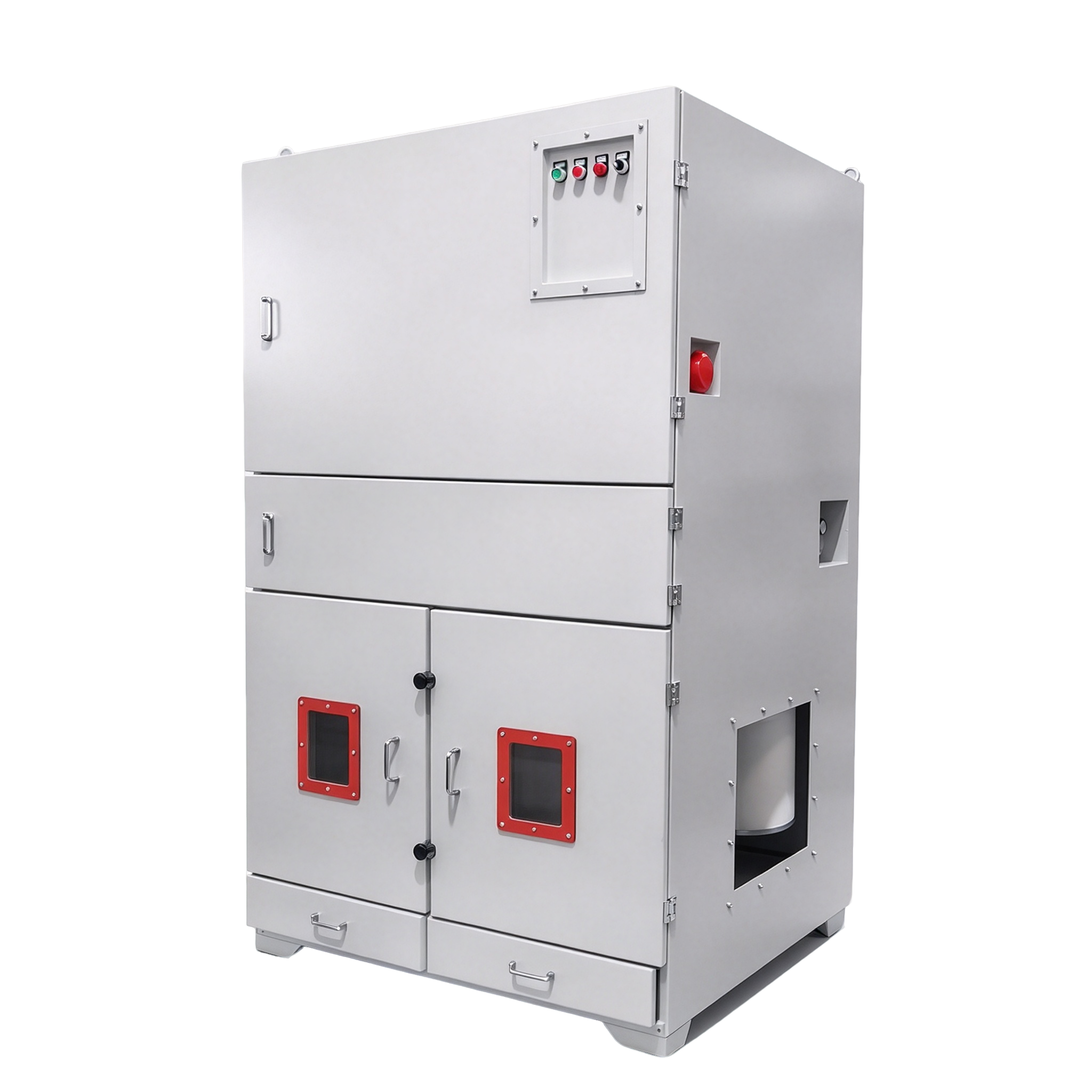
Pulse-jet cartridge dust collector
The pulse-jet cartridge dust collector is a compact, high-efficiency industrial dust removal system. Utilizing advanced pleated, high-precision filter cartridge technology, it offers a more space-efficient design and superior filtration accuracy compared to traditional bag-house dust collectors. The unit integrates dust collection, airflow filtration, automatic pulse-jet cleaning, and clean-air exhaust. Specifically engineered for fine, dry industrial dust, welding fumes, and airborne particulate matter, it features a small footprint, high purification efficiency, stable operation, and ease of maintenance. It serves as a core environmental protection solution for industrial dust control, workshop air purification, and exhaust gas pre-treatment, and complies with international environmental standards such as CE and ISO.
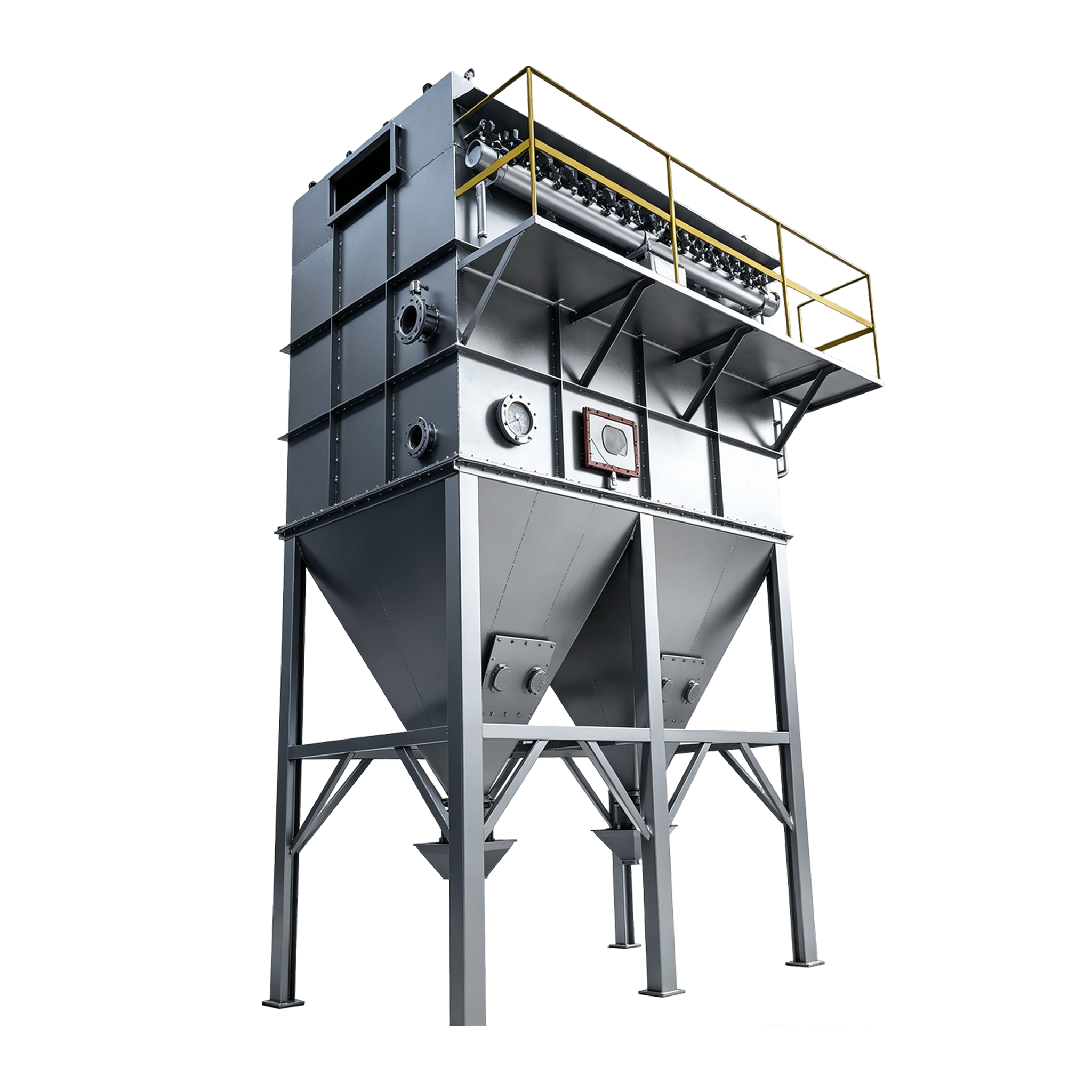
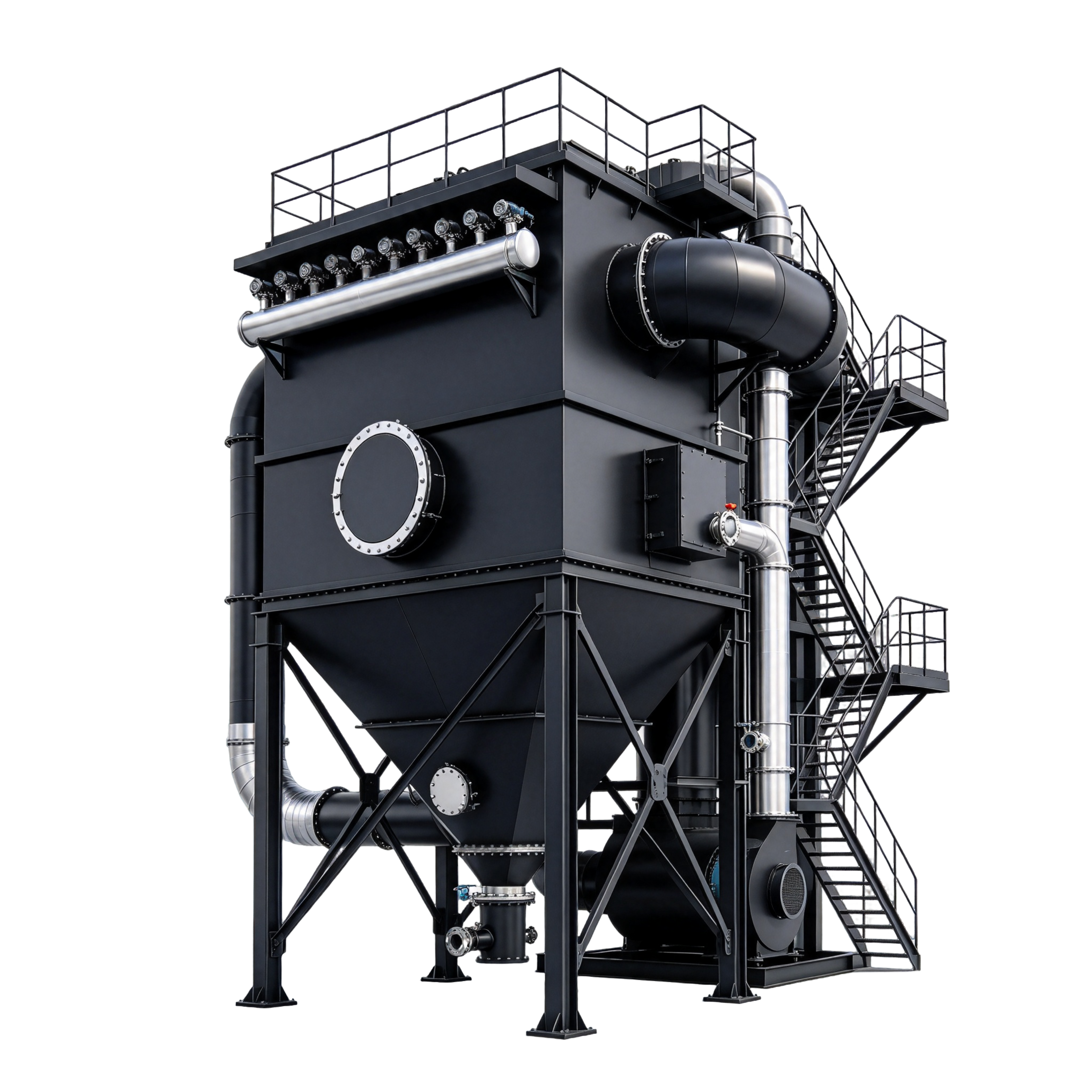
Baghouse dust collector
A baghouse dust collector is a highly efficient, dry-type filtration system that uses fabric filter bags to capture solid particulate matter from dust-laden gas. It employs pulse-jet cleaning technology to regenerate the filter bags, allowing for continuous, on-line operation. With a dust removal efficiency exceeding 99.5% and outlet emission concentrations as low as 10 mg/m³ or less, it serves as the primary equipment for industrial dust control and material recovery.
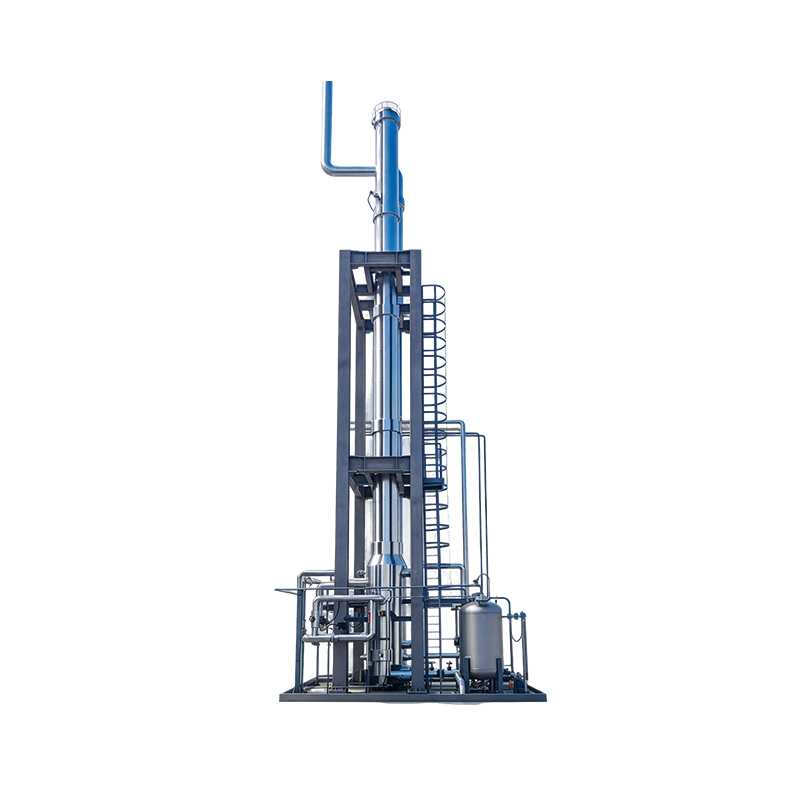
Absorption tower
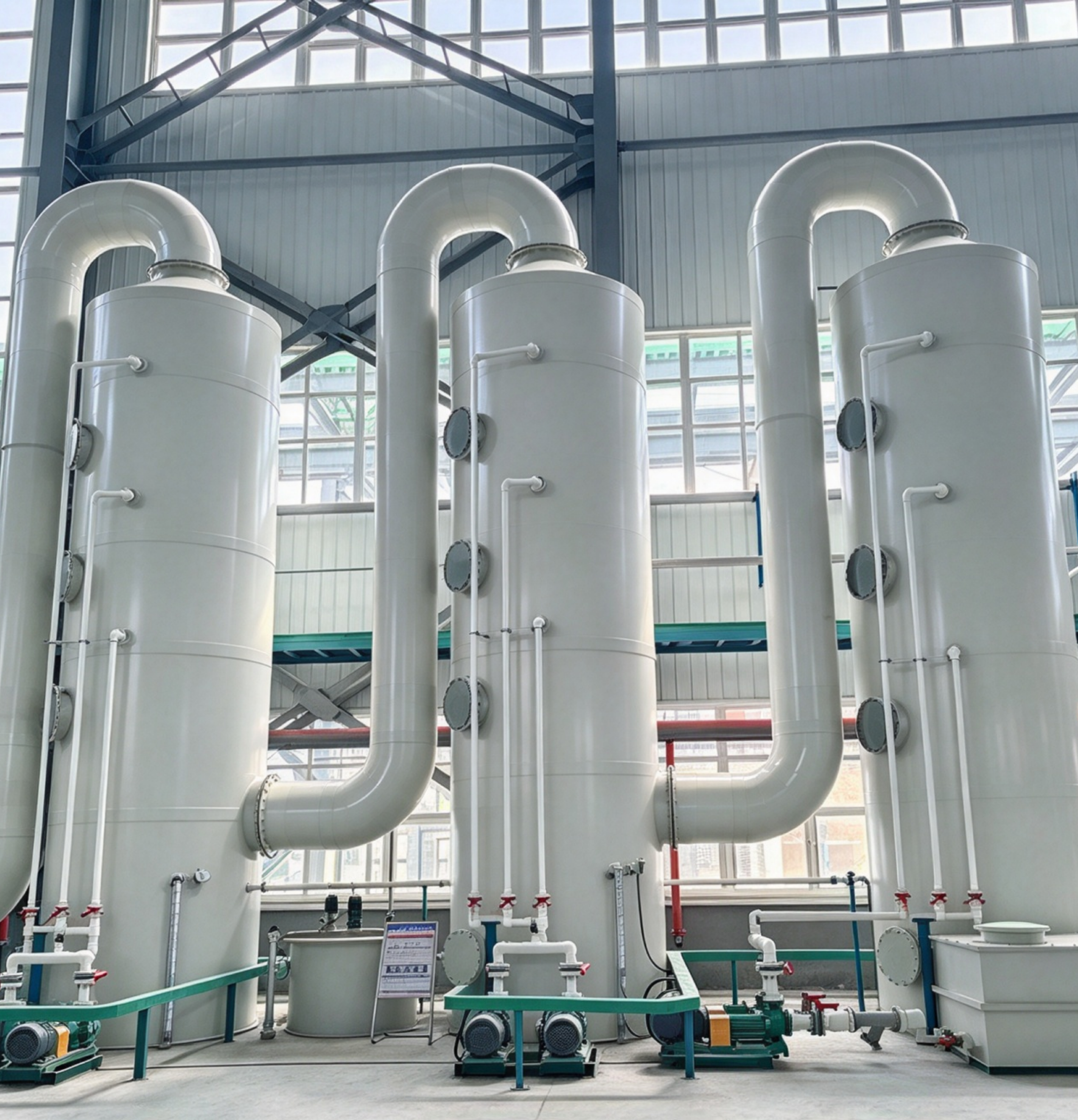
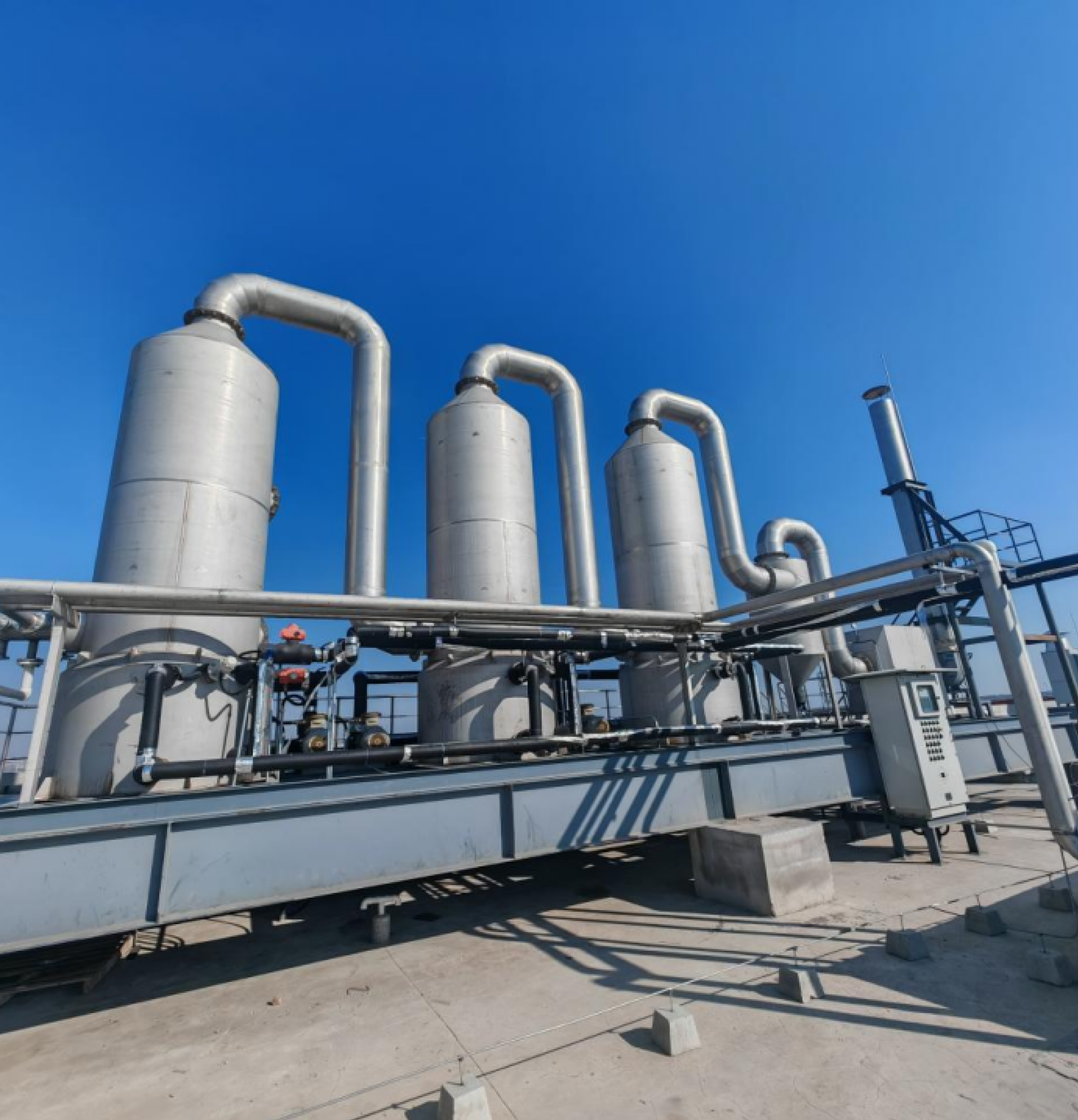
Waste gas enters from the bottom of the tower and flows upward, while an absorbent is sprayed from the top and flows downward, creating a counter-current gas-liquid contact. Pollutants in the waste gas are transferred into the liquid phase, where they undergo dissolution or neutralization reactions. The purified gas passes through a demister at the top of the tower before being discharged. The absorbent liquid is circulated from the bottom of the tower, with fresh reagents added or spent liquid removed as needed, depending on operational conditions.
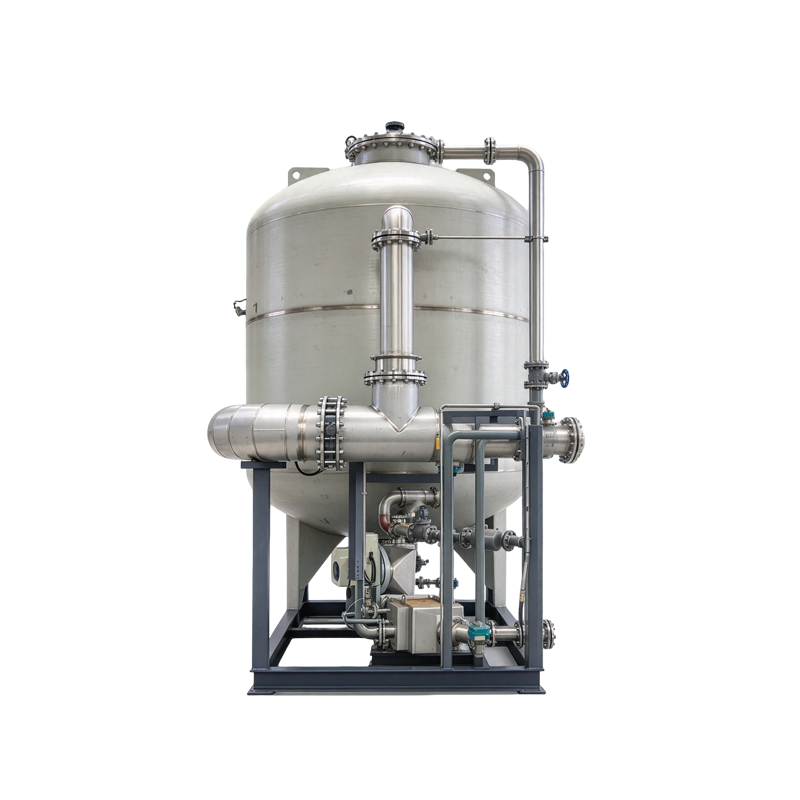
Resin tank
The resin vessel—constructed as a pressure vessel (or non-pressure vessel) from carbon steel, duplex stainless steel, or stainless steel—is filled with macroporous ion-exchange resin for the adsorption of gaseous media. In exhaust gas treatment applications, it is used for the adsorption and recovery of organic waste gases. The vessel is equipped with internal water/gas distribution components, as well as upper and lower Johnson-type screen pipes or screen plates, to ensure uniform distribution of the media.
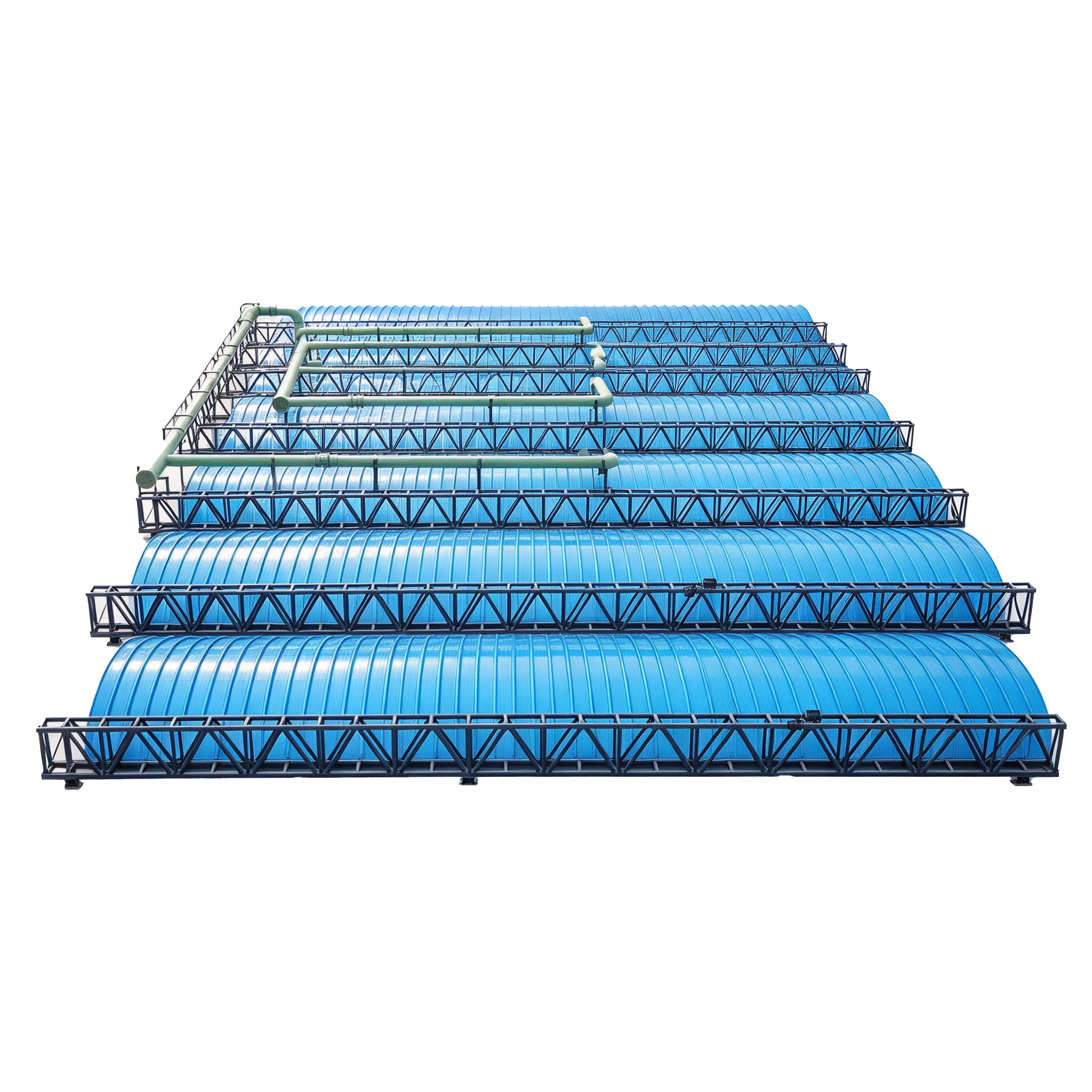
Exhaust Gas Sealing and Collection Cover
VOCs exhaust treatment covers are specialized sealing components designed for industrial exhaust collection and treatment systems. They are primarily used to enclose open emission sources—such as points along production lines, reaction tanks, cleaning vats, material mixing stations, and the inlets/outlets of spray towers—to facilitate the containment and collection of pollutants. Through their fully sealed design, these covers effectively prevent the fugitive release and dispersion of VOCs, odors, smoke, and dust. By consolidating scattered exhaust streams, they channel the emissions toward downstream treatment equipment. As an essential foundational component of any comprehensive VOCs treatment system, these covers are widely utilized in both the retrofitting of existing facilities and the construction of new projects across various industries.
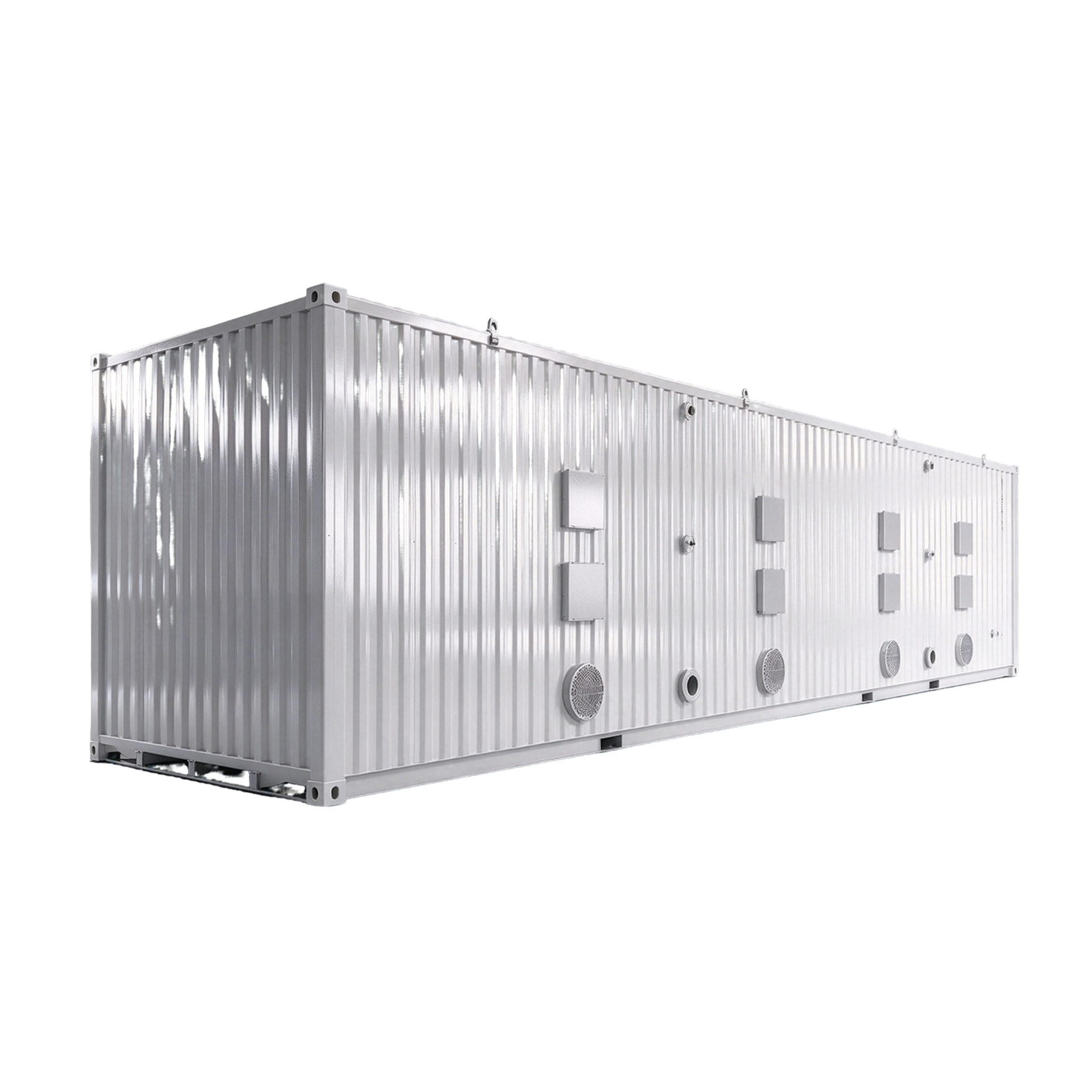
Biological Deodorization Unit
A biological deodorization unit is a system for purifying waste gas through biological processes. It utilizes microbial metabolism to break down substances such as hydrogen sulfide, ammonia, and other volatile odorous compounds. The unit contains biological packing material, the surface of which hosts a population of acclimated, odor-degrading microorganisms. As the waste gas passes through the system, it is first humidified via a spray process before entering the biological filter bed, where the pollutants are degraded by the microorganisms into harmless substances such as carbon dioxide and water.
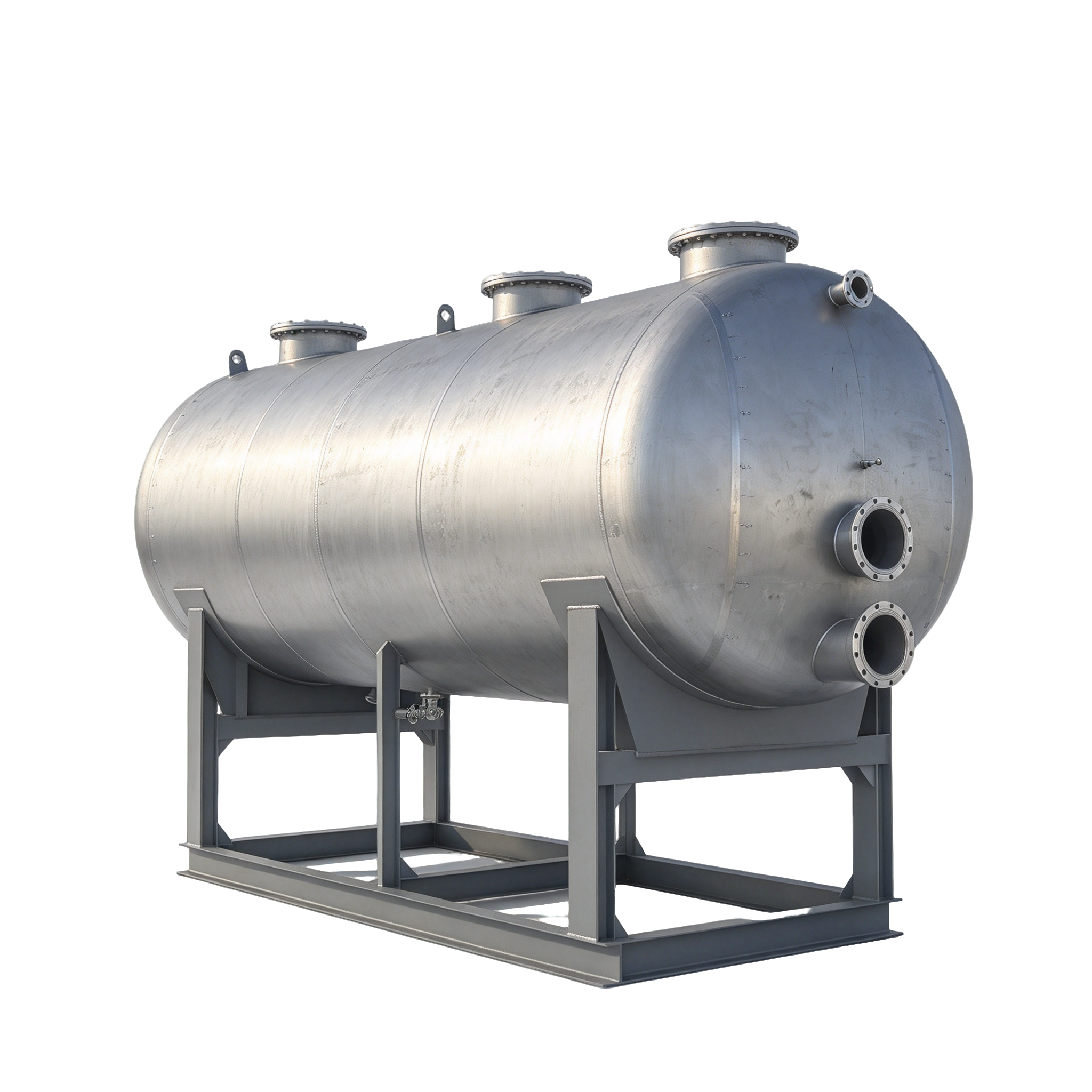
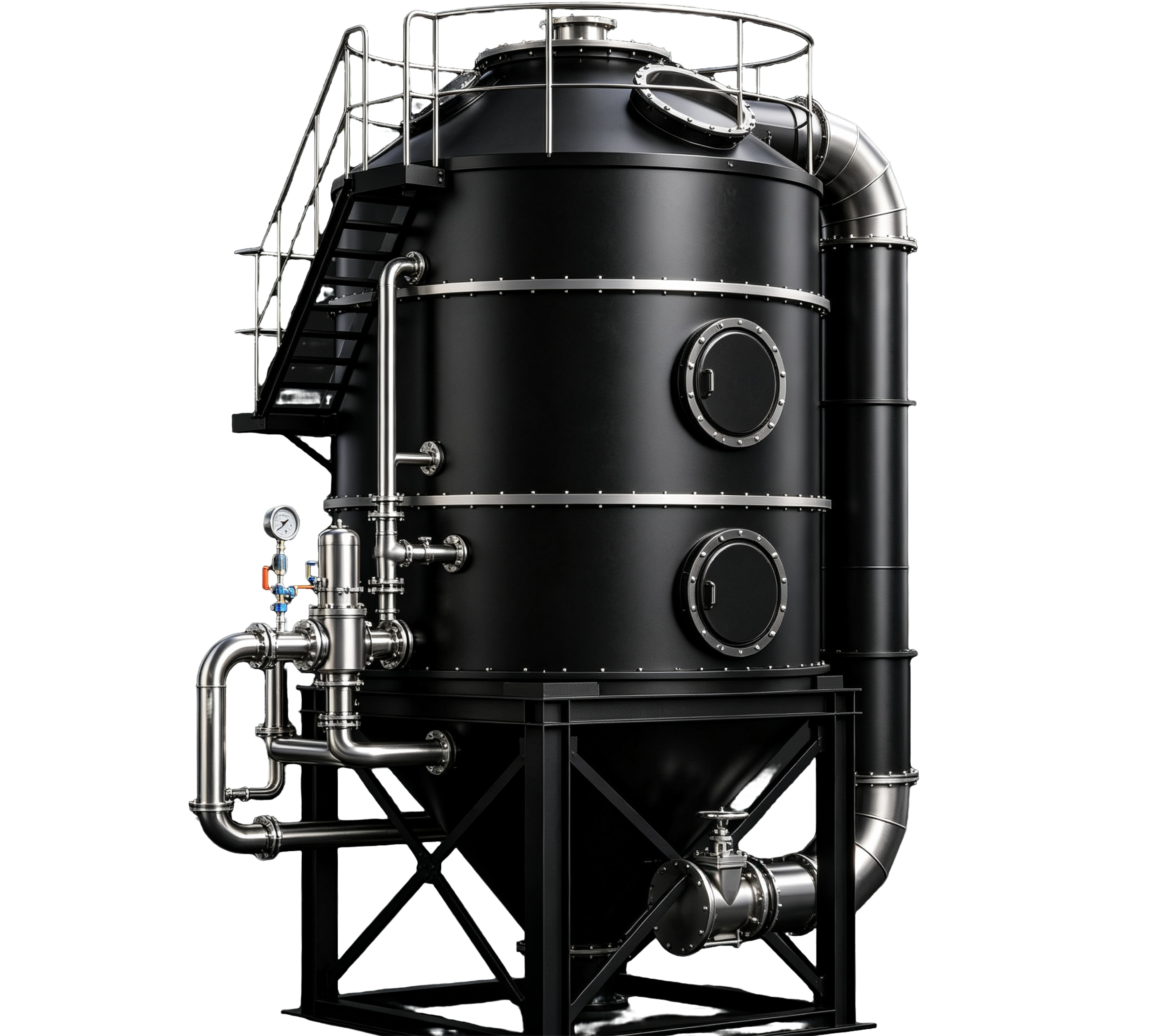
Activated carbon adsorption tank
An activated carbon adsorption tank is a vertical, vessel-style adsorption unit. Designed to withstand pressure, it is primarily used for applications involving low-to-medium air volumes that require solvent recovery and the ability to regenerate the adsorbent through desorption. The tank is filled with granular activated carbon and equipped with valves and piping, enabling a cyclic adsorption-desorption operation. It can be constructed from various materials, including anti-corrosion treated carbon steel, 304 stainless steel, or 316L stainless steel. Unlike rectangular adsorption boxes, these tanks are well-suited for enclosed processes and solvent recovery systems.
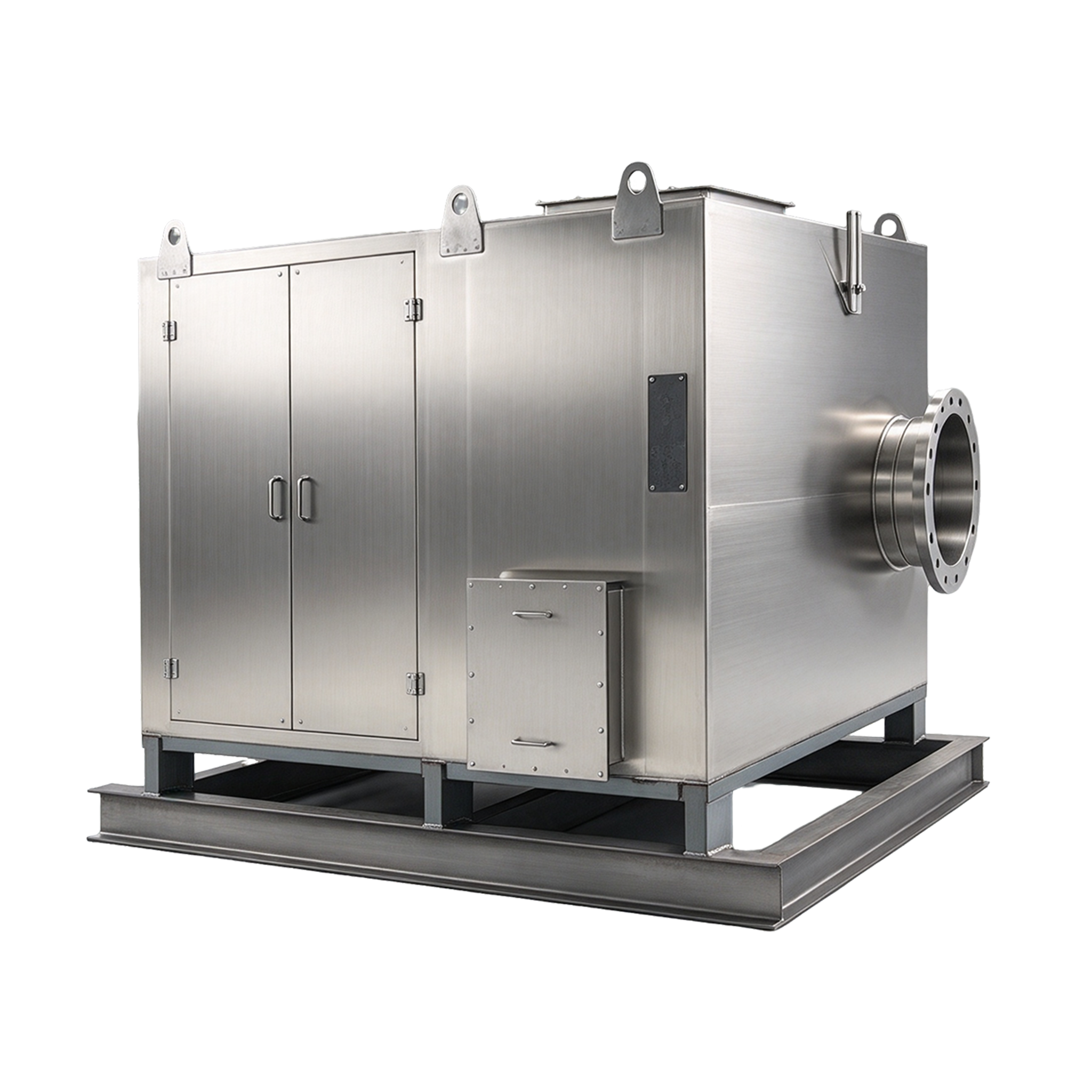
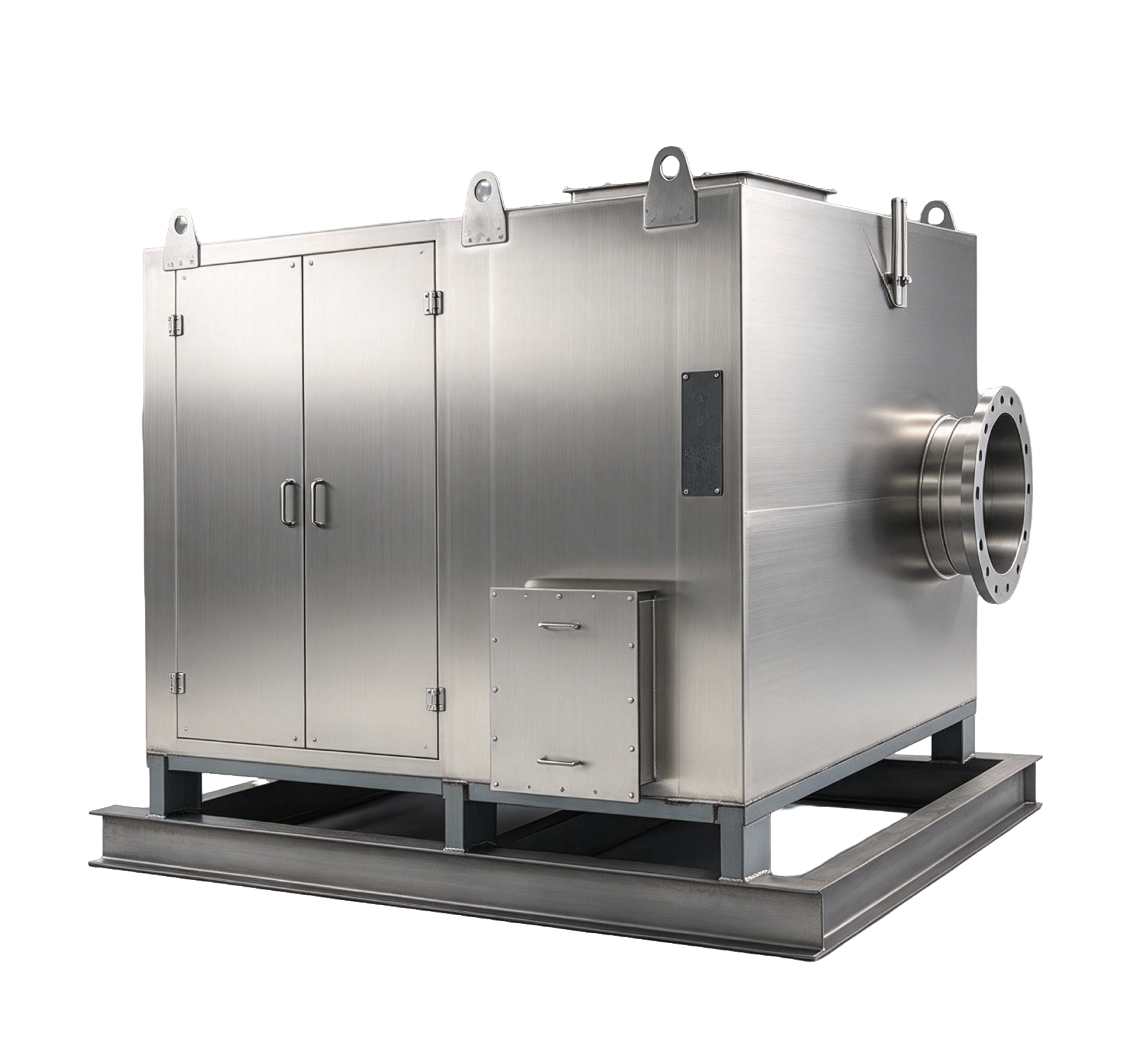
Activated Carbon Adsorption Unit
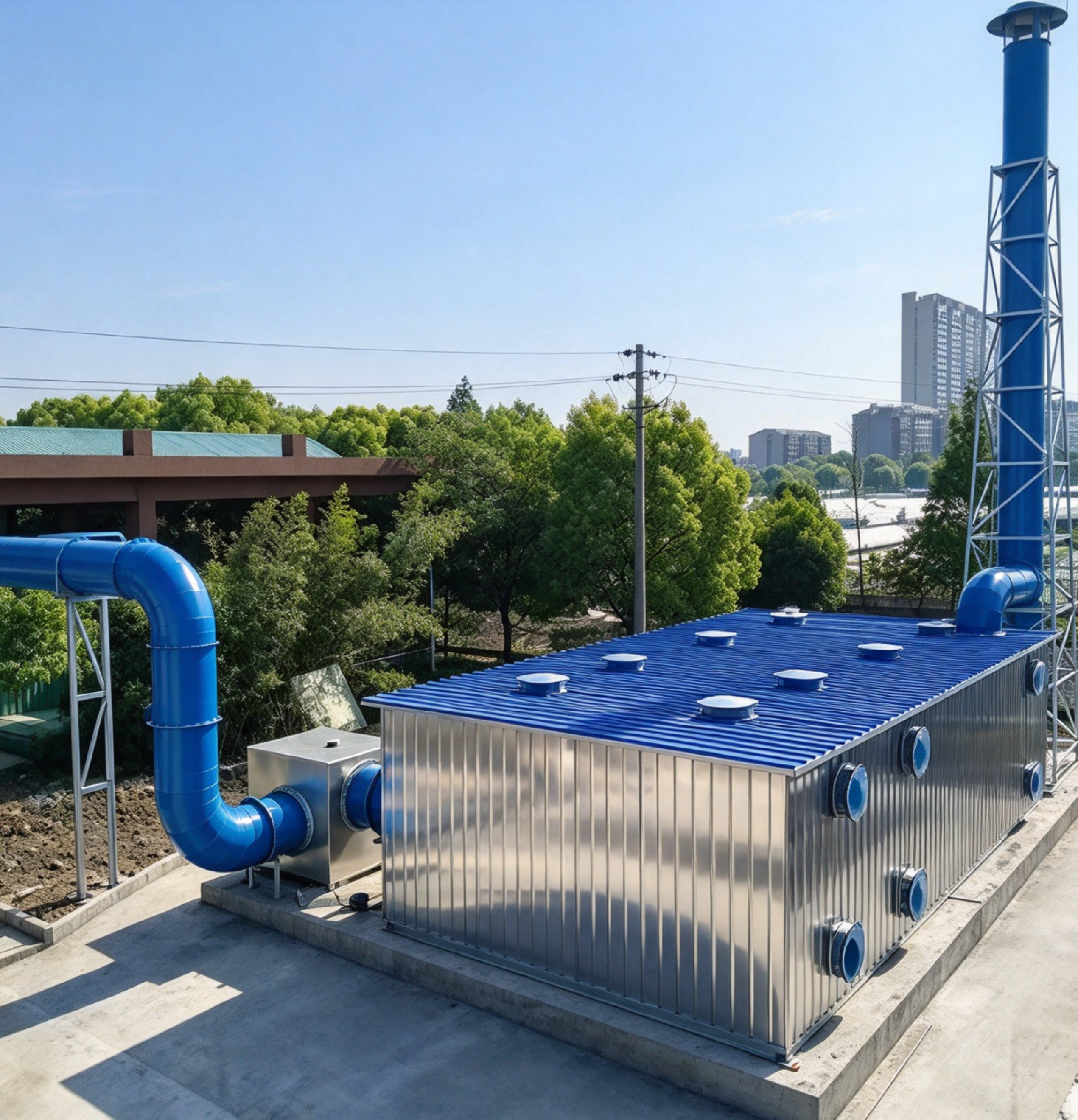
The activated carbon adsorption unit is a modular, drawer-style system designed for the purification of organic waste gases. It utilizes the extensive microporous structure of activated carbon to achieve physical adsorption, making it effective for treating low-concentration, high-volume waste gas streams and odorous emissions. The unit’s housing can be constructed from powder-coated carbon steel, 304/316L stainless steel, or polypropylene (PP). It is filled with either honeycomb or granular/columnar activated carbon, housed in drawer-style filter cartridges that allow for easy installation and replacement. This unit can operate independently or serve as a secondary, high-efficiency purification stage downstream of equipment such as wet scrubbers or UV-based treatment systems; it is a primary solution for the final-stage treatment of industrial waste gases.

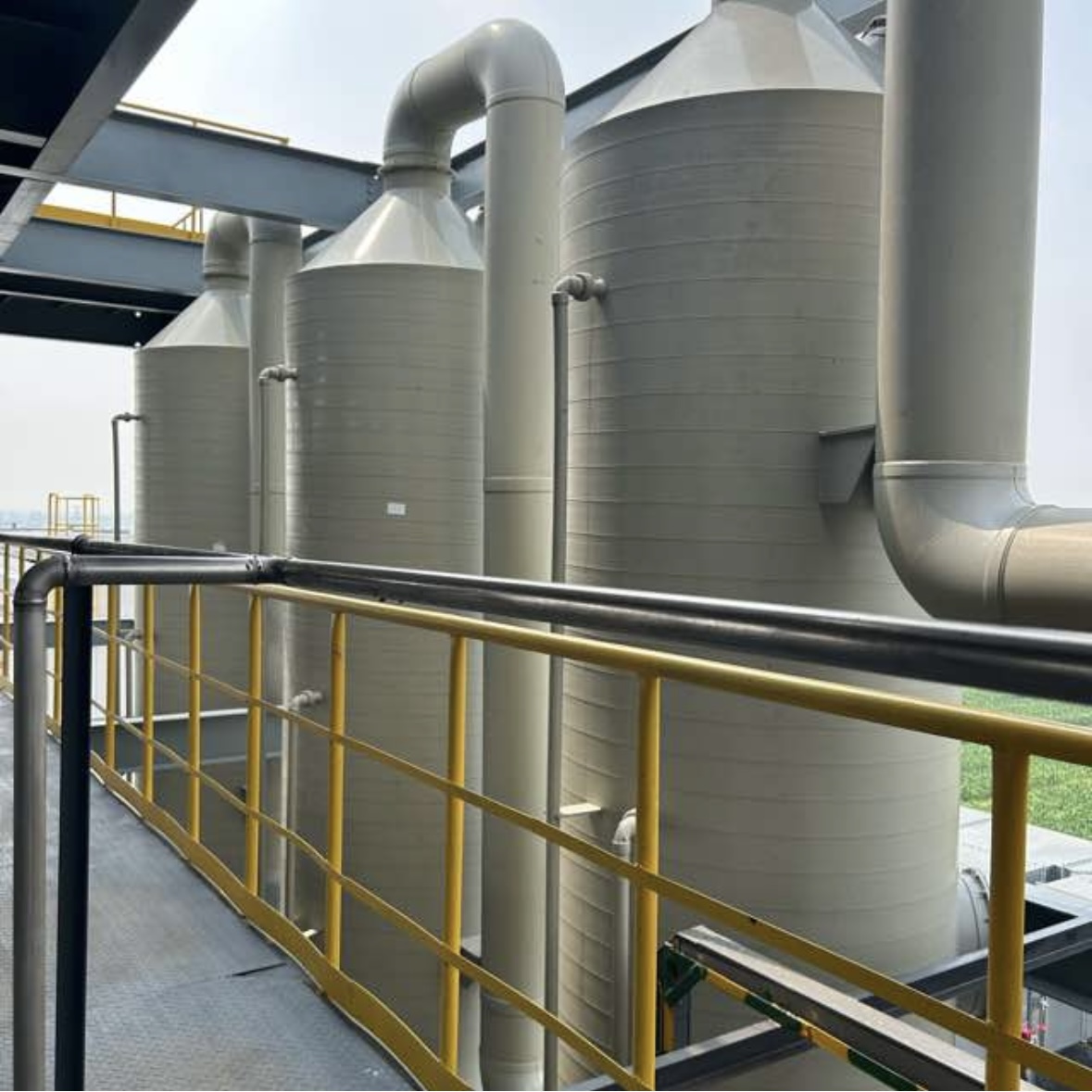
Spray Tower
A spray tower is a highly efficient wet-type exhaust gas purification device. By facilitating thorough countercurrent contact between a spray liquid and the exhaust gas within the tower, it employs chemical processes—such as absorption, neutralization, and redox reactions—to remove acidic or alkaline gases, water-soluble pollutants, and particulate matter. It is one of the most widely used primary treatment devices in industrial exhaust gas management.
View details
Process flow
1Step 2 Step 3 Step 4 Step 5
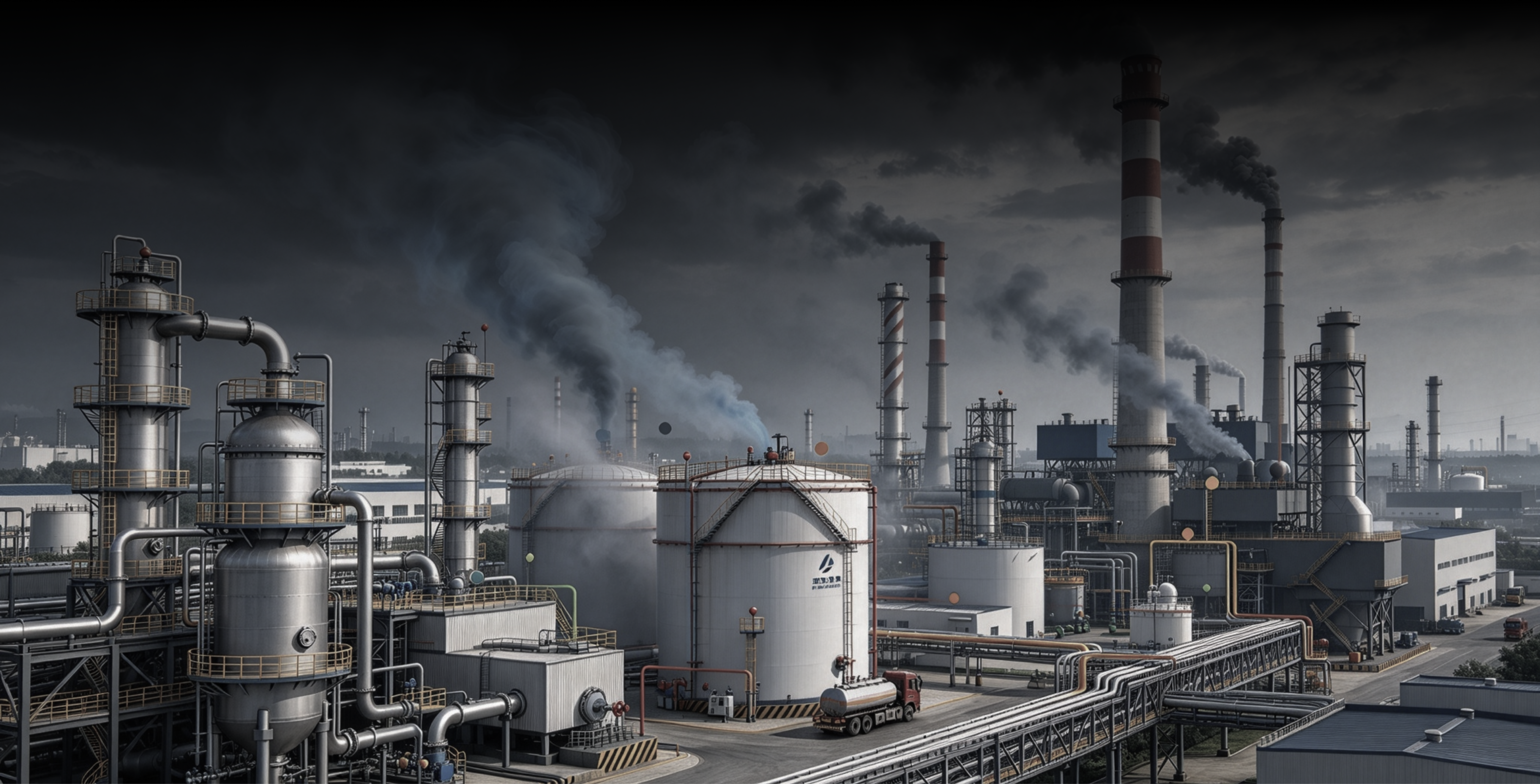
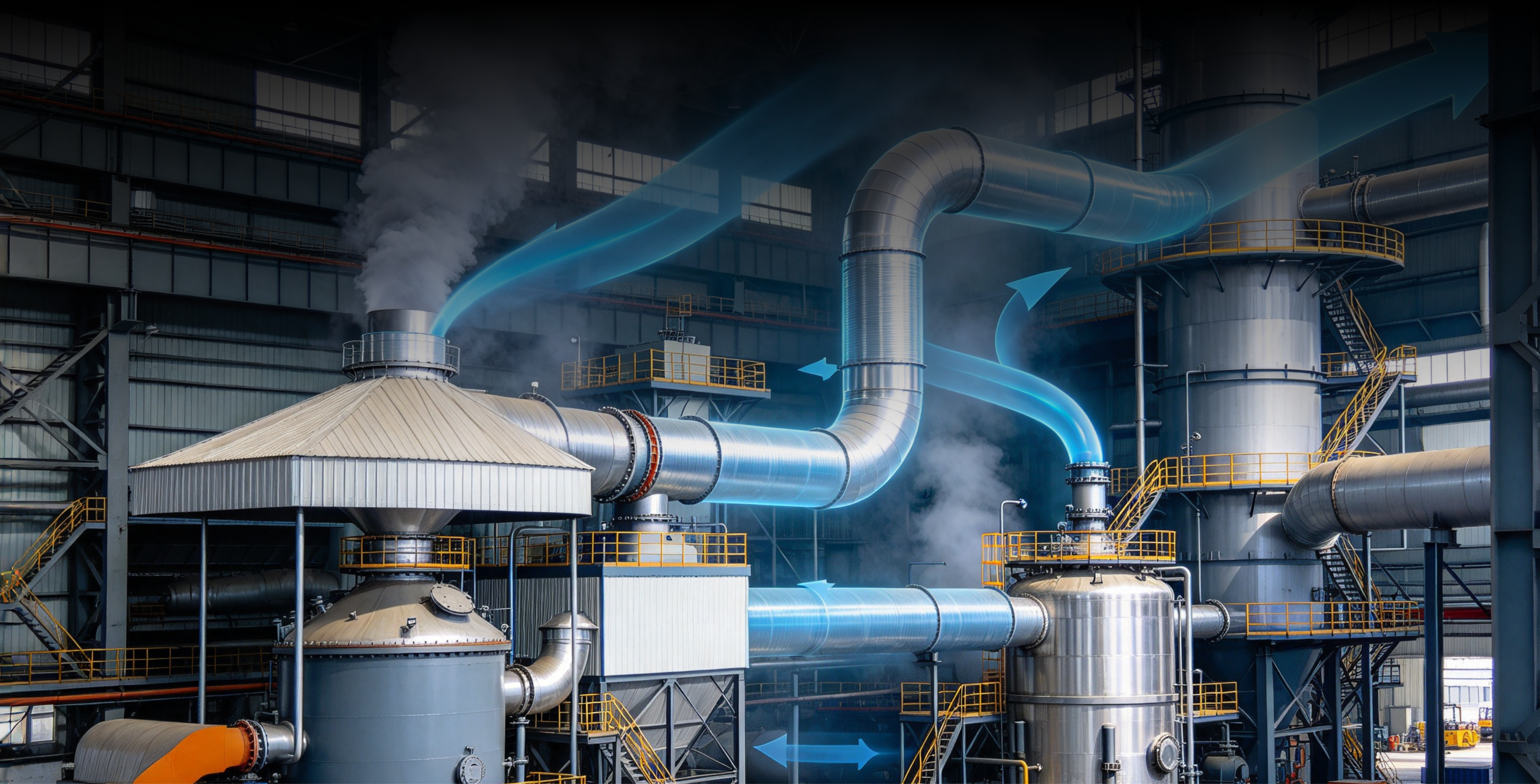
Identify pollution sources
Understand where exhaust gas is generated.
Analyze the production process, pollutants, emission concentrations, and site conditions to support the solution design.
Process flow
Step 12Step 3 Step 4 Step 5
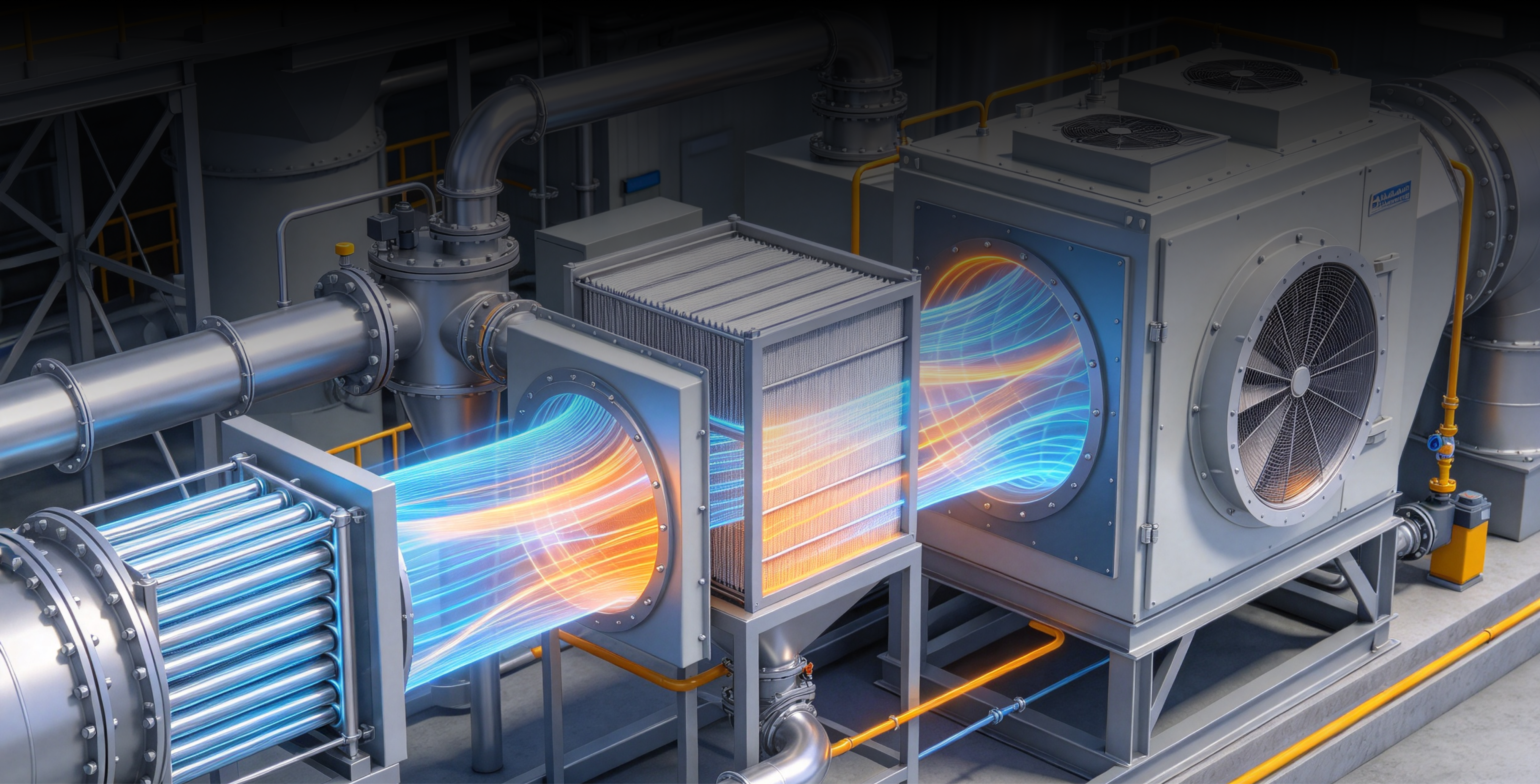
Efficient exhaust collection
Reduce fugitive dispersion and feed the treatment system steadily.
Collection hoods, enclosures, and ductwork gather polluted exhaust and deliver it to the purification equipment.
Process flow
Step 1 Step 23Step 4 Step 5
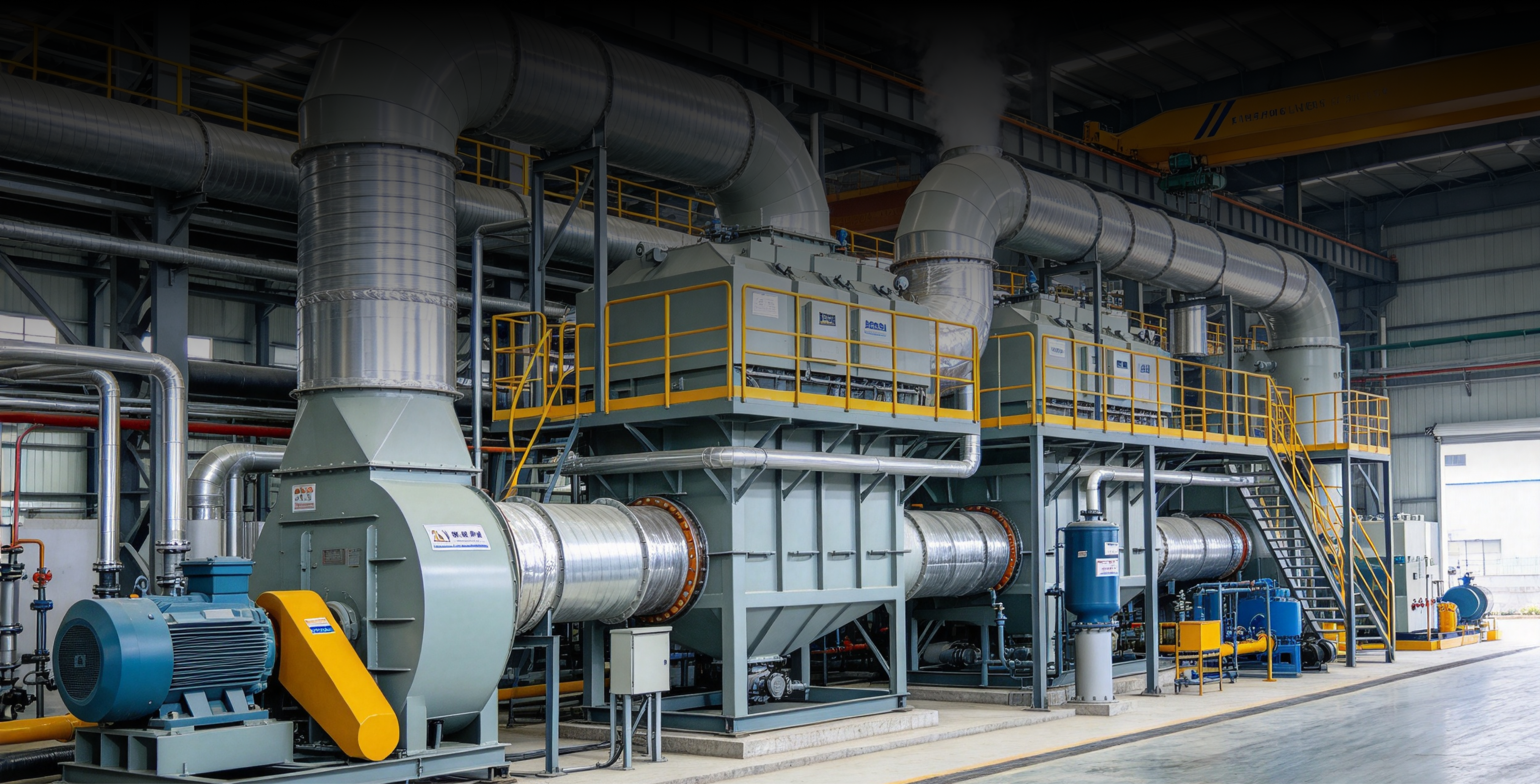
Multi-stage pretreatment
Remove interfering components first to protect the core equipment.
Cool, filter, dehumidify, and demist high-temperature gas, dust, oil mist, and water mist.
Process flow
Step 1 Step 2 Step 34Step 5
Core-process purification
Select the right treatment technology for the pollutants.
Remove pollutants through spray absorption, activated-carbon adsorption, biological deodorization, bag filtration, catalytic oxidation, and other processes.
Process flow
Step 1 Step 2 Step 3 Step 45
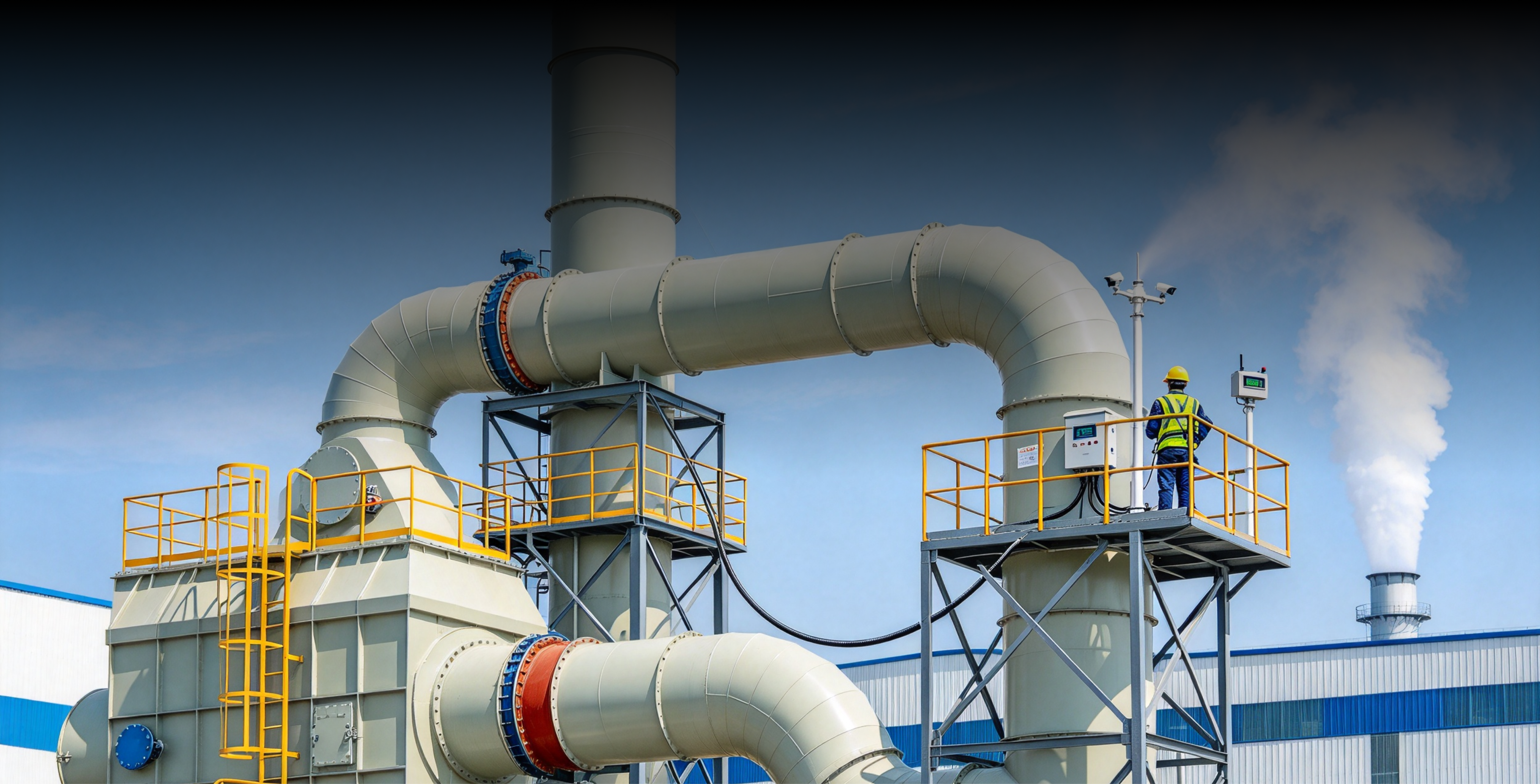
Advanced treatment and compliant discharge
Monitor continuously to ensure stable compliance.
Discharge through fans, stacks, and monitoring systems, with operation, maintenance, and performance testing carried out as required.
Solutions
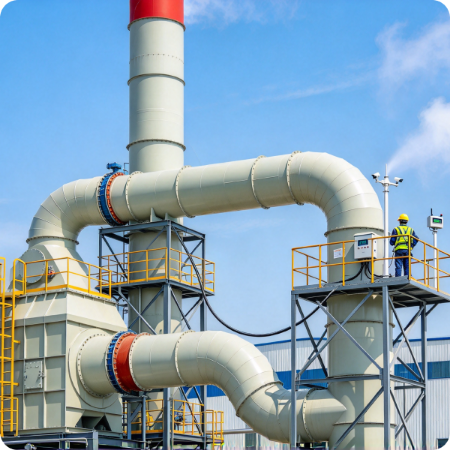
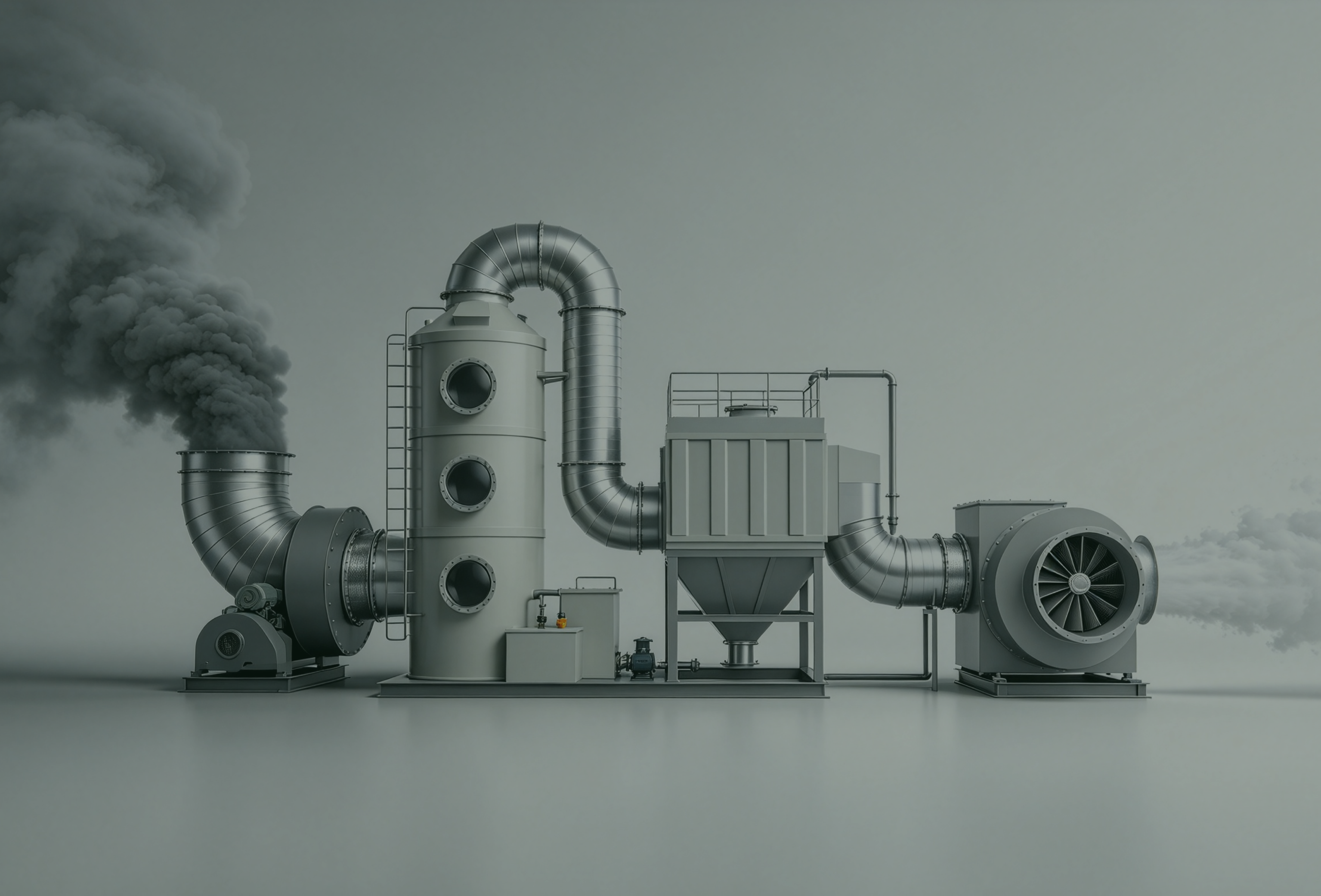
Exhaust treatment
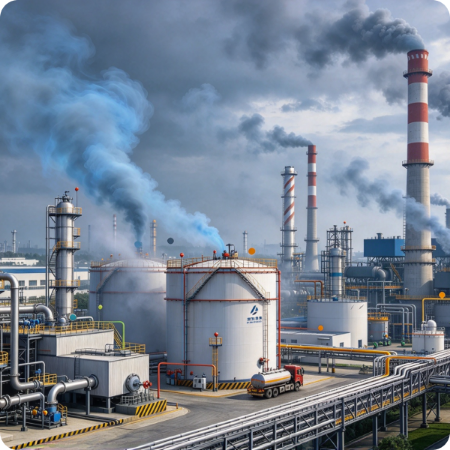
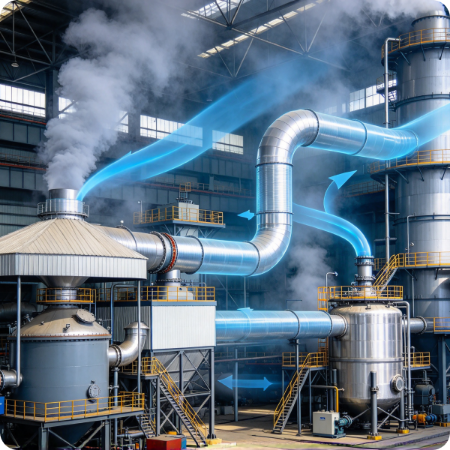
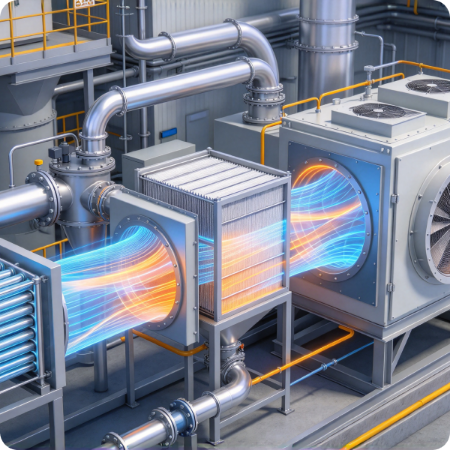
Customized industrial exhaust treatment systems provide one-stop purification for dust, acidic and alkaline gases, and VOCs while meeting environmental emission standards in different countries.
Learn more
Solutions
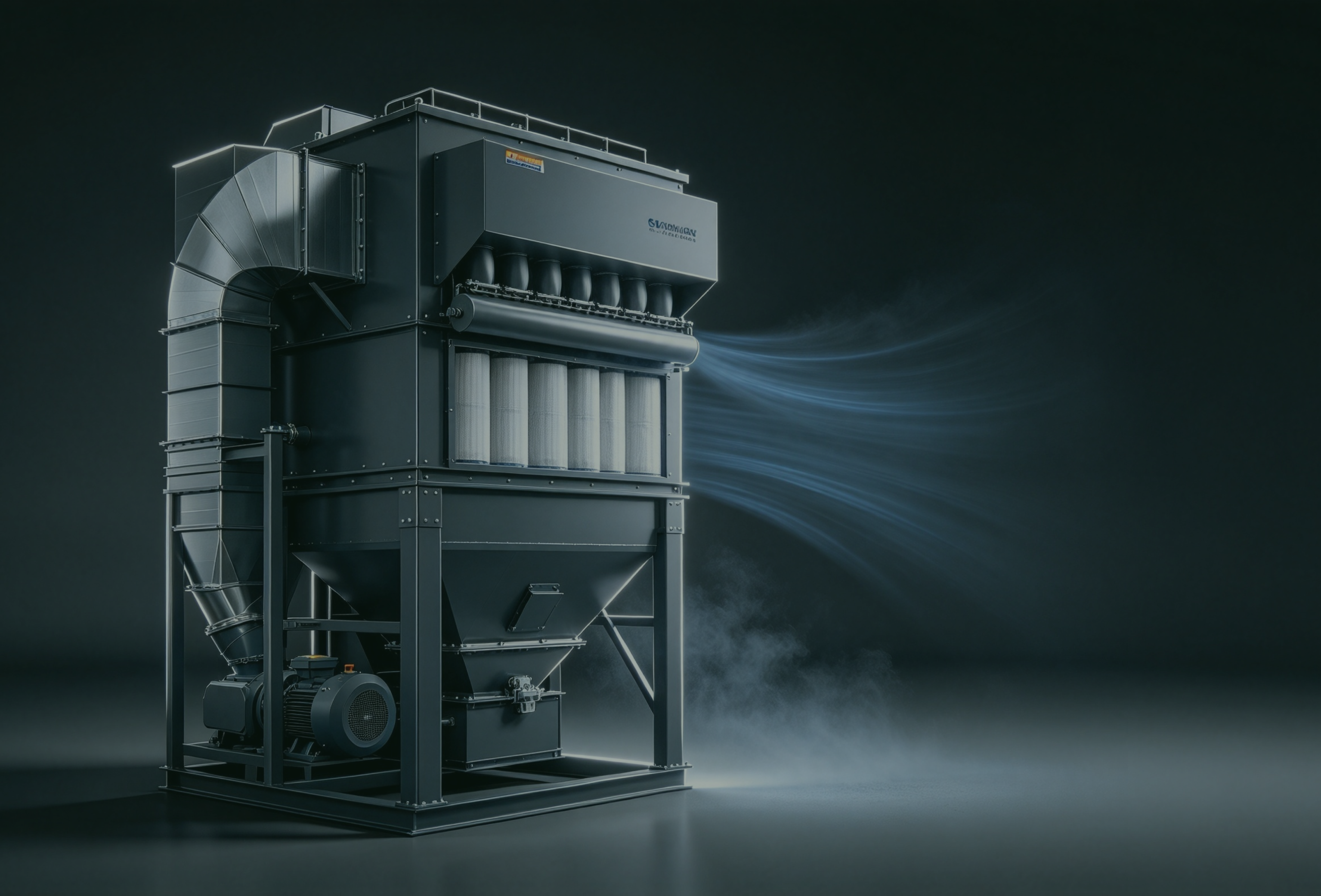
Dust removal
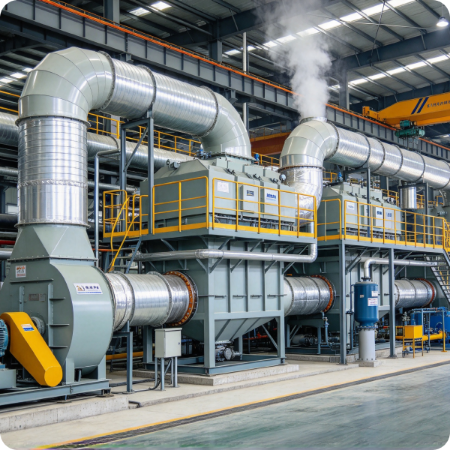
Customized industrial exhaust treatment systems provide one-stop purification for dust, acidic and alkaline gases, and VOCs while meeting environmental emission standards in different countries.
Learn more
Who we are
Shijiazhuang Bonchun Trading Co., Ltd. is based in Shijiazhuang, Hebei, and focuses on exporting industrial environmental equipment and engineering solutions. We combine R&D, manufacturing, international trade, and technical service to provide compliant, reliable one-stop environmental system solutions worldwide. With honest business practices and skilled manufacturing, backed by a complete production system, strict quality control, and extensive project experience, we provide standalone equipment, modular equipment, and complete engineering services.
Professional team and service system
Bonchun has a professional team with deep experience in environmental protection, machinery, technology, project management, and international trade.
Industry experience
We focus on environmental protection, specializing in exhaust treatment, dust removal, waste-heat recovery, and solvent separation and purification projects.
Core product range
Bonchun focuses on industrial environmental protection and resource recovery, providing a complete product range and system solutions. Our business covers VOC exhaust treatment, dust removal, waste-heat recovery, utility systems, and separation and purification equipment. Core products include spray towers, activated-carbon adsorption units, biological deodorization equipment, bag filters, heat exchangers, and distillation towers. We can customize standalone equipment, modular systems, and complete environmental engineering solutions for specific conditions.
Market coverage and international business
Supported by an established supply chain and international trade team, our products are sold across Asia, the Middle East, Africa, Europe, and South America and comply with local environmental standards.
Our expertiseTeam
We integrate industrial exhaust treatment equipment, engineering execution, logistics delivery, and customer management to provide reliable solutions for global projects.

Chris Lebon
Founder and general manager
Chris Lebon
Founder and general manager
Chris Lebon
Founder and general manager
Chris Lebon
Founder and general manager
Chris Lebon
Founder and general manager
Chris Lebon
Founder and general manager
FAQs
Answers to common questions about exhaust treatment solutions, engineering, and equipment.
View details
Company profile and capabilities
01
Water-soluble and oil-soluble mixed exhaust treatment
02
Chloride-containing corrosive exhaust treatment
03
Wastewater tank exhaust collection and deodorization
04
Finned-tube heat exchanger exhaust treatment
05
Industrial fire-water tank system
06
Distillation tower resource recovery
07
What service models does the company offer for different types of clients (such as brand owners, agents, and end users)?
* Brand Owners: We provide OEM/ODM custom development, branded production, quality management, and product upgrade support. * Distributors: We offer support for market development and product selection, sales guidance, technical training, and reliable supply of products and spare parts. * End Users: Focusing on specific operational conditions, we deliver comprehensive solutions that encompass "operational analysis and customized planning + supply of complete equipment and project implementation + full-lifecycle technical services."
What support and guarantees does the company provide for overseas and international clients?
Leveraging a professional international trade team and a robust supply chain, our products are exported extensively to numerous countries and regions across Asia, the Middle East, Africa, Europe, and South America. We provide international clients with comprehensive support—including multilingual communication, technical documentation, customized design, international logistics, installation guidance, and remote after-sales service—to ensure the efficient execution of their projects.
What equipment is included in the company’s core product and system solution portfolio?
We have established a comprehensive product portfolio, featuring core offerings such as spray towers, activated carbon adsorption units, biological deodorization equipment, absorption towers, distillation columns, resin adsorption tanks, finned-tube heat exchangers, bag/cartridge dust collectors, and industrial fire-fighting water tanks. We provide solutions tailored to client requirements, ranging from individual units and modular systems to complete, turnkey engineering solutions.
In which industry sectors does the company have a deep focus, and what key environmental challenges can it help address?
With many years of deep engagement in the field of industrial environmental protection, we provide services across a wide range of sectors, including chemicals, pharmaceuticals, new energy, advanced materials, electronics manufacturing, mechanical processing, surface treatment, and food processing. We specialize in addressing complex challenges such as the treatment of VOC emissions, acid/alkali exhaust, corrosive chlorine-containing gases, particulate matter, and industrial odors (e.g., foul smells from wastewater basins), as well as providing solutions for industrial separation, purification, and waste heat recovery.
What core service capabilities does the company’s professional team possess?
The company boasts a professional team comprising environmental engineers, mechanical design engineers, process technicians, project managers, and international trade consultants. We possess the capability to provide end-to-end services—ranging from conceptual design, equipment selection, and system integration to project implementation—and are able to deliver customized technical solutions and on-site support tailored to specific operating conditions and environmental standards.
What are the corporate positioning and core business of Shijiazhuang Benchun Trading Co., Ltd.?
Located in Shijiazhuang, Hebei Province, China, the company is a comprehensive enterprise specializing in the export of industrial environmental protection equipment and engineering solutions. Integrating R&D and design, equipment manufacturing, international trade, engineering services, and technical support, the company is dedicated to providing global industrial clients with one-stop solutions—ranging from individual units to complete environmental protection systems.
What is the purity of the solvent recovered via distillation, and can it be reused directly?
Through multi-stage fractional distillation, the recovered solvent can reach a purity of over 95% and be fed directly back into the production line for reuse, effectively reducing the enterprise's raw material procurement costs.
Does the equipment have a large footprint, and is it suitable for a small factory?
The equipment features a modular, customizable design and supports compact layouts; specifications can be adjusted based on the dimensions of the client’s facility, making it suitable for production workshops of all sizes—large, medium, and small.
Does frequent desorption of activated carbon affect its service life?
Steam desorption temperatures are controllable, ensuring thorough desorption; under normal operating conditions, the system can be used repeatedly for 1–5 years, significantly reducing the costs associated with replacing consumables.
Can the treated mixed exhaust gas meet European and American environmental emission standards?
The comprehensive treatment process employs multi-stage purification and advanced treatment techniques, ensuring that concentrations of VOCs, acidic/alkaline substances, and particulate matter in the exhaust gas are consistently maintained within international emission standards. This solution complies with the environmental regulations of various regions—including the European Union, Southeast Asia, and the Middle East—and testing reports can be provided.
How safe is the vacuum desorption process?
Low-temperature vacuum desorption eliminates the risks associated with high temperatures and high pressures. Equipped with explosion-proof, pressure-relief, and alarm systems, the process ensures safe and stable operation in compliance with international industrial safety standards.
Can the equipment handle high-concentration chlorine-containing waste gas?
Multi-stage adsorption and multi-stage scrubbing processes can be customized based on exhaust gas concentration; these systems are suitable for handling chlorine-containing waste gas across a wide range of concentrations, consistently achieving treatment efficiencies of over 98%.
Do resin adsorption materials need to be replaced frequently?
The resin can be repeatedly regenerated via vacuum desorption; under normal operating conditions, it has a service life of 3–5 years, eliminating the need for frequent replacement and resulting in very low operation and maintenance costs.
Will chlorine-containing waste gas corrode the entire set of equipment?
The entire system features a fully anti-corrosive configuration, with tower bodies, adsorption tanks, fans, and ductwork constructed from 316 or 2205-grade stainless steel. Specifically designed to withstand chloride-ion-induced corrosion, the equipment offers a service life of 8–10 years under normal operating conditions.
Is the equipment noisy, and does it affect the factory environment?
Equipped with quiet, corrosion-resistant fans and an integrated noise-reduction design, the unit operates at low noise levels, making it perfectly suited for both production and office environments within a factory complex.
Will rainy weather or high temperatures affect the deodorizing performance?
The entire system is designed to withstand outdoor temperature extremes as well as rain and snow; its sealed configuration remains unaffected by weather conditions, ensuring stable performance of the microbial population and consistently meeting deodorization standards.
Does biological deodorization require frequent replacement of microbial strains?
The specialized deodorizing microbial consortia are self-replicating; under normal operating conditions, they require only periodic, small-scale replenishment rather than frequent replacement, resulting in extremely low operation and maintenance costs.
Is there a risk of water accumulation or damage to the sealed cover plate?
The cover plate features an arched design with an integrated drainage slope to prevent water accumulation. Made from FRP or PP, it offers excellent impact and aging resistance; it is durable, resistant to breakage or deformation, and comes with a warranty of over 10 years for outdoor use.
Can the equipment's dimensions and specifications be customized?
Full-specification customization is supported; designs and production can be tailored to individual client requirements regarding airflow, temperature, site conditions, and recovery needs.
How is the heat exchange efficiency, and are the energy-saving benefits significant?
Featuring a customized, high-efficiency heat exchange structure, the system achieves a heat exchange efficiency of over 95%. This significantly reduces wear and tear on downstream equipment, while the recovery and reuse of waste heat can lower production energy consumption by more than 30%.
Is it suitable for high-temperature, highly corrosive exhaust gases?
Available in 316L or 2205 stainless steel, these units are suitable for handling highly acidic, highly alkaline, or high-temperature corrosive exhaust gases; their fully anti-corrosive construction ensures a long service life.
Are finned heat exchangers prone to dust accumulation and clogging?
Featuring a design with widely spaced corrugated fins and smooth tube walls that resist fouling, the unit incorporates a detachable, easy-to-clean structure; this allows for the rapid removal of impurities and ensures consistent heat-transfer efficiency over long-term use.
Does the intelligent system support remote monitoring?
Optional remote IoT monitoring functionality is available, enabling real-time viewing of water levels, water pressure, and equipment operating status, as well as remote early warning and remote control.
Is it suitable for outdoor, open-air installation?
The enclosure is UV-resistant, anti-aging, and weatherproof (windproof and rainproof); it features a specialized anti-corrosion design for outdoor use, allowing for long-term installation and operation in open-air environments.
What is the service life of the water tank, and is it prone to leaking?
Constructed from 304 stainless steel, the system offers a service life of over 15 years under normal use; its modular, precision-engineered assembly combined with a dual-layer sealing process completely eliminates any risk of water leakage or seepage.
Does the water tank comply with overseas industrial fire protection standards?
Our products are manufactured in strict accordance with international industrial fire safety standards. They meet all requirements regarding materials, water storage capacity, and pressure stabilization performance. We provide a complete set of qualification documentation to ensure a smooth inspection and acceptance process for our clients.
Is the equipment prone to scaling or clogging?
Featuring a smooth stainless steel tower body and high-voidage structured packing, combined with an upstream filtration system, the unit effectively prevents clogging from impurities and is easy to clean and maintain.
Is it capable of handling various mixed organic solvent waste liquids?
Multi-stage distillation processes can be customized based on the boiling point differences of components in a mixed solvent, making them suitable for the purification of various organic waste liquid mixtures, including esters, alcohols, ketones, and hydrocarbons.
Is the equipment's energy consumption high, and what are the operating costs like?
Features intelligent, precise temperature control and thermal energy recycling; offers low energy consumption and automated, unattended operation—delivering long-term returns that far exceed maintenance and operating costs.
What level of purity can the solvent recovered from a distillation column reach?
Depending on the solvent composition, a purification level of 95%–99% can be achieved—fully meeting the standards for reuse within the production line and significantly reducing raw material procurement costs.


Contact us
If you have questions or need help, contact our team for dedicated support.
We look forward to hearing from you
Submit
Online
Send email
