







View details
Industrial Exhaust Gas Treatment Equipment
1793242181000
How do activated carbon adsorption tanks recover organic solvents? An explanation of the adsorption and desorption process.
Online


Send email


Product details
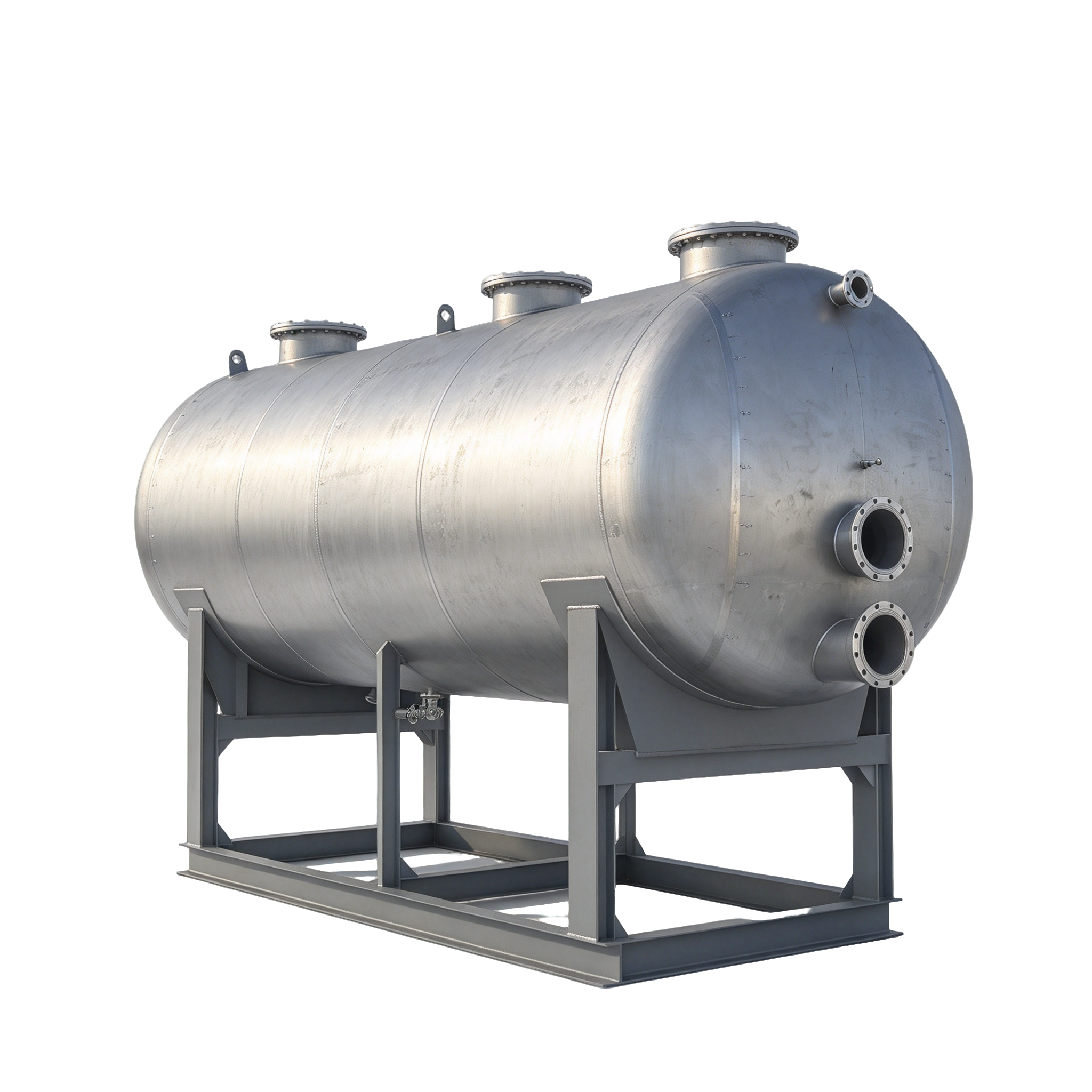
Activated carbon adsorption tank
≥99.5%
Filtration efficiency
≤10 mg/m³
Outlet concentration
Equipment Introduction
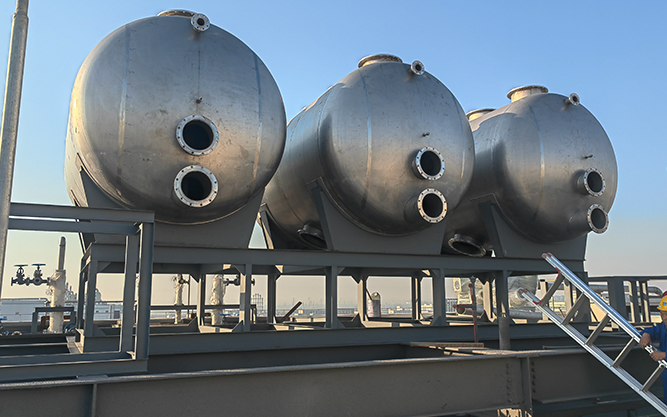
An activated carbon adsorption tank is a vertical, vessel-style adsorption unit. Designed to withstand pressure, it is primarily used for applications involving low-to-medium air volumes that require solvent recovery and the ability to regenerate the adsorbent through desorption. The tank is filled with granular activated carbon and equipped with valves and piping, enabling a cyclic adsorption-desorption operation. It can be constructed from various materials, including anti-corrosion treated carbon steel, 304 stainless steel, or 316L stainless steel. Unlike rectangular adsorption boxes, these tanks are well-suited for enclosed processes and solvent recovery systems.
Working Principle
Organic waste gas enters the vessel and passes through a bed of activated carbon, where organic components are adsorbed; the purified gas is then discharged. Once the activated carbon becomes saturated, steam or hot nitrogen is introduced to perform desorption, releasing the organic solvents, which are subsequently recovered via condensation. Following desorption, the bed is cooled, and the equipment returns to the adsorption phase. By alternating between multiple vessels, the system achieves continuous operation.
Applicable Operating Conditions
For organic waste gas streams with low to medium flow rates where solvent recovery is required; concentration range: 200–20,000 mg/m³.
Suitable for either intermittent or continuous operation; waste gas temperature ≤ 80°C.
Designed for the recovery of organic solvents (such as esters, ketones, alcohols, etc.).
Common Materials
1) Carbon steel (Q235)
Advantages: More economical; suitable for low-concentration exhaust gases and dry environments.
Disadvantages: Poor corrosion resistance; susceptible to corrosion from acids, alkalis, and moisture.
2) Stainless steel (304, 316L)
Advantages: High-temperature resistance and excellent corrosion resistance; suitable for high-humidity environments or settings containing mildly acidic or mildly alkaline gases.
Disadvantages: Higher cost.
Application Areas
Chemical industry, coating, printing, composite material production, organic solvent recovery, and laboratory exhaust gases.
Product Advantages
Enables desorption regeneration and solvent recovery, reducing material loss.
Pressure-rated, hermetically sealed vessel design ensures no exhaust gas leakage.
Multi-vessel switching allows for 24-hour continuous operation.
Automated valve control; compatible with PLC control systems.
|
model |
Airflow capacity (m³/h) |
Tank diameter (mm) |
Tank height (mm) |
Work pressure |
Material |
|
VCA-G1000 |
1000 |
1000 |
2200 |
-2000~+5000Pa |
Q235 (anti-corrosion treated) / 304 stainless steel |
|
VCA-G3000 |
3000 |
1500 |
2600 |
-2000~+5000Pa |
Q235 (anti-corrosion treated) / 304 stainless steel |
|
VCA-G5000 |
5000 |
2000 |
3000 |
-2000~+5000Pa |
304/316L stainless steel |
Key parameters: Adsorption cycle is adjustable; desorption steam pressure is 0.05–0.2 MPa; can be equipped with a condenser and separator.
Customization details: Vessel dimensions, pressure ratings, and control systems are customized according to project requirements.
Related articles
Industrial Exhaust Gas Treatment Equipment
1793242181000
How do activated carbon adsorption tanks recover organic solvents? An explanation of the adsorption and desorption process.
Industrial Exhaust Gas Treatment Equipment
1793242166000
What is the difference between an activated carbon adsorption tank and an adsorption box? How do you choose the right equipment?
Industrial Exhaust Gas Treatment Equipment
1793242151000
What parameters are required for selecting an activated carbon adsorption tank? Information on models and system configuration.
OEM
Customized for your process conditions
Get a tailored solution
FAQs
We could not find what you need. Please contact our team.
View details
What is the difference between an activated carbon adsorption tank and an activated carbon adsorption box?
Adsorption tanks feature a vertical vessel design equipped with valves and piping, making them suitable for closed-loop processes, desorption/regeneration, and solvent recovery systems. Adsorption units, by contrast, utilize a modular, drawer-style configuration and are typically employed in purification processes that require periodic replacement of the activated carbon. The selection between these options should be based on an assessment of factors such as airflow volume, exhaust gas concentration, the need for solvent recovery, and the specific operational requirements.
What are the materials and specifications for activated carbon adsorption tanks?
Available material options include anti-corrosion treated carbon steel, 304 stainless steel, or 316L stainless steel. The VCA-G1000, VCA-G3000, and VCA-G5000 models listed have air treatment capacities of 1,000, 3,000, and 5,000 m³/h, respectively. Specific vessel dimensions, materials, and pressure parameters are determined based on the model and project requirements.
What is the applicable temperature range for an activated carbon adsorption tank?
The product specifications indicate an exhaust gas temperature of ≤80°C. Actual operating conditions must be determined by taking into account the composition of the exhaust gas, the characteristics of the activated carbon, and the specific adsorption and desorption processes.
Can an activated carbon adsorption tank operate continuously?
Continuous operation can be achieved by switching between multiple vessels, allowing for adsorption and desorption processes to take place across different units. Whether the system can meet a 24-hour operational requirement must be verified during the design phase, based on factors such as the exhaust gas flow rate, adsorption cycle duration, desorption and cooling times, and the specific configuration of the vessels.
How is solvent recovery achieved using an activated carbon adsorption tank?
As organic waste gas passes through a bed of granular activated carbon within a vessel, the organic components are adsorbed. Once the activated carbon becomes saturated, it can be regenerated by introducing steam or hot nitrogen; the desorbed solvents are then recovered using auxiliary equipment such as condensers. The specific regeneration method and recovery efficiency depend on the properties of the solvents and the design of the system.
What kind of waste gas are activated carbon adsorption tanks primarily used to treat?
Primarily used for the treatment of organic waste gas with low to medium flow rates; it is particularly well-suited for applications involving the recovery of organic solvents or processes where the adsorbent can be desorbed and regenerated. It is applicable for concentrations ranging from 200 to 20,000 mg/m³; however, its actual suitability should be determined based on the specific composition of the waste gas and the process conditions.


Contact us
If you have questions or need help, contact our team for dedicated support.
We look forward to hearing from you
Submit
Online
Send email