







View details
Dust removal equipment
1793242808000
How Do Grinding and Dust-Removal Workbenches Collect Dust? An Explanation of Their Operating Principle and Dust-Clearing Process
Online


Send email


Product details
Grinding and Dust-Extraction Workstation
≥99.5%
Filtration efficiency
≤10 mg/m³
Outlet concentration
Product Definition
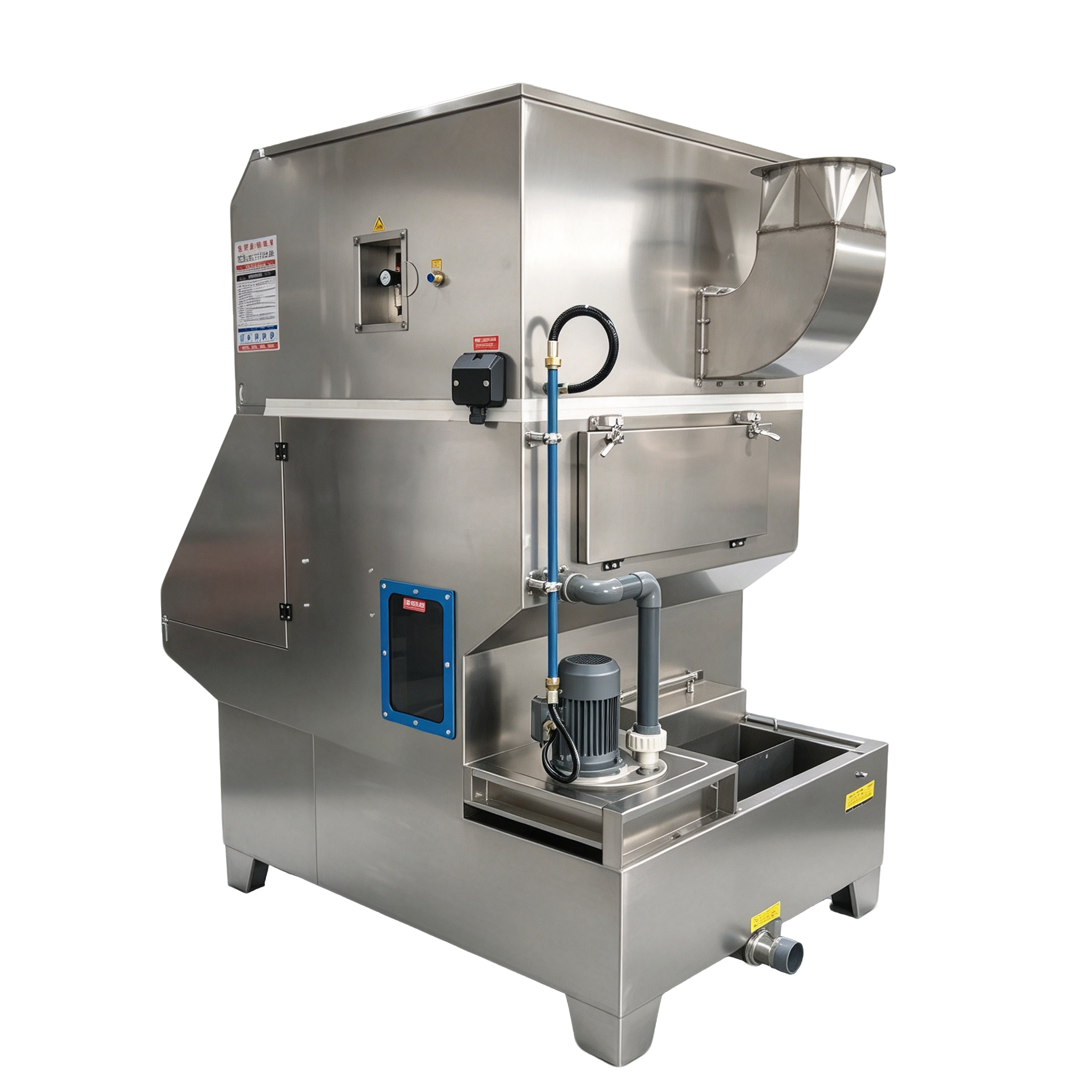
The grinding and dust-extraction workbench is an integrated, dry-type dust-removal system that combines a workstation, dust capture, purification/filtration, and automatic dust discharge. It is specifically designed for dry-process operations that generate dust, such as grinding, polishing, cutting, and deburring. The workbench surface features built-in suction inlets, allowing dust generated during operations to be captured on-site via negative pressure. The dust is then purified through an internal filtration unit, while an automatic pulse-jet cleaning mechanism regenerates the filter media, enabling continuous operation. With a dust-removal efficiency exceeding 99.5% and outlet emission concentrations as low as 10 mg/m³ or less, this unit significantly improves the workshop environment. It serves as a specialized dust-control solution for metal processing, as well as for grinding and polishing operations involving castings.
Working Principle
During grinding and polishing operations performed on the workbench, the dust generated is drawn downward and toward the rear—through intake ports on the workbench surface—into the unit’s internal chamber by means of negative pressure. Larger dust particles settle into the dust collection drawer at the bottom due to gravity, while finer particles are carried by the airflow into the filtration chamber, where they are captured by filter cartridges. Clean, filtered air then passes through the filter media and is exhausted from the unit by a fan. As dust accumulates on the surface of the filter media, the operating resistance of the system increases; a pulse controller then triggers electromagnetic pulse valves at set intervals, releasing a blast of compressed air (0.4–0.6 MPa) to dislodge the accumulated dust from the filter cartridges, causing it to fall into the collection drawer. This cleaning process does not interrupt ongoing grinding operations, and the dust collection drawer can be removed for periodic emptying, allowing for continuous equipment operation.
Applicable Operating Conditions
Dry Dust Treatment: For dry dust—both metallic and non-metallic—generated during processes such as metal grinding, casting polishing, weld grinding, deburring, and small-scale cutting.
Applicable Dust Types: Iron filings/dust, aluminum filings/dust, plastic dust, and composite material dust; can be configured with anti-static features for handling combustible dust.
Operating Temperature: Standard ambient conditions (≤60°C); not suitable for high-temperature flue gas, high-humidity environments, or highly adhesive dust.
System Negative Pressure: ≤3000 Pa.
Not suitable for dust-laden air containing moisture or significant oil/grease, which could cause the filter media to clog or "blind."
Application Areas
Widely used in sectors such as machining plants, hardware foundries, auto parts manufacturing, mold workshops, stainless steel processing, furniture hardware production, composite material processing, new energy component grinding, and handicraft polishing. It provides on-site dust collection for grinding, polishing, and deburring stations, and can also be integrated into production lines for targeted dust control.
Product Advantages
High Dust Removal Efficiency: Filtration efficiency ≥99.5% with an outlet concentration ≤10 mg/m³; ensures a dust-free workshop environment and compliance with environmental emission standards.
On-Source Dust Capture: Dust is captured at the point of generation, preventing it from spreading throughout the workshop and improving the working environment for operators.
Automatic Pulse Cleaning: Features dual-mode (timed or pressure-differential triggered) pulse-jet cleaning, enabling long-term continuous grinding operations with minimal maintenance requirements.
Versatile Filter Media Options: Available with polyester, PTFE-membrane, or anti-static filter cartridges, suitable for various applications—from general dust to explosive or combustible particulate matter.
Robust and Durable Construction: Equipped with a thickened steel-plate work surface that is wear-resistant and impact-proof; the unit features a welded sheet-metal housing with a powder-coated, anti-corrosion finish.
Easy Operation and Maintenance: Includes a pull-out dust collection drawer at the base for simple debris removal, and a quick-access front maintenance door for rapid installation or replacement of filter cartridges.
Integrated Design: Combines a fan, filtration system, cleaning mechanism, and grinding workbench into a single, compact unit; easy to install—simply connect to a power source and it is ready for use.
Table of Common Models and Specifications
|
Specification |
Device dimensions (length × width × height, mm) |
Plate thickness configuration (mm) |
Common Materials |
|
Single station |
2400×1600×2400 |
2-5 |
304 |
|
Dual-station |
2400×3200×2400 |
2-5 |
304 |
Customization details: The workbench dimensions, height, and the material of the enclosure can all be customized to suit the client's specific operating conditions.
Related articles
Dust removal equipment
1793242808000
How Do Grinding and Dust-Removal Workbenches Collect Dust? An Explanation of Their Operating Principle and Dust-Clearing Process
Dust removal equipment
1793242789000
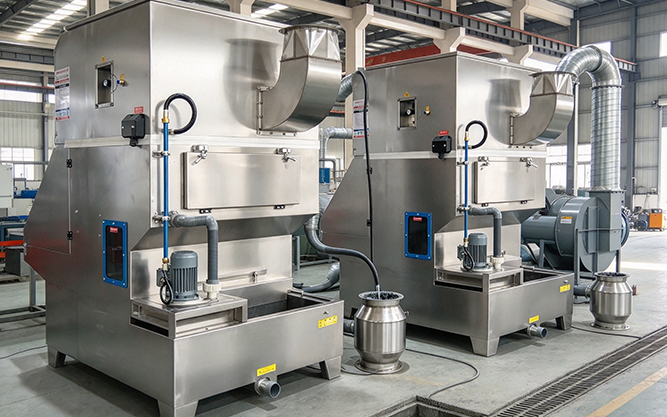
Single-Station or Dual-Station? Dimensions and Station Layout for Grinding and Dust-Extraction Workbenches
Dust removal equipment
1793242770000
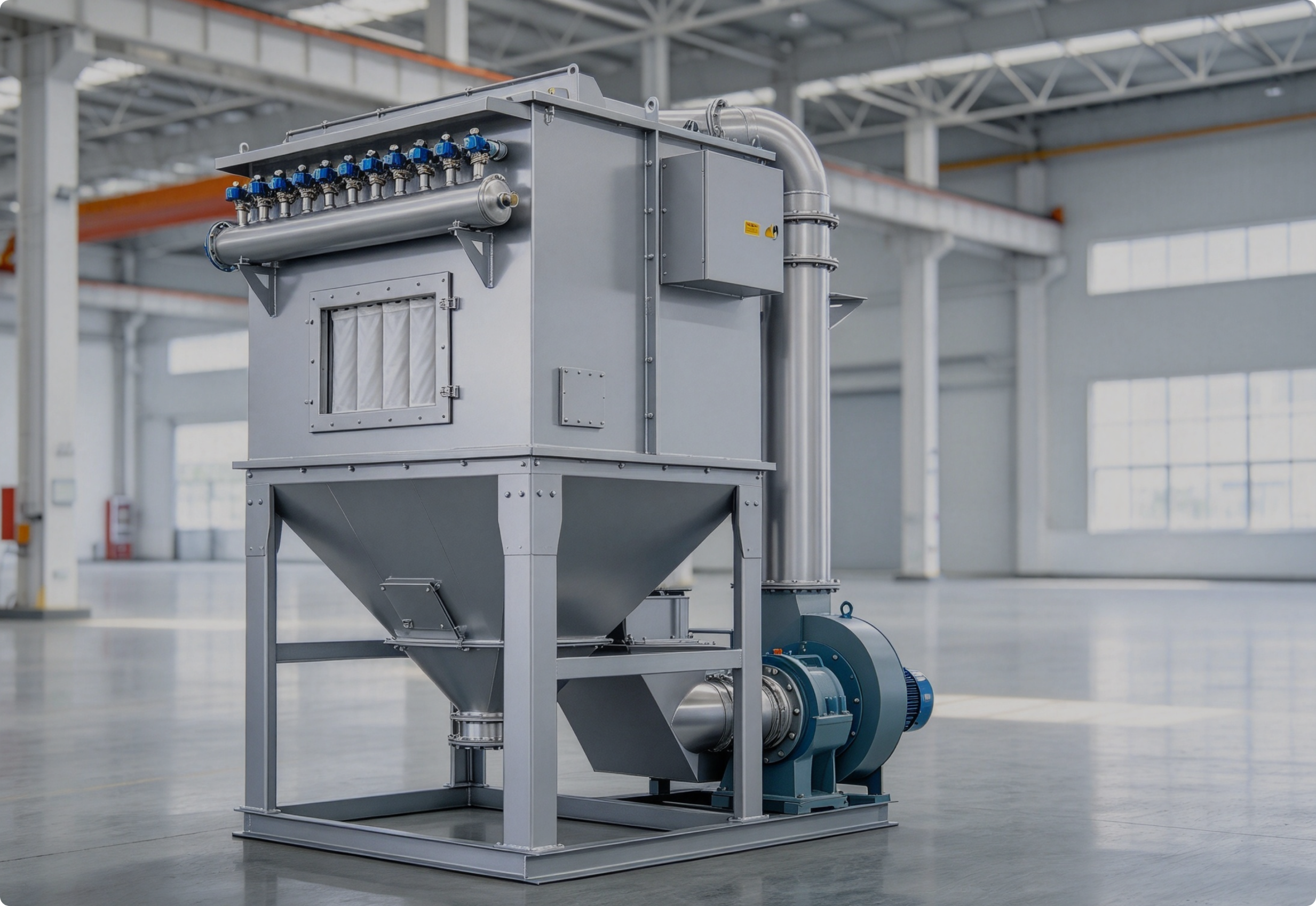
How to Select Filter Media for Grinding Dust? Operational Constraints, Maintenance, and Safety Requirements
OEM
Customized for your process conditions
Get a tailored solution
FAQs
We could not find what you need. Please contact our team.
View details
What are the dust removal efficiency and filtration method of the equipment?
The filtration efficiency is ≥99.5%, with an outlet concentration of ≤10 mg/m³. Filter cartridge options include polyester media, PTFE-membrane-coated media, or anti-static media. Actual performance may vary based on factors such as dust characteristics, filter media configuration, operating airflow, and equipment sealing; specific performance metrics shall be determined by the project design and test results.
For what types of dust and operating conditions are grinding and dust-extraction workstations suitable?
Suitable for dry operating conditions at ambient temperature; the specified parameters are a temperature of ≤60°C and a system negative pressure of ≤3000 Pa. It is not suitable for applications involving high temperatures, high humidity, high moisture or oil content, or dust that is highly adhesive and prone to clogging the filter media.
What are the available dimensions and workstation configurations for the workbenches?
There are two common configurations: single-station and dual-station. The single-station unit measures 2400 × 1600 × 2400 mm, while the dual-station unit measures 2400 × 3200 × 2400 mm. Workbench dimensions, height, and enclosure configuration can be customized based on the specific site layout and operational requirements.
How do sanding and dust-removal workstations collect and purify dust?
When a workpiece is being processed on the work surface, dust is drawn into the unit through the intake vents by means of negative pressure. Larger particles settle into the dust collection drawer at the bottom, while finer particles are captured by the filter cartridges. As dust accumulates on the cartridges, a pulse-jet cleaning system clears the filter media surface, causing the dislodged dust to fall into the drawer for convenient periodic removal.
For which processes are grinding and dust-extraction workstations suitable?
Suitable for dry, dust-generating workstations—such as those involving metal grinding, casting polishing, weld seam grinding, deburring, and small-scale cutting—this equipment can be used for the on-site collection of dust, including iron filings, aluminum shavings, plastics, and composite material particles. Specific suitability should be determined based on the characteristics of the dust and on-site safety requirements.


Contact us
If you have questions or need help, contact our team for dedicated support.
We look forward to hearing from you
Submit
Online
Send email