







View details
Industrial Exhaust Gas Treatment Equipment
1793242253000
How Do Biological Deodorization Units Treat Malodorous Waste Gas? An Explanation of Working Principles and Purification Processes
Online


Send email


Product details
Biological Deodorization Unit
≥99.5%
Filtration efficiency
≤10 mg/m³
Outlet concentration
Equipment Introduction
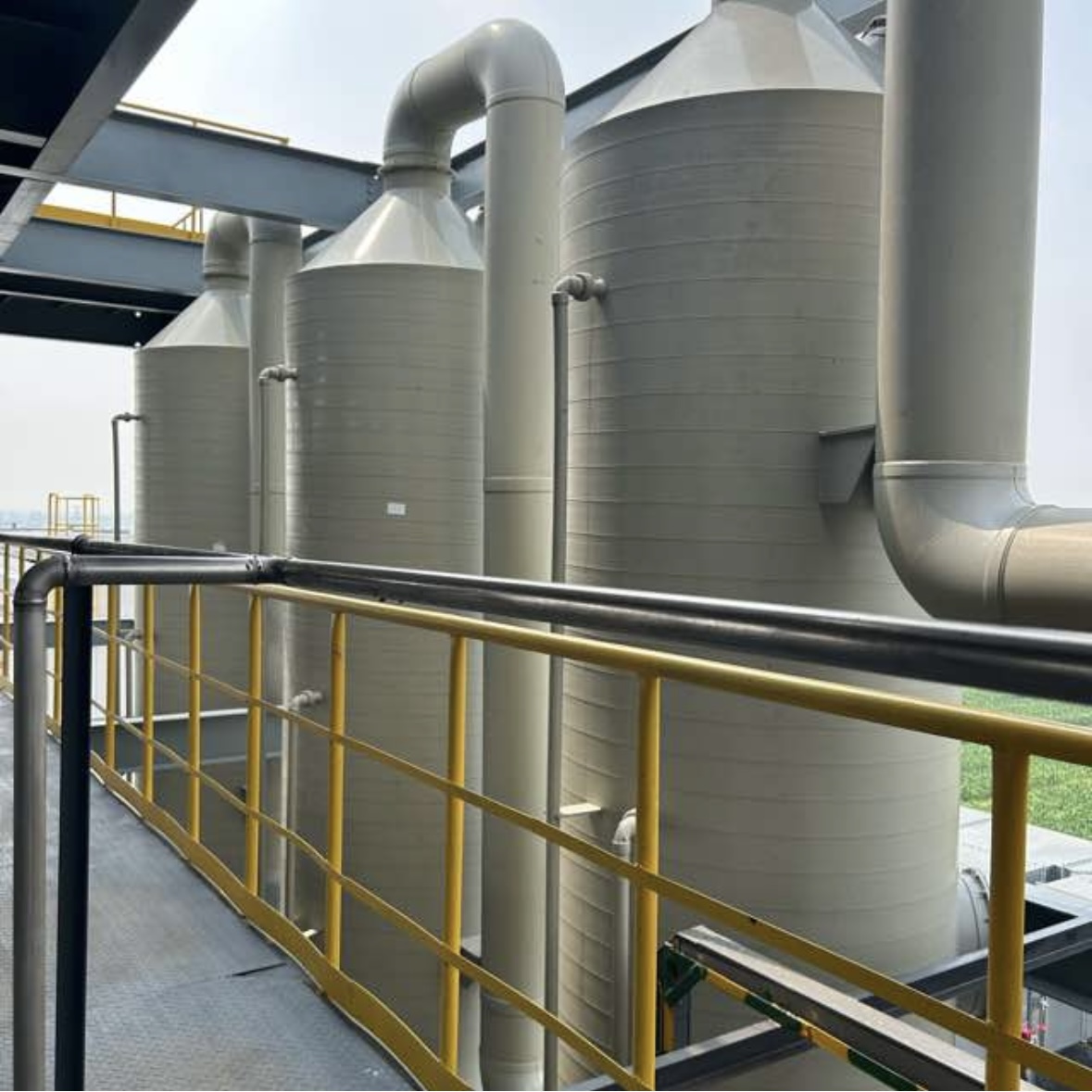
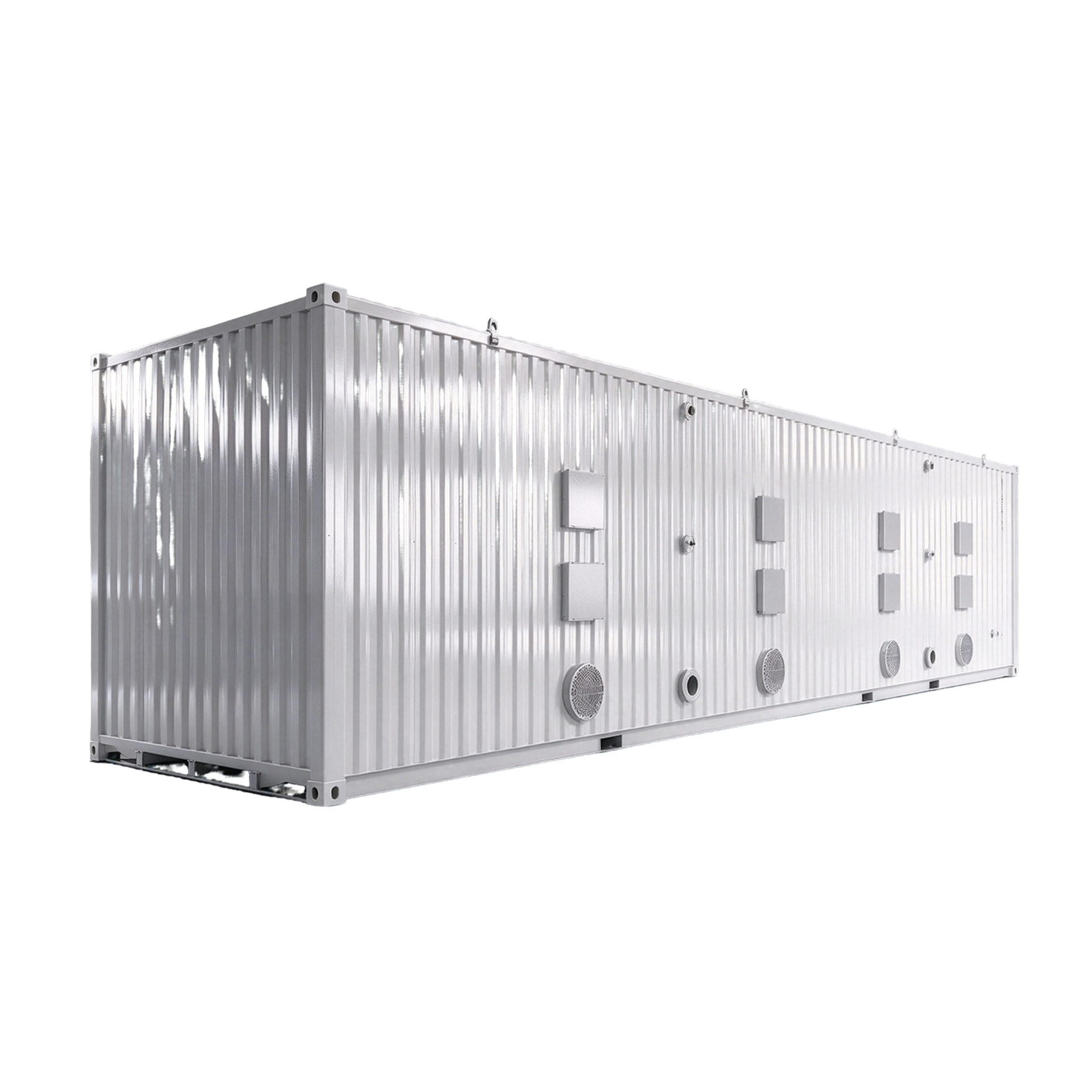
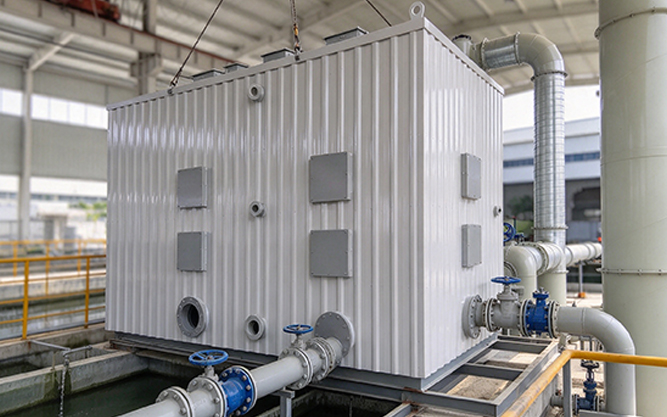
A biological deodorization unit is a system for purifying waste gas through biological processes. It utilizes microbial metabolism to break down substances such as hydrogen sulfide, ammonia, and other volatile odorous compounds. The unit contains biological packing material, the surface of which hosts a population of acclimated, odor-degrading microorganisms. As the waste gas passes through the system, it is first humidified via a spray process before entering the biological filter bed, where the pollutants are degraded by the microorganisms into harmless substances such as carbon dioxide and water.
Working Principle
The malodorous exhaust gas first passes through a pre-scrubbing stage, where it is humidified and its temperature is adjusted, before entering a biological filter bed. Odorous molecules in the gas are adsorbed by the packing material, where microorganisms—thriving on the packing—oxidize and decompose these odorous compounds, converting them into CO₂, H₂O, and inorganic salts. The purified gas is then discharged in compliance with emission standards. A spray system maintains the moisture level of the packing material, ensuring a suitable environment for the survival of the microorganisms.
Applicable Operating Conditions
Malodorous gases such as hydrogen sulfide, ammonia, and mercaptans; low-concentration odors; VOCs (with a preference for readily biodegradable components).
Inlet gas temperature: 15–40°C; the waste gas must not contain substances with strong bactericidal or toxic properties.
Treatment capacity: 500–100,000 m³/h; larger specifications can be customized.
Application Areas
Treatment of odorous emissions from wastewater treatment plants, sludge dewatering facilities, waste transfer stations, livestock and poultry farms, food fermentation processes, pharmaceutical plants, and rubber factories.
Product Advantages
Biodegradable process with low chemical consumption and reduced operating costs
High deodorization efficiency, with an odor removal rate of ≥95%
Stable operation with no secondary pollution
Modular housing design, allowing for capacity expansion through parallel unit configuration
|
model |
Airflow volume (m³/h) |
External dimensions (length × width × height) in mm |
Packing height |
Material |
|
BOT‑5000 |
5000 |
3000×1500×2200 |
1200mm |
FRP (Fiberglass Reinforced Plastic) / Carbon Steel Anti-Corrosion |
|
BOT‑10000 |
10000 |
4200×2000×2400 |
1200‑1500mm |
FRP (Fiberglass Reinforced Plastic) / Carbon Steel Anti-Corrosion |
|
BOT‑20000 |
20000 |
5500×2500×2600 |
1200‑1500mm |
FRP (Fiberglass Reinforced Plastic) / Carbon Steel Anti-Corrosion |
Key parameters: Residence time ≥ 15–25 s; equipment pressure drop 600–1000 Pa; includes a circulating spray system and liquid level control.
Customization: Airflow capacity, housing material, and packing type can all be designed to non-standard specifications.
Related articles
Industrial Exhaust Gas Treatment Equipment
1793242253000
How Do Biological Deodorization Units Treat Malodorous Waste Gas? An Explanation of Working Principles and Purification Processes
Industrial Exhaust Gas Treatment Equipment
1793242226000
Where Can Biological Deodorization Units Be Used? Common Sources of Odor and Operational Requirements
Industrial Exhaust Gas Treatment Equipment
1793242208000
How to Select a Biological Deodorization Unit: Airflow Volume, Packing Height, and Equipment Configuration
OEM
Customized for your process conditions
Get a tailored solution
FAQs
We could not find what you need. Please contact our team.
View details
What is the deodorization efficiency of a biological deodorization unit, and what auxiliary systems are required?
The odor removal efficiency is ≥95%; the system is equipped with a circulating spray mechanism and liquid-level control. Actual performance may vary depending on the composition, concentration, and temperature of the exhaust gas, as well as specific operating conditions; these factors should be verified based on project-specific testing and applicable emission requirements.
What are the available models and packing heights for biological deodorization units?
The models listed include the BOT-5000, BOT-10000, and BOT-20000, with corresponding air volumes of 5,000, 10,000, and 20,000 m³/h, respectively. The packing heights are 1200 mm for the BOT-5000, and 1200–1500 mm for both the BOT-10000 and BOT-20000. The unit dimensions, materials, and packing configuration can be determined or customized based on specific project requirements and operating conditions.
What is the treatment air volume range for a biological deodorization unit?
The equipment’s air treatment capacity ranges from 500 to 100,000 m³/h; larger specifications can also be customized based on project requirements. The specific model should be determined by considering factors such as the exhaust gas flow rate, the nature of the pollutants, the required residence time, and on-site installation conditions.
For what temperature ranges and exhaust gas conditions are biological deodorization units suitable?
The provided data specifies an inlet air temperature range of 15–40°C. The waste gas must not contain highly bactericidal or toxic substances, as these could impair microbial activity. For actual projects, it is also necessary to verify the composition and concentration of the waste gas, as well as other operating conditions that might affect the biological treatment process.
How do biological deodorization units purify waste gas?
The malodorous waste gas first passes through a pre-scrubbing stage, where it is humidified and its temperature is adjusted, before entering a biological filter bed. Microorganisms on the surface of the packing material adsorb and decompose the odorous components in the waste gas, converting them into substances such as carbon dioxide, water, and inorganic salts. A spray system is used to maintain the moisture level of the packing material, providing a suitable environment for the microorganisms.
What types of malodorous gases are primarily treated by biological deodorization units?
It is primarily used for treating malodorous gases such as hydrogen sulfide, ammonia, and mercaptans; it can also be applied to low-concentration VOCs containing readily biodegradable components. Its specific suitability should be evaluated based on the composition, concentration, and biodegradability of the waste gas.


Contact us
If you have questions or need help, contact our team for dedicated support.
We look forward to hearing from you
Submit
Online
Send email