







View details
Dust removal equipment
1793242999000
How to Choose Anti-Corrosion Treatment for Filter Cages? A Comparison of Cold Galvanizing, Hot-Dip Galvanizing, Spray Coating, and Stainless Steel
Online


Send email


Product details
Filter cage
≥99.5%
Filtration efficiency
≤10 mg/m³
Outlet concentration
Equipment Introduction
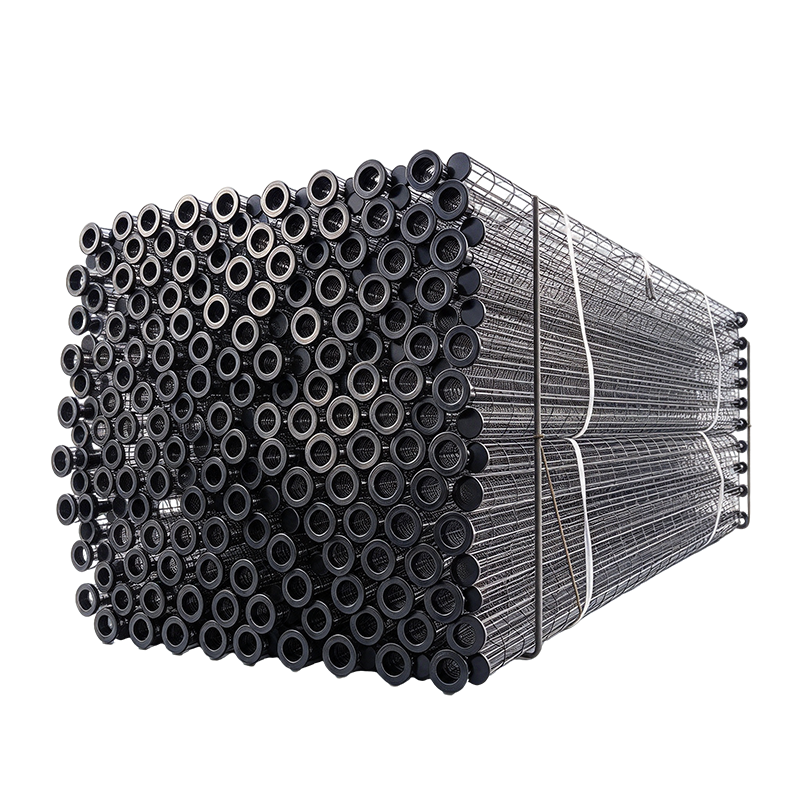
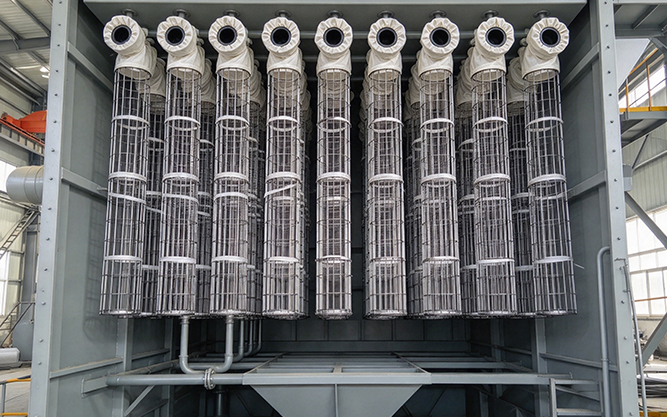
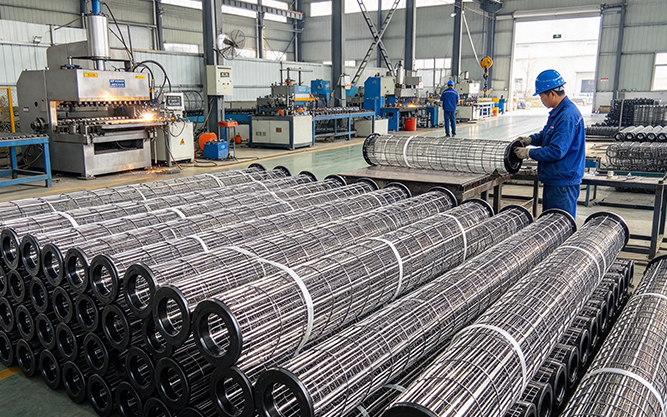
A filter cage (dust collector skeleton) is a metal framework used inside a fabric filter dust collector to support the filter bags. It maintains the shape of the bags and ensures the effectiveness of pulse-jet cleaning. Constructed by welding longitudinal ribs and circumferential rings, the cage is treated with an anti-corrosion coating. These cages are available in single-piece or multi-section (interlocking) designs and serve as a core component of fabric filter dust collectors.
Application Areas
Comprehensive pulse-jet bag filter solutions for applications in metallurgy, construction materials, chemicals, boilers, waste incineration, woodworking, and grain processing.
Product Advantages
Welds are robust, with weld points ground smooth to prevent damage to the filter bags;
Various anti-corrosion treatments are available, suitable for operating conditions ranging from ambient temperature up to 220°C;
Available in single-section or multi-section configurations, accommodating requirements for long filter bags intended for overseas export.
Parameters and Specifications
Diameter: φ100, φ120, φ125, φ130, φ133, φ150, φ160, φ180, φ200 mm
Length: 500–8000 mm (customizable)
Longitudinal wires: 8, 10, 12, 16, 20, 24
Steel wire diameter: 3.0 mm, 3.2 mm, 3.5 mm, 4.0 mm, 5.0 mm
Horizontal ring spacing: 100 mm, 150 mm, 200 mm
Top configuration: Spring-type, flange-type, chuck-type, Venturi-type
Connection method: Plug-in, butt-joint, threaded, snap-fit
Customization details: All dimensions, anti-corrosion treatments, and structural configurations can be tailored to meet the requirements of overseas projects.
Applicable Operating Conditions (by Material Category)
|
Material Classification |
definition |
advantage |
shortcoming |
Applicable Operating Conditions |
Inapplicable operating conditions |
|
Cold-galvanized (electro-galvanized) filter bag cage |
Electrochemical galvanizing of carbon steel, resulting in a thin zinc coating |
Low cost, bright appearance; provides standard rust protection at room temperature. |
The zinc coating is thin, making it prone to rusting in highly humid, corrosive environments. |
Dust collection for ambient-temperature, dry dust—applicable to woodworking, grain handling, and general mining operations. |
High humidity, high salt spray, corrosive flue gas, waste incineration |
|
Hot-dip galvanized filter cage |
Carbon steel immersed in molten zinc, resulting in a thick zinc-alloy layer |
Superior corrosion resistance compared to cold galvanizing; moisture-resistant with a long service life. |
Higher cost than cold galvanizing; potential for zinc nodules or burrs. |
Standard boilers, general operating conditions in cement, metallurgical, and mining industries, and outdoor equipment |
Highly corrosive flue gas containing strong acids, strong bases, high levels of chlorine, and high levels of sulfur |
|
Epoxy-coated filter bag cage |
Electrostatic epoxy resin coating on carbon steel following rust removal and phosphating |
Resistant to weak acids and weak bases; smooth surface protects the filter bag; good electrical insulation properties. |
Low upper temperature limit (≤120°C) |
Mildly corrosive operating conditions at ambient temperature; dust removal for woodworking machinery |
Operating conditions involving high-temperature flue gas, severe corrosion, and large pressure differentials |
|
Silicone-coated filter bag cage |
High-temperature resistant, anti-corrosive silicone coating for carbon steel frameworks |
Withstands high temperatures of 150–220°C; commonly used in asphalt mixing plants. |
Poor coating processes can lead to delamination and an inability to withstand severe corrosion. |
Medium-to-high-temperature flue gas from boilers, asphalt mixing plants, and cement kiln tail ends |
Flue gas characterized by strong acids, strong bases, and high chloride ion concentrations (which cause corrosion) |
|
304 Stainless Steel Filter Bag Cage |
All-304 stainless steel welding |
Highly corrosion-resistant, high-temperature resistant, and long-lasting |
High cost; risk of pitting corrosion in environments containing chloride ions. |
Chemical, pharmaceutical, and food industries; high-humidity, corrosive flue gases |
Very low budget, typical usage scenario (performance exceeds requirements) |
Related articles
Dust removal equipment
1793242999000
How to Choose Anti-Corrosion Treatment for Filter Cages? A Comparison of Cold Galvanizing, Hot-Dip Galvanizing, Spray Coating, and Stainless Steel
Dust removal equipment
1793242980000
How to Determine Filter Bag Cage Dimensions? An Explanation of Diameter, Length, and Connection Structure
Dust removal equipment
1793242931000
Single-Section or Multi-Section Filter Cages? Considerations for the Transport and Installation of Long Filter Bags
OEM
Customized for your process conditions
Get a tailored solution
FAQs
We could not find what you need. Please contact our team.
View details
How can one prevent filter bags from being scratched or worn by the cage?
It should be verified that the longitudinal bars and circumferential rings are securely welded, with weld points and surfaces finished to be smooth. Additionally, ensure that the diameter and length of the filter cage are compatible with the filter bag. The presence of burrs, deformation, or rust on the surface of the filter cage may increase the risk of wear on the filter bag during both installation and operation.
How should one choose between a single-section filter cage and a multi-section plug-in (modular) filter cage?
A single-piece structure is suitable for equipment where length and transport conditions permit; a multi-section, plug-in (interlocking) design facilitates segmented transport and on-site assembly, making it appropriate for applications such as those involving longer filter bags. When making a selection, it is also necessary to ensure compatibility regarding the cage connection method, available installation space, and the structure of the filter bags.
What dimensions and structural configurations can be customized for filter cages?
The diameter ranges from φ100 to φ200 mm, with customizable lengths between 500 and 8000 mm. Specifications such as the number of longitudinal wires, wire diameter, spacing of transverse rings, top design, and connection method can also be selected according to requirements. When customizing, please verify the dimensions of the filter bags, the aperture size of the dust collector’s tube sheet, and the installation structure.
What is the difference between cold-galvanized and hot-galvanized filter cages?
Cold galvanizing produces a thinner zinc coating at a lower cost and is suitable for general operating conditions, such as dry environments at ambient temperatures. Hot-dip galvanizing, by contrast, provides a thicker zinc coating with superior moisture resistance, making it appropriate for applications involving standard boilers, cement production, metallurgy, and outdoor equipment. Neither method is suitable for environments exposed to strong acids, strong alkalis, or highly corrosive flue gases.
What are the common anti-corrosion treatments for filter cages?
Common types include cold galvanizing, hot-dip galvanizing, epoxy coating, silicone coating, and 304 stainless steel. Since each treatment method is suited to different temperature, humidity, and corrosive conditions, the choice should be based on the actual flue gas operating conditions.
What is the function of a filter cage in a fabric dust collector?
A filter cage—also known as a dust collector cage—consists of welded longitudinal wires and circumferential rings. It serves to support the filter bag, maintain its shape, and facilitate dust removal via pulse-jet cleaning. The quality of the welds and the surface treatment can also affect the installation of the filter bag and the risk of wear during operation.


Contact us
If you have questions or need help, contact our team for dedicated support.
We look forward to hearing from you
Submit
Online
Send email