







Submit
Phone
Online


Send email


Product details
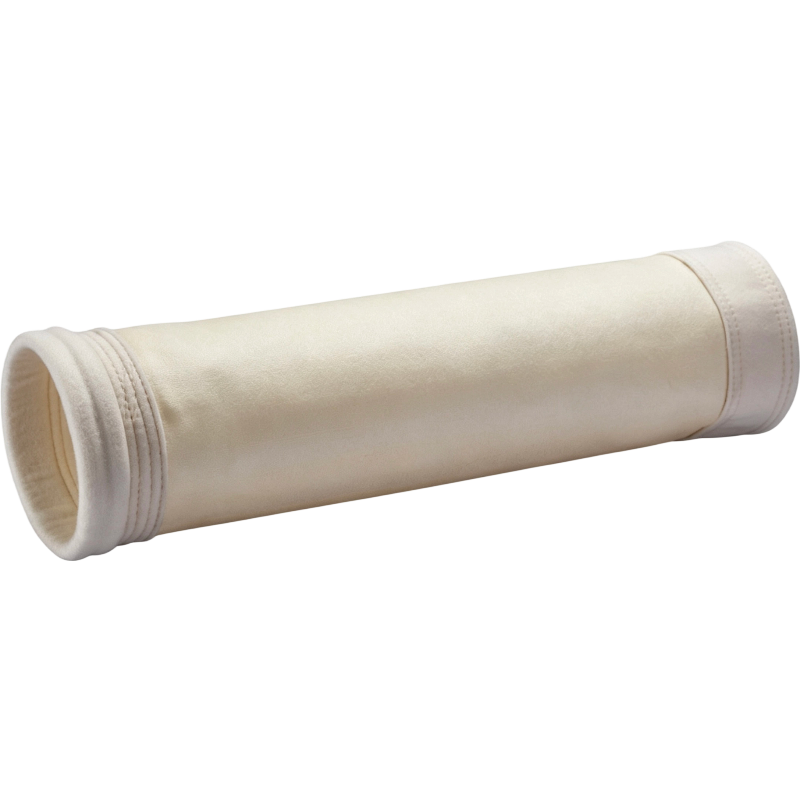
Acrylic filter bag
≥99.5%
Filtration efficiency
≤10 mg/m³
Outlet concentration
Equipment Introduction
Dust filter bags (also known as filter sleeves) serve as the core filtration components in fabric-filter dust collectors, directly determining dust removal efficiency, operational resistance, and service life. Manufactured from needle-punched felt or woven filter media using specialized sewing techniques, these bags capture dust particles through a combination of mechanisms—including inertial impaction, interception, diffusion, electrostatic attraction, and filtration via an initial dust layer—making them essential components for achieving ultra-low emission levels.
Applicable Operating Conditions
Dry dust at ambient temperatures (≤120°C): Polyester needle-punched felt
Sulfur-containing flue gas from coal-fired boilers (≤190°C): PPS needle-punched felt
High-temperature industrial furnaces/kilns (≤200–260°C): Nomex, P84, or PTFE
High-humidity, oily, or ultra-fine dust: PTFE-membrane-laminated filter media; oil- and water-repellent treatments
Highly corrosive flue gas: PTFE filter bags
Customizable dimensions: diameter Φ120–200 mm, length 1000–8000 mm
Types, Parameters, and Specifications of Filter Bags
Full Range of Filter Media: Specifications, Operating Conditions, Advantages, and Parameters
Polyester (PET) Needle-Punched Felt Filter Bags: Temperature resistance ≤130°C; suitable for dry, neutral dust at ambient temperatures. Offers high cost-effectiveness, excellent abrasion resistance, and good air permeability. Can be enhanced with "three-proof" treatments (water-repellent, oil-repellent, and anti-static) or membrane lamination; widely used for general industrial dust collection.
Anti-Static Polyester Filter Bags: Blended with modified conductive fibers to provide a high level of explosion protection. Designed for flammable and explosive dusts—such as coal, aluminum, or wood dust—to prevent static accumulation and eliminate the risk of dust explosions.
Membrane-Laminated Polyester Filter Bags: Feature an ePTFE microporous membrane (pore size 0.2–0.5 μm) on the surface. Prevents the penetration of ultra-fine dust, ensures thorough cleaning, and avoids "blinding" (clogging) of the bag. Ideal for applications requiring ultra-low emissions or involving ultra-fine dust.
Polypropylene (PP) Needle-Punched Felt Filter Bags: Temperature resistance ≤90°C; highly resistant to strong acids, strong alkalis, and hydrolysis. The preferred choice for chemical pickling processes, corrosive flue gas, and high-humidity operating environments.
PPS (Polyphenylene Sulfide) Filter Bags: Long-term temperature resistance of 160–190°C; resistant to sulfur and weak acids. Specifically designed for sulfur-containing flue gas from coal-fired boilers and industrial kilns; offers excellent aging resistance and a long service life.
Acrylic (Medium-Temperature) Filter Bags: Temperature resistance 120–140°C; resistant to mild acids and alkalis. A cost-effective solution for medium-temperature applications; suitable for small-to-medium kilns and the low-temperature sections of cement plants.
Nomex (Aramid) Filter Bags: Long-term temperature resistance of 200–220°C; exhibits superior abrasion and heat resistance. Suitable for high-temperature flue gas applications, such as asphalt mixing plants and metallurgical processes.
P84 (Polyimide) Filter Bags: Long-term temperature resistance of 240–260°C; features a unique, non-circular fiber structure that provides exceptionally high filtration precision. Suitable for waste incineration, glass kilns, and high-temperature flue gas containing strong oxidizing agents. PTFE Filter Bags: Capable of withstanding temperatures from -200°C to 260°C; resistant to strong acids, strong alkalis, severe corrosion, and oxidation. Designed specifically for extreme chemical environments, these bags offer an exceptionally long service life.
Standard Specifications: Fabric weight ranges from 450 to 800 g/m². Custom shapes—including circular, non-standard, and large-diameter configurations—are available. The bag openings and bottoms are reinforced, and construction options include both heat-sealing and sewing techniques.
Customization Services: Tailored dimensions, modifications for specific operating conditions, membrane lamination, explosion-proof designs, and anti-corrosion treatments.
Selection Table for Common Filter Media Materials
|
Filter media material |
Grammage |
Continuous temperature resistance |
Instantaneous temperature resistance |
Typical Applicable Operating Conditions |
|
Polyester needle-punched felt (PET) |
550 g/㎡ |
≤120℃ |
150℃ |
Dust from woodworking, building materials, and grain, as well as dust generated during ambient-temperature drying processes |
|
Oil- and Water-Repellent Polyester Needle-Punched Felt |
550 g/㎡ |
≤120℃ |
150℃ |
Moist and oily waste gas, such as that from steel plant converters |
|
Anti-static polyester needle-punched felt |
550 g/㎡ |
≤120℃ |
150℃ |
Explosive dusts such as pulverized coal, aluminum powder, and flour |
|
PPS needle-punched felt |
550 g/㎡ |
≤190℃ |
220℃ |
Flue gas from coal-fired boilers, waste incineration, and processes containing sulfur oxides |
|
Nomex |
550 g/㎡ |
≤200℃ |
240℃ |
Asphalt mixing, industrial furnaces and kilns, high-temperature flue gas |
|
P84 needle-punched felt |
550 g/㎡ |
≤260℃ |
280℃ |
Cement kiln tail, glass furnace, and high-temperature dust-laden flue gas |
|
PTFE-laminated polyester |
550 g/㎡ |
≤120℃ |
150℃ |
Ultrafine dust, high-humidity operating conditions, ultra-low emissions |
|
PTFE-laminated PPS |
550 g/㎡ |
≤190℃ |
220℃ |
Ultra-low emission retrofitting of coal-fired boilers |
|
Pure PTFE needle-punched felt |
600 g/㎡ |
≤260℃ |
280℃ |
Highly corrosive, high-temperature chemical flue gas |
Standard specifications: common diameter Φ130mm, standard length 2000mm (customizable from 1000mm to 8000mm)
OEM
Customized for your process conditions
Get a tailored solution


Contact us
If you have questions or need help, contact our team for dedicated support.
We look forward to hearing from you
Submit
Online
Send email