







View details
Distillation column
1793243252000
How does a distillation column separate mixtures? An explanation of the processes at the top, the bottom, and the reflux system.
Online


Send email


Product details
Distillation column
≥99.5%
Filtration efficiency
≤10 mg/m³
Outlet concentration
Equipment Introduction
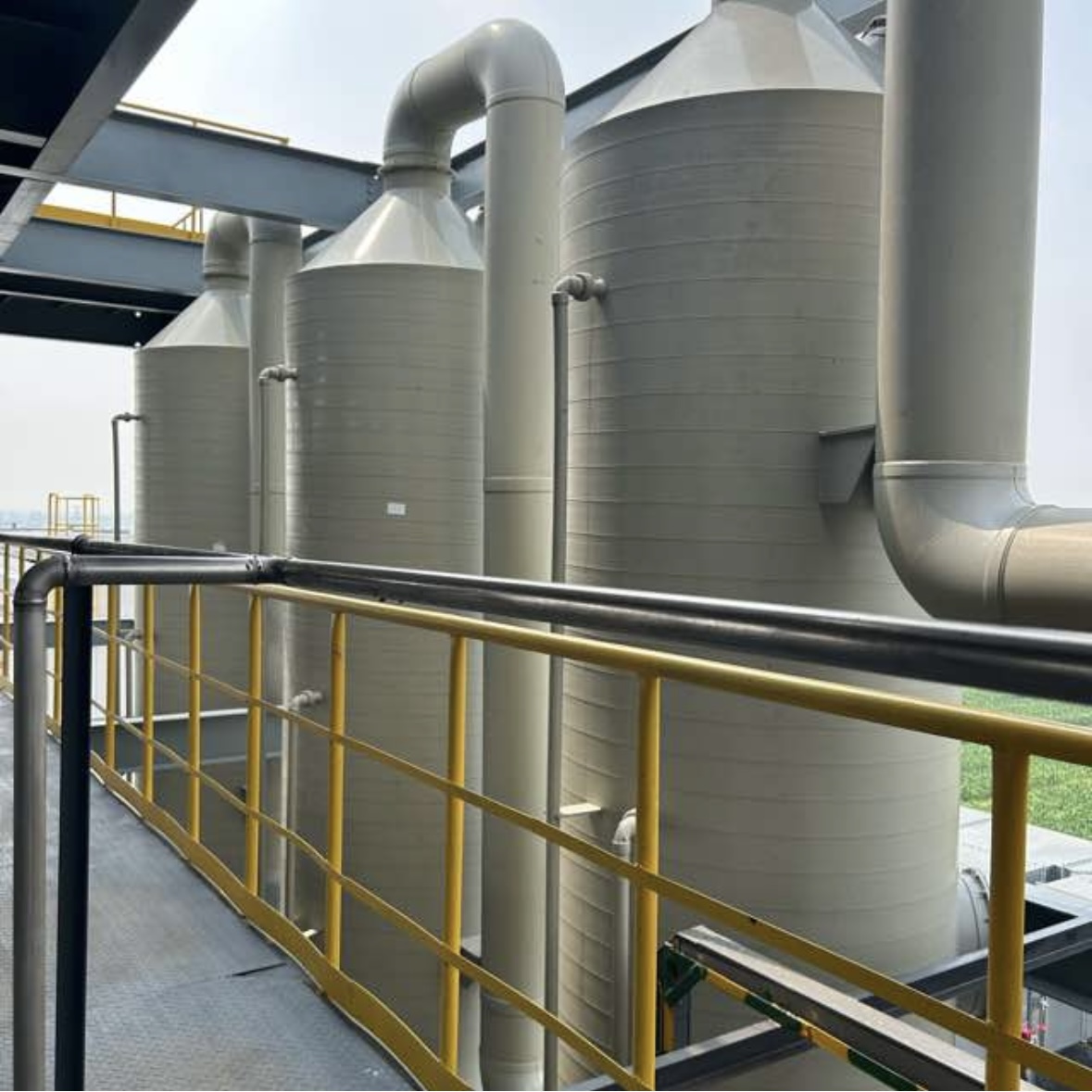
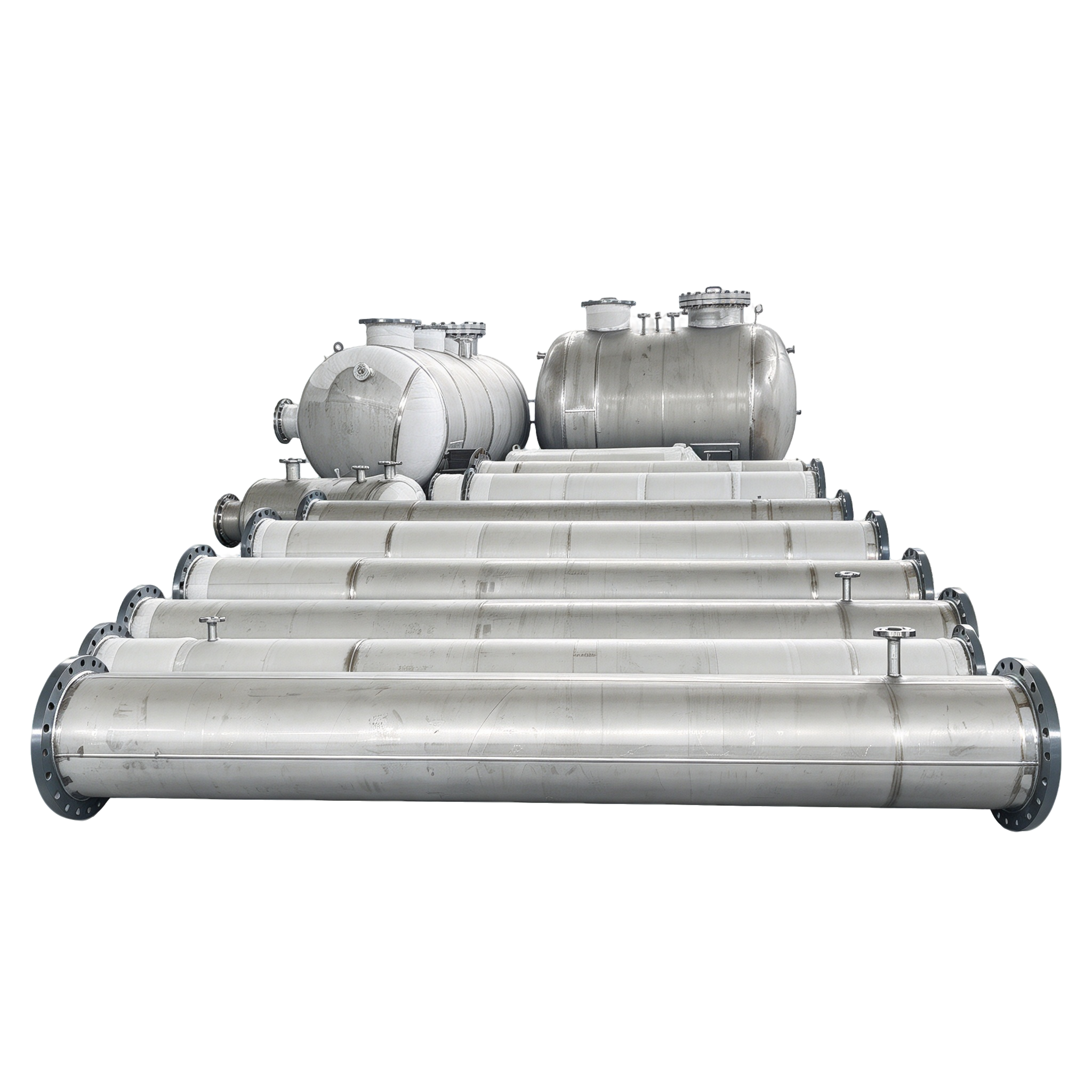
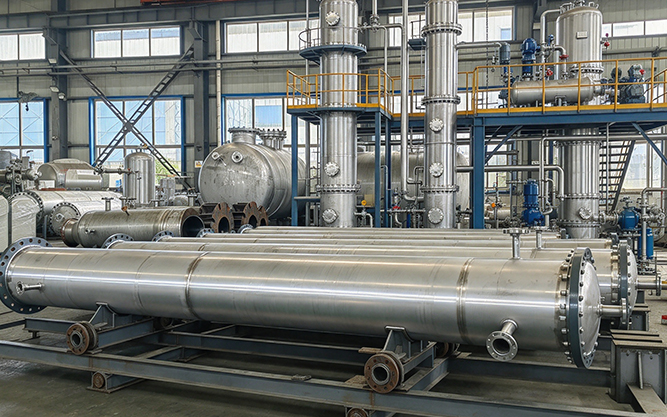
A distillation column is a core mass-transfer device used in chemical separation. It leverages differences in the volatility (boiling points) of components within a mixture, employing repeated partial vaporization and partial condensation—occurring throughout the column—to achieve the high-purity separation of liquid mixtures. Distillation columns are widely utilized across sectors such as petrochemicals, fine chemicals, pharmaceuticals, food processing, and environmental solvent recovery. They enable continuous, large-scale, high-purity separation processes, with separation efficiencies reaching over 99%.
Working Principle
The liquid mixture to be separated is preheated and fed into the distillation column through an inlet located in the middle section. A reboiler at the bottom of the column heats the liquid, causing partial vaporization, and the resulting vapor rises through the column. At the top, a condenser converts the rising vapor back into a liquid; a portion of this condensate is returned to the top of the column as reflux, flowing downward. As the rising vapor and the descending reflux come into countercurrent contact—either on trays or across the surface of packing material—repeated heat and mass transfer occur: the more volatile components (light components) preferentially transfer into the vapor phase, while the less volatile components (heavy components) preferentially transfer into the liquid phase. With a sufficient number of theoretical stages, a high-purity light-component product is obtained at the top of the column, and a high-purity heavy-component product is recovered from the bottom, thereby achieving the continuous distillation separation of the mixture.
Applicable Operating Conditions
Separation of liquid mixtures: Separation of binary or multi-component systems with a boiling point difference of ≥5°C
Solvent recovery: Recovery and purification of organic solvents such as methanol, ethanol, acetone, toluene, and ethyl acetate
Fine chemicals: Fractional distillation and purification of intermediates, monomers, fragrances, and pharmaceutical raw materials
Petrochemicals: Crude oil fractionation, light hydrocarbon separation, and aromatics separation
Food and pharmaceuticals: Alcohol distillation, purification of natural extracts, and recovery of pharmaceutical-grade solvents
Operating pressure: Atmospheric, reduced (vacuum), or elevated pressure
Operating temperature: Determined by the specific material system; typically ≤300°C
Material Selection
1. Common Materials
1) Carbon Steel
Advantages: Low cost; suitable for handling non-corrosive materials and media with mild corrosivity.
Disadvantages: Not suitable for handling strong acids, strong bases, or highly corrosive substances.
2) Stainless Steel (304, 316L)
Advantages: Good corrosion resistance; 316L, in particular, is suitable for more aggressive acidic or alkaline media.
Disadvantages: High material cost.
3) Plastic-Lined (e.g., PTFE-lined)
Advantages: Excellent corrosion resistance; suitable for environments involving strong acids and bases.
Disadvantages: Limited mechanical strength.
2. Suitability of Materials for Different Operating Conditions
For ambient-temperature, non-corrosive materials (e.g., ethanol distillation): Carbon steel is an economical and practical choice.
For environments involving weak acids, weak bases, or moisture (e.g., distillation of acidic substances): 304 stainless steel.
For high-temperature and highly corrosive environments (e.g., media containing strong acids or chlorides): 316L stainless steel.
Application Areas
Continuous distillation/separation and solvent recovery systems for industries such as petrochemical plants, fine chemical plants, pharmaceutical plants, pesticide plants, fragrance/flavor manufacturing plants, food processing plants, new energy material plants, electronic chemical plants, and waste solvent recovery centers.
Product Advantages
High Separation Efficiency: Features high-performance packing or tray designs with an ample number of theoretical stages, enabling product purity of over 99.5%.
Continuous Operation: Supports 24-hour continuous feeding and discharge, ensuring high production efficiency.
Controllable Energy Consumption: Optimized reflux ratio design, combined with heat recovery in reboilers and condensers, reduces operational energy consumption.
Wide Range of Materials: Available in various materials—such as Q235 carbon steel, SS304, SS316L, titanium, and PTFE-lined steel—to accommodate corrosive substances.
Comprehensive Structural Options: Offers both tray columns (sieve, valve, or bubble-cap trays) and packed columns (structured or random packing), selected based on the specific process system.
Stable Operation: Equipped with automated controls for liquid level, temperature, pressure, and reflux ratio, offering high operational flexibility and consistent performance.
Compliance and Safety: Designed and manufactured in accordance with pressure vessel standards; includes essential safety accessories such as safety valves and rupture discs.
Table of Common Models and Specifications
|
Column diameter mm |
Tower height m |
Throughput t/h |
Common Materials |
Applicable Scenarios |
|
300~500 |
3~6 |
0.5~2 |
SS304/SS316L |
Laboratory-scale trials, pilot-scale trials, and small-batch production of fine chemicals |
|
600~1000 |
6~15 |
2~10 |
SS304/SS316L / Carbon steel |
Medium-scale distillation and solvent recovery unit |
|
1200~1500 |
15~25 |
10~50 |
SS304/SS316L / Carbon steel |
Large-scale solvent recovery and fine chemical production |
|
2000~3000 |
25~50 |
50~200 |
Carbon steel/ SS304 / PTFE-lined |
Large-scale petrochemical and industrial-grade separation |
Customization Details: Column diameter, height, tray/packing type, materials of construction, operating pressure, and auxiliary equipment—such as reboilers, condensers, and reflux drums—can all be tailored to the client’s specific material system and processing capacity. Turnkey project solutions are also available.
Related articles
Distillation column
1793243252000
How does a distillation column separate mixtures? An explanation of the processes at the top, the bottom, and the reflux system.
Distillation column
1793243236000
How to Choose Between Tray Columns and Packed Columns? Considerations Regarding Structural Design and Process Conditions
Distillation column
1793243221000
What parameters are required for selecting a distillation column? Guidance on column diameter, throughput capacity, and material specifications.
OEM
Customized for your process conditions
Get a tailored solution
FAQs
We could not find what you need. Please contact our team.
View details
What information is required for the customization of a distillation column?
It is recommended to provide information such as feed composition and flow rate, target products and their purity requirements, operating pressure and temperature, material corrosivity, and available on-site space. Parameters including column diameter and height, the type of trays or packing, materials of construction, and auxiliary equipment—such as reboilers, condensers, and reflux drums—must be determined based on the specific material system and throughput.
What materials are available for distillation columns?
Materials include carbon steel, 304 and 316L stainless steel, titanium, and PTFE-lined components. Material selection should be based on the composition, corrosivity, temperature, and pressure of the process media. It is not advisable to determine suitability based solely on broad categories such as "strong acid" or "contains chlorides"; rather, corrosion resistance must be verified specifically for the actual medium in question.
Can a distillation column operate at atmospheric pressure, under vacuum, or under pressure?
Depending on the properties of the materials and the requirements of the process, the system can be designed for operation at atmospheric, reduced, or elevated pressure. Since operating pressure influences the boiling point of the materials, equipment construction, and auxiliary systems, it must be clearly defined during the selection phase and verified through process design calculations.
What are the structural configurations of a distillation column?
Either tray columns or packed columns may be selected. Tray columns include types such as sieve-tray, valve-tray, and bubble-cap columns, while packed columns can utilize either structured or random packing. The choice of column type should be determined based on the material system, throughput, separation requirements, and operating conditions.
What types of materials can a distillation column process?
This can be used for the separation of liquid mixtures in industries such as organic solvent recovery, fine chemicals, petrochemicals, pharmaceuticals, and food processing. Materials listed include methanol, ethanol, acetone, toluene, and ethyl acetate; however, the feasibility of effective separation must be evaluated based on the specific composition of the mixture, boiling points, and phase equilibrium data.
What is the separation principle of a distillation column?
A distillation column exploits the differences in volatility among the components of a mixture. Through heating and vaporization at the bottom, condensation at the top, and the reflux of a portion of the liquid, the rising vapor and descending liquid are brought into repeated contact on trays or packing, facilitating mass transfer. More volatile components tend to enter the vapor phase, while less volatile components tend to remain in the liquid phase; ultimately, these components are recovered separately from the top and bottom of the column.


Contact us
If you have questions or need help, contact our team for dedicated support.
We look forward to hearing from you
Submit
Online
Send email