







View details
Fire water tank
1793243203000
What Types of Firefighting Water Tanks Are There? A Guide to Selecting Stainless Steel, SMC, Enameled, and BDF Water Tanks
Online


Send email


Product details
Fire water tank
≥99.5%
Filtration efficiency
≤10 mg/m³
Outlet concentration
Equipment Introduction
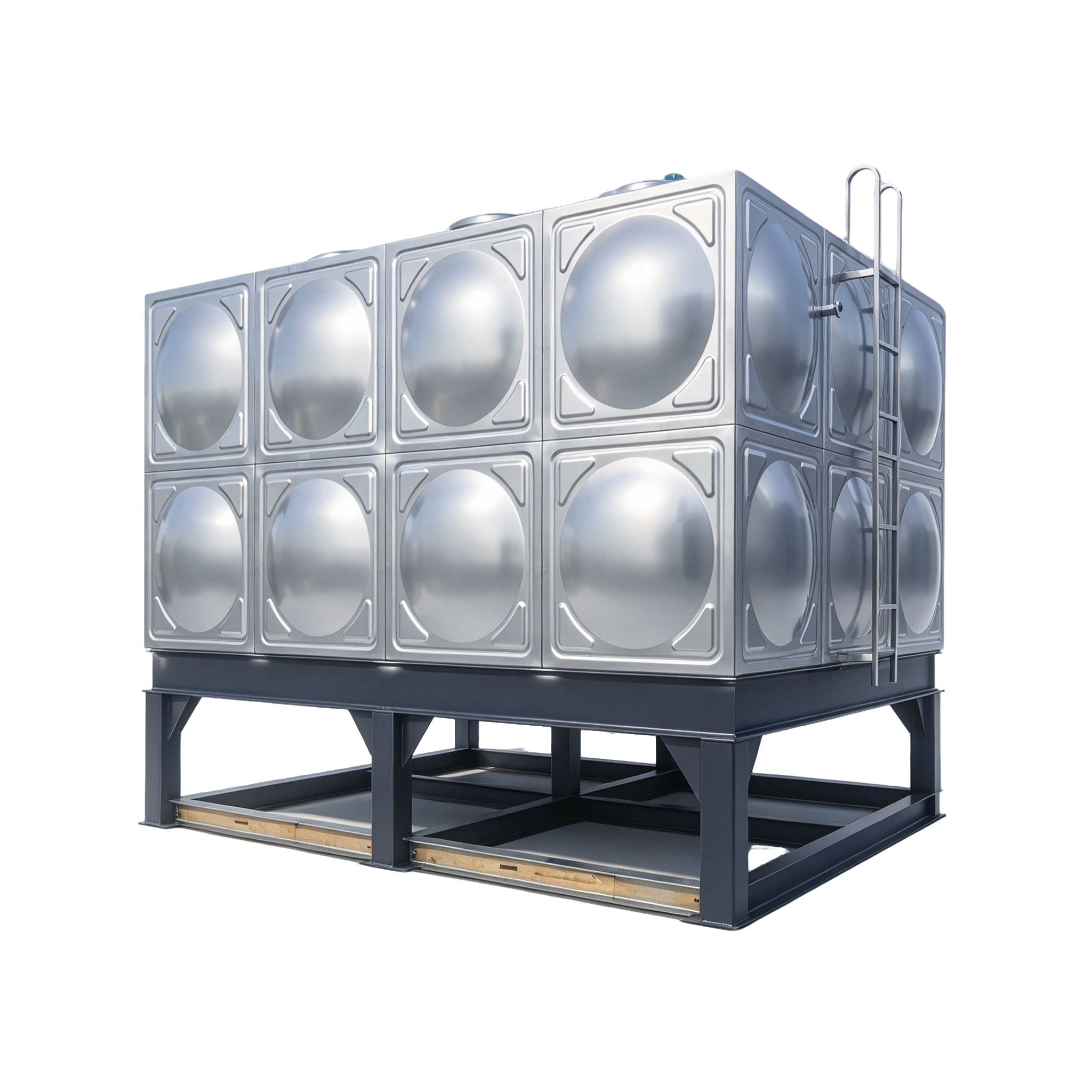
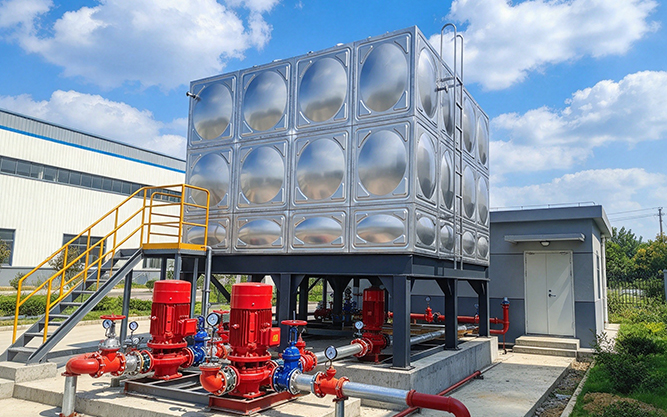
Fire water tanks are specialized storage facilities within a fire water supply system designed to hold water for use during the initial stages of a fire. They provide a supply of water for firefighting before the fire pumps are activated, ensuring that initial fire-suppression efforts can begin promptly. Our product range includes four main series: stainless steel assembled/welded tanks, SMC (sheet molding compound) modular fiberglass tanks, steel tanks with enamel/powder-coated/galvanized finishes, and BDF (bolted/composite) stainless steel composite tanks. With capacities ranging from 0.125 to 2,000 m³, these products comply with the national standard GB 50974, "Technical Code for Fire Water Supply and Hydrant Systems."
Working Principle
The fire water tank is connected to the municipal or domestic water supply system via an inlet pipe. A float valve or liquid-level control valve automatically regulates the water intake to maintain a preset water level. The outlet pipe connects to the fire pump or the fire hydrant piping network, ensuring an automatic water supply in the event of a fire. The tank is equipped with an overflow pipe, a drain pipe, a vent pipe, a manhole, internal and external ladders, and a liquid-level monitoring device. Large tanks feature internal bracing and support columns to ensure structural integrity. The tank can be installed above ground or underground, and in cold regions, an additional layer of thermal insulation can be applied.
Applicable Operating Conditions
Indoor and outdoor fire hydrant systems and automatic sprinkler fire extinguishing systems for various industrial and civil buildings
Water tanks designed for both fire-fighting and domestic (potable) use
Elevated fire-fighting water tanks (rooftop) and ground-level fire-fighting water reservoirs
Operating temperature: 0–70°C; designed for atmospheric pressure
Water quality must comply with GB 5749, "Standards for Drinking Water Quality"
Application Areas
Fire water supply systems for high-rise buildings, commercial complexes, industrial parks, chemical plant areas, hospitals, schools, airports, transport terminals, data centers, logistics and warehousing facilities, and similar locations.
Product Advantages
Never Rusts: Constructed from food-grade SUS304 stainless steel with a fully enclosed design that prevents algae growth, ensuring clean and stable water quality.
Lightweight yet High-Strength: The yield strength of the stainless steel is 1.5 times that of carbon steel and 6 times that of fiberglass-reinforced plastic (FRP), offering excellent seismic and impact resistance.
Compliant with Fire Safety Codes: High-temperature resistance meets fire safety regulations for buildings; the all-welded construction ensures a leak-proof system.
Superior Structural Mechanics: A combination of spherical and flat panels provides high load-bearing capacity, featuring a sleek and aesthetically pleasing design.
Easy Installation: Components are factory-pressed and assembled via on-site welding; the internal welding method allows for installation against three walls, saving space.
Hygienic and Safe: Ventilation ports are equipped with multi-layer dust-proof filters to prevent secondary contamination.
Flexible Customization: Capacities ranging from 0.125 m³ to 2000 m³ can be configured as needed, with optional insulation layers available for use in cold regions.
Selection Table for Dimensions of Prefabricated Welded Stainless Steel Water Tanks (ZYB Series)
|
model |
Volume (m³) |
Length (mm) |
Width (mm) |
Height(mm) |
roof |
Base plate |
|
ZYB-1 |
1 |
1000 |
1000 |
1000 |
1.0 |
1.5 |
|
ZYB-2 |
2 |
1000 |
2000 |
1000 |
1.0 |
1.5 |
|
ZYB-3 |
3 |
1000 |
3000 |
1000 |
1.0 |
1.5 |
|
ZYB-4 |
4 |
1000 |
2000 |
2000 |
1.0 |
2.0 |
|
ZYB-6 |
6 |
1000 |
3000 |
2000 |
1.0 |
2.0 |
|
ZYB-8 |
8 |
2000 |
2000 |
2000 |
1.0 |
2.0 |
|
ZYB-12 |
12 |
2000 |
3000 |
2000 |
1.0 |
2.0 |
|
ZYB-16 |
16 |
2000 |
4000 |
2000 |
1.0 |
2.0 |
|
ZYB-18 |
18 |
3000 |
3000 |
2000 |
1.0 |
2.0 |
|
ZYB-20 |
20 |
2000 |
5000 |
2000 |
1.0 |
2.0 |
|
ZYB-24 |
24 |
3000 |
4000 |
2000 |
1.0 |
2.0 |
|
ZYB-30 |
30 |
3000 |
5000 |
2000 |
1.0 |
2.0 |
|
ZYB-36 |
36 |
3000 |
6000 |
2000 |
1.0 |
2.0 |
|
ZYB-40 |
40 |
4000 |
5000 |
2000 |
1.0 |
2.0 |
|
ZYB-45 |
45 |
3000 |
5000 |
3000 |
1.0 |
2.5 |
|
ZYB-50 |
50 |
5000 |
5000 |
2000 |
1.0 |
2.0 |
|
ZYB-60 |
60 |
4000 |
5000 |
3000 |
1.0 |
2.5 |
|
ZYB-75 |
75 |
5000 |
5000 |
3000 |
1.0 |
2.5 |
|
ZYB-90 |
90 |
5000 |
6000 |
3000 |
1.0 |
2.5 |
|
ZYB-105 |
105 |
5000 |
7000 |
3000 |
1.0 |
2.5 |
|
ZYB-120 |
120 |
5000 |
8000 |
3000 |
1.0 |
2.5 |
|
ZYB-135 |
135 |
5000 |
9000 |
3000 |
1.0 |
2.5 |
|
ZYB-150 |
150 |
5000 |
10000 |
3000 |
1.0 |
2.5 |
|
ZYB-180 |
180 |
6000 |
10000 |
3000 |
1.0 |
2.5 |
|
ZYB-216 |
216 |
6000 |
12000 |
3000 |
1.0 |
2.5 |
|
ZYB-270 |
270 |
6000 |
15000 |
3000 |
1.0 |
2.5 |
|
ZYB-312 |
312 |
6000 |
13000 |
4000 |
1.0 |
3.0 |
|
ZYB-408 |
408 |
6000 |
17000 |
4000 |
1.0 |
3.0 |
|
ZYB-504 |
504 |
7000 |
18000 |
4000 |
1.0 |
3.0 |
Note: Plate thickness is in mm. The side plates are divided into four sections, numbered from bottom to top: Section 1 (at the very bottom), Section 2, Section 3, and Section 4 (at the very top). As water pressure decreases from bottom to top, the plate thickness decreases accordingly.
Description of Other Water Tank Types
|
Water Tank Type |
Materials and Craftsmanship |
Key Features |
Applicable Scenarios |
|
SMC Modular GRP Water Tank |
Food-grade resin SMC molded panels, bolt-assembled |
Corrosion-resistant, lightweight, and long-lasting; tensile strength ≥60 MPa, flexural strength ≥100 MPa; complies with JC658.1-1997. |
Treatment of domestic drinking water, fire-fighting water, and reclaimed water |
|
Enameled steel water tank |
Enamel coating on Q235 steel plate via high-temperature sintering, with a diffusion layer of 200–300 μm. |
The porcelain surface is smooth and easy to clean; it is corrosion-resistant, highly shock-resistant, and suitable for storing hot water as well as acidic or alkaline liquids. |
Building Water Supply, Hot Water Storage, and Retrofitting of Water Tanks in Older Buildings |
|
Powder-coated steel water tank |
Q235 steel plate with electrostatic powder coating, secured by 12 bolts |
High strength, corrosion-resistant, anti-aging, low cost, and does not promote algae growth |
Building Water Supply, Fire Protection Water Supply, and HVAC Systems |
|
Hot-dip galvanized steel water tank |
Hot-dip galvanizing of Q235 steel plates, manufactured in accordance with 92SS177 |
No welding required; installation is independent of civil construction work; aesthetically pleasing and durable; prevents secondary contamination. |
Building water supply, expansion tanks for heating systems, and temporary water storage |
|
BDF Stainless Steel Composite Panel Water Tank |
SUS304/316L facing + galvanized/galvalume substrate, bonded with polymer adhesive |
Stainless steel contact surfaces ensure water quality, while the base structure provides strength; suitable for either underground or above-ground installation. |
Drinking water reserves, fire-fighting water tanks, underground water reservoirs |
General technical specifications: design pressure – atmospheric; operating temperature – 0–70°C; water replenishment time – ≤8 hours; service life – ≥15 years; inlet pipe – DN50, outlet pipe – DN100, overflow pipe – DN100; water-retention test – no leakage observed over a period of 2–3 hours is considered a pass.
Related articles
Fire water tank
1793243203000
What Types of Firefighting Water Tanks Are There? A Guide to Selecting Stainless Steel, SMC, Enameled, and BDF Water Tanks
Fire water tank
1793243188000
How are the capacity and dimensions of a fire water tank determined? What information is required for project selection?
Fire water tank
1793243172000
What should be prioritized during the installation and acceptance of fire water tanks? Guidelines for piping, liquid level monitoring, and maintenance access.
OEM
Customized for your process conditions
Get a tailored solution
FAQs
We could not find what you need. Please contact our team.
View details
What inspections and maintenance checks are required for fire-fighting water tanks?
The water-holding test shall last for 2–3 hours, with the absence of any leakage serving as the criterion for acceptance. Specific requirements for final acceptance, cleaning, and maintenance shall be determined based on the project design, applicable standards, and the material of the water tank. Additionally, the configuration of components—such as the liquid level control system, inlet and outlet pipes, overflow pipe, drain pipe, and maintenance access facilities—should also be inspected.
Can fire water tanks be installed on the roof, on the ground, or underground?
The installation location depends on the type of water tank, the building structure, and the fire protection system design. Options include elevated installation, ground-level placement, or—in the case of certain BDF (bolted-panel) water tanks—underground installation. Prior to actual installation, it is essential to verify the load-bearing capacity of the foundation, waterproofing measures, space for maintenance access, piping connections, and environmental conditions.
How do fire water tanks replenish their water supply and provide water to the fire protection system?
The water tank can be replenished via an inlet pipe, with the water level maintained at a set point by a float valve or a liquid-level control device. The outlet pipe is connected to fire pumps or the relevant piping network in accordance with the design. Provisions for overflow, drainage, ventilation, access manholes, ladders, and liquid-level monitoring shall be determined based on the tank structure and project design specifications.
How are the capacity and dimensions of a fire water tank determined?
The capacity and dimensions of a water tank must be determined based on the fire protection system design, the intended use of the building, available installation space, and relevant regulatory requirements. For the ZYB series of stainless steel tanks, the available specifications range from 1 m³ to 504 m³; other product types may have different ranges. The final capacity, dimensions (length, width, and height), and plate thickness shall be in accordance with the project design and the confirmed technical documentation.
What are the types and materials of fire-fighting water tanks?
Available options include stainless steel prefabricated welded water tanks, SMC (fiberglass-reinforced plastic) modular water tanks, porcelain-enameled steel water tanks, powder-coated steel water tanks, hot-dip galvanized steel water tanks, and BDF stainless steel composite panel water tanks. These types differ in terms of structure, installation method, corrosion resistance, and suitable applications; the selection should be based on specific project requirements.
What is the primary function of a fire water tank?
A fire water tank is used to store water for firefighting purposes and, in accordance with the design of the fire water supply system, delivers water to the relevant piping network or fire pumps. It serves to provide a water supply during the initial stages of a fire; the specific supply method and storage capacity must be determined based on the fire protection design for the building.


Contact us
If you have questions or need help, contact our team for dedicated support.
We look forward to hearing from you
Submit
Online
Send email