







View details
Industrial Exhaust Gas Treatment Equipment
1793242331000
What is an exhaust-sealing collection cover? How can waste gases be captured from open-source emission points?
Online


Send email


Product details
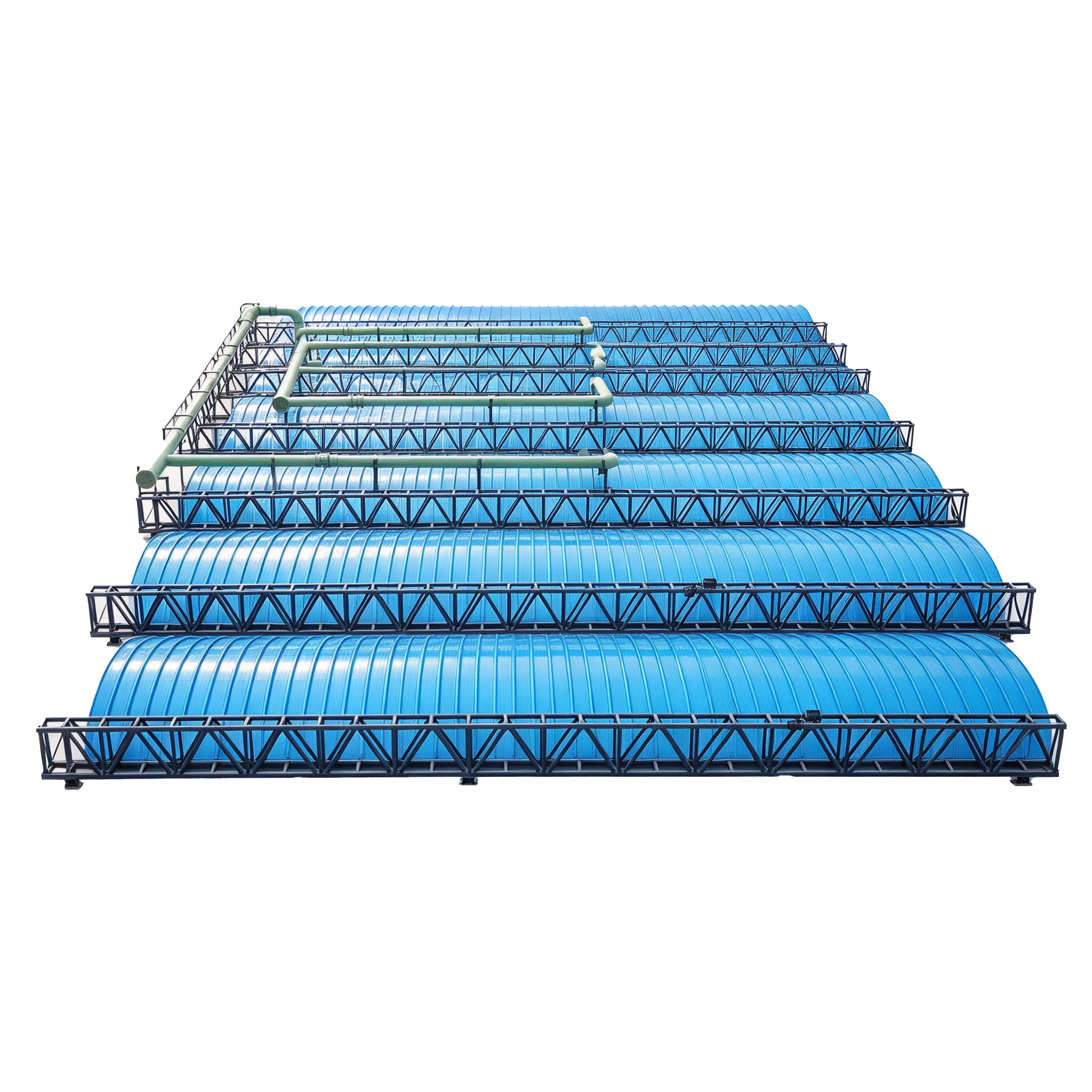
Exhaust Gas Sealing and Collection Cover
≥99.5%
Filtration efficiency
≤10 mg/m³
Outlet concentration
Product Definition
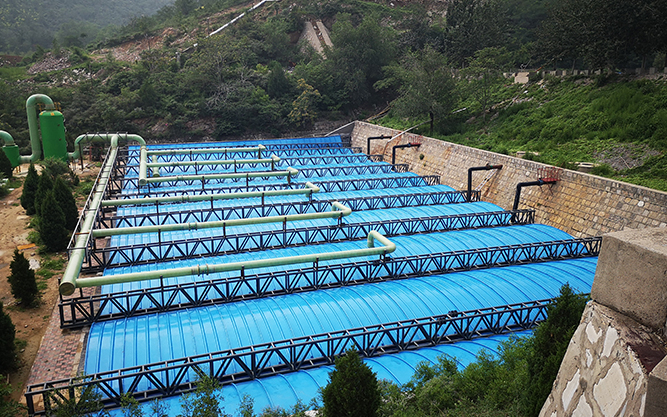
VOCs exhaust treatment covers are specialized sealing components designed for industrial exhaust collection and treatment systems. They are primarily used to enclose open emission sources—such as points along production lines, reaction tanks, cleaning vats, material mixing stations, and the inlets/outlets of spray towers—to facilitate the containment and collection of pollutants. Through their fully sealed design, these covers effectively prevent the fugitive release and dispersion of VOCs, odors, smoke, and dust. By consolidating scattered exhaust streams, they channel the emissions toward downstream treatment equipment. As an essential foundational component of any comprehensive VOCs treatment system, these covers are widely utilized in both the retrofitting of existing facilities and the construction of new projects across various industries.
Working Principle
The equipment features a modular, fully enclosed design. It provides comprehensive sealing for open emission sources—such as waste-gas-generating workstations, tanks, and equipment interfaces—thereby preventing the fugitive release of organic waste gases, volatile odors, and particulate matter at the source. Integrated with a workshop-wide negative-pressure collection system, the setup captures dispersed emissions and channels them into a centralized exhaust duct network. From there, the gases are routed to downstream purification units—including scrubbing, adsorption, deodorization, and rectification systems—for centralized treatment. The cover panels utilize high-elasticity sealing strips and precision-engineered locking mechanisms, which eliminate air leakage at joints and maintain stable negative pressure. This significantly enhances the collection efficiency of the entire waste gas treatment system and ensures consistent compliance with emission standards.
Applicable Operating Conditions
Operating Conditions: Environments involving ambient or moderate temperatures and high humidity; subject to mild acid/alkali corrosion and typical industrial corrosive elements.
Exhaust Gas Types: Low-concentration VOCs, odors from painting/coating processes, volatile emissions from printing, fugitive gases from chemical tanks, and odorous gases from fermentation processes (unorganized/fugitive emissions).
Applicable Scenarios: Open reaction tanks, pickling or washing baths, material mixing stations, grinding or loading stations, connection ports for exhaust treatment equipment, and various points within a workshop where fugitive emissions occur.
Airflow Capacity: Compatible with small, medium, and large-scale VOC treatment systems; fully customizable to non-standard specifications.
Material Selection
FRP (Fiberglass Reinforced Plastic): Corrosion-resistant, anti-aging, and lightweight; suitable for environments involving acidic/alkaline corrosion or high-humidity exhaust gases. It offers a high price-performance ratio and is the standard, mainstream choice.
PP (Polypropylene): Resistant to acids and alkalis, non-scaling, and possesses excellent anti-corrosion properties; ideal for applications involving mild organic exhaust gases, water-scrubbing tanks, or exhaust from wastewater treatment processes.
SS304/SS316L Stainless Steel: High-temperature resistant, highly corrosion-resistant, and structurally robust; suitable for medium-to-high-temperature exhaust gases and highly corrosive chemical environments, offering a longer service life.
Anti-corrosion Coated Carbon Steel: Features a stable structure and high load-bearing capacity; suitable for environments without strong corrosive agents, such as those with general dust or mild exhaust gases, while keeping costs manageable.
Industry Applications
This equipment is widely used across various sectors, including fine chemicals, industrial coating and painting, printing and packaging, plastic injection molding, pharmaceuticals and biotechnology, food processing, electroplating and pickling, as well as the new energy and advanced materials industries. It is primarily designed for the contained collection of fugitive VOC emissions in workshops, the enclosure of exhaust gases from tanks or basins, and localized gas capture at specific production workstations. The equipment integrates seamlessly with comprehensive exhaust gas treatment systems—such as scrubbing towers, activated carbon adsorption units, biological deodorization systems, and distillation units—enabling enterprises to ensure emissions meet regulatory standards, improve the workplace environment, and achieve environmental compliance.
Product Advantages
High Sealing and High Collection Efficiency: Featuring an integrated, modular, interlocking design combined with specialized sealing strips, the system eliminates air leakage. It achieves an exhaust collection efficiency of over 98%, effectively resolving issues such as excessive fugitive emissions and unpleasant odors in the workshop.
Corrosion-Resistant, Weather-Resistant, and Highly Adaptable: Available in a variety of materials, the system is designed to withstand complex industrial environments—including high temperatures, high humidity, and exposure to acids or alkalis. It is resistant to aging, maintains its structural integrity, and offers long-lasting durability.
Customizable for All Operating Conditions: Supports non-standard configurations, including flat, arched, curved, or custom-shaped designs. It can be tailored to fit various tank dimensions and workstations, ensuring easy on-site installation and a precise fit.
Safe and Convenient Operation and Maintenance: Access hatches, observation windows, and operational ports can be integrated as needed, ensuring that routine equipment maintenance, manual tasks, and the continuous operation of production lines remain unaffected.
Strong System Compatibility: Compatible with all mainstream VOCs treatment equipment currently on the market; ideal for both new installations and the retrofitting, upgrading, or expansion of existing production lines.
Ensures Environmental Compliance: Effectively reduces the concentration of exhaust gases within the workshop, meeting both domestic and international environmental emission standards. This helps mitigate environmental compliance risks and improves the overall production environment within the facility.
Parameters and Specifications
Custom Sizing: Full-scale non-standard customization available to suit specific on-site operating conditions.
Containment/Collection Efficiency: ≥98%
Applicable Temperature Range: -20°C to 180°C (temperature range varies based on the material selected).
Main Materials: FRP (Fiberglass Reinforced Plastic), PP (Polypropylene), SS304 stainless steel, SS316L stainless steel, or carbon steel with anti-corrosion coating.
Structural Configurations: Flat-top, domed, arched, or modular (combined) designs.
Integrated Features: Provisions for access hatches, observation windows, ventilation connections, and operational openings.
Service Life: 5–15 years (depending on the material chosen and the operating environment).
Related articles
Industrial Exhaust Gas Treatment Equipment
1793242331000
What is an exhaust-sealing collection cover? How can waste gases be captured from open-source emission points?
Industrial Exhaust Gas Treatment Equipment
1793242312000
How to Choose Gas-Collection Covers: FRP, PP, Stainless Steel, or Carbon Steel? Considerations Regarding Material and Operating Conditions
Industrial Exhaust Gas Treatment Equipment
1793242292000
How to Improve the Collection Efficiency of Fugitive Waste Gas? Cover Design and Integration with Downstream Equipment
OEM
Customized for your process conditions
Get a tailored solution
FAQs
We could not find what you need. Please contact our team.
View details
What are the collection efficiency and applicable temperature range for the gas-collection cover plate?
Product documentation specifies a containment/collection efficiency of ≥98% and an applicable temperature range of -20°C to 180°C; the exact range depends on the specific material and operating conditions. Actual collection efficiency may be influenced by factors such as on-site sealing, negative-pressure system performance, the presence of openings, and installation quality. It is recommended to rely on project-specific design specifications and test results.
How should the material for a resin tank be selected?
Material selection must take into account the presence of acidic, alkaline, or corrosive components in the exhaust gas, as well as factors such as temperature, pressure, and chloride ion concentration. Carbon steel is a cost-effective option suitable for standard operating conditions. Whether stainless steel or 2205 duplex stainless steel is appropriate depends on the specific medium and corrosive environment; the general term "corrosion-resistant" is insufficient for making a final selection.
What are the materials and specifications for resin tanks?
The vessel can be constructed from carbon steel, 304 or 316L stainless steel, or 2205 duplex stainless steel; the internal screen assembly and vessel dimensions can be customized according to project requirements. The RG-500, RG-1000, and RG-1500 models listed have air handling capacities of 1,000, 3,000, and 5,000 m³/h, respectively. Operating pressures and material specifications vary by model; please refer to the finalized technical proposal for specific details.
Can the resin tank operate continuously?
Multiple vessels can be operated in an alternating sequence—integrating adsorption, desorption, and cooling stages—to meet the requirements for continuous operation. The number of vessels required and the switching cycle are determined based on the exhaust gas flow rate, the adsorption capacity of the resin, and the regeneration process.
How do resin tanks adsorb and recover organic solvents?
Organic waste gas enters the vessel and passes through a resin bed, where organic components are adsorbed by the macroporous resin, and the treated gas is then discharged. Once the resin becomes saturated, it can be regenerated by introducing steam or hot nitrogen; the desorbed solvents are subsequently recovered via condensation. Following desorption, the resin bed is cooled with water, and the vessel returns to the adsorption phase.
What are resin tanks primarily used for?
The resin vessel is packed with macroporous resin, designed for the adsorption of gaseous media. In exhaust gas treatment, it can be used for the adsorption and enrichment of organic waste gases, as well as for the recovery of organic solvents. Its specific applicability should be determined based on the composition of the waste gas and the type of resin used.


Contact us
If you have questions or need help, contact our team for dedicated support.
We look forward to hearing from you
Submit
Online
Send email