




View details
Distillation column
How to Choose Between Tray Columns and Packed Columns? Considerations Regarding Structural Design and Process Conditions
Online


Send email


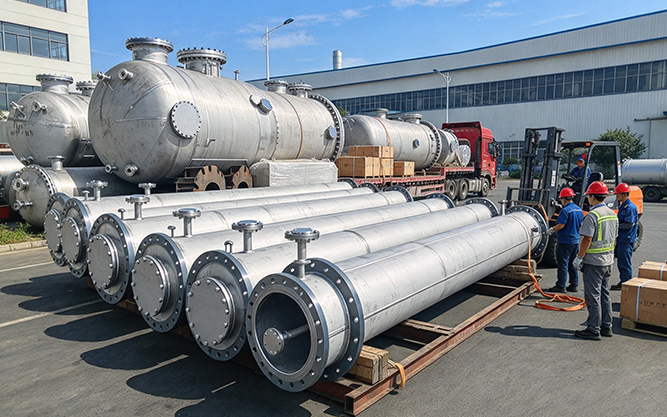
Distillation column
1793087696000
How does a distillation column separate mixtures? An explanation of the processes at the top, the bottom, and the reflux system.
Views:0
A distillation column achieves separation by exploiting differences in the volatility of the various components within a mixture. The feed is typically preheated before entering the column. A reboiler at the bottom provides heat, vaporizing a portion of the liquid, which then rises through the column; meanwhile, a condenser at the top liquefies the vapors, with a fraction of this condensate returned to the column as reflux. This reflux repeatedly contacts the ascending vapors on the surfaces of trays or packing. More volatile components become progressively concentrated toward the top of the column, while less volatile components accumulate toward the bottom, allowing them to be withdrawn from different locations. The actual separation performance depends on factors such as phase equilibrium, column internals, reflux conditions, and operating pressure; therefore, the final purity cannot be determined solely based on differences in boiling points.
Related articles
Distillation column
How to Choose Between Tray Columns and Packed Columns? Considerations Regarding Structural Design and Process Conditions
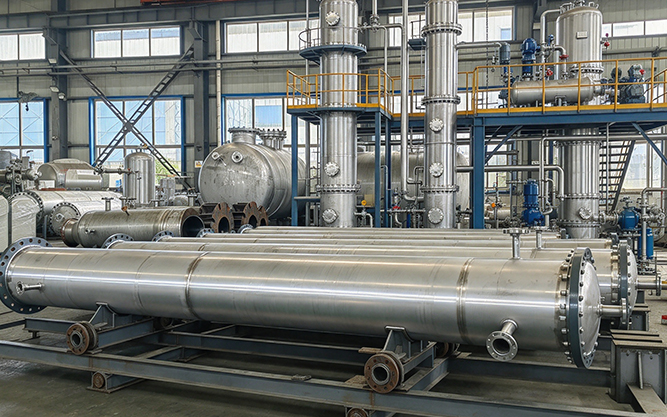
Distillation column
What parameters are required for selecting a distillation column? Guidance on column diameter, throughput capacity, and material specifications.
Related products
FAQs
Frequently asked questions related to this article.
View details
What information is required for the customization of a distillation column?
What materials are available for distillation columns?
Can a distillation column operate at atmospheric pressure, under vacuum, or under pressure?
What are the structural configurations of a distillation column?
What types of materials can a distillation column process?
What is the separation principle of a distillation column?


Contact us
If you have questions or need help, contact our team for dedicated support.
We look forward to hearing from you
Submit
Online
Send email