





View details
Dust removal equipment
How Do Grinding and Dust-Removal Workbenches Collect Dust? An Explanation of Their Operating Principle and Dust-Clearing Process
Online


Send email


Dust removal equipment
1793087066000
How to Select Filter Media for Grinding Dust? Operational Constraints, Maintenance, and Safety Requirements
Views:0
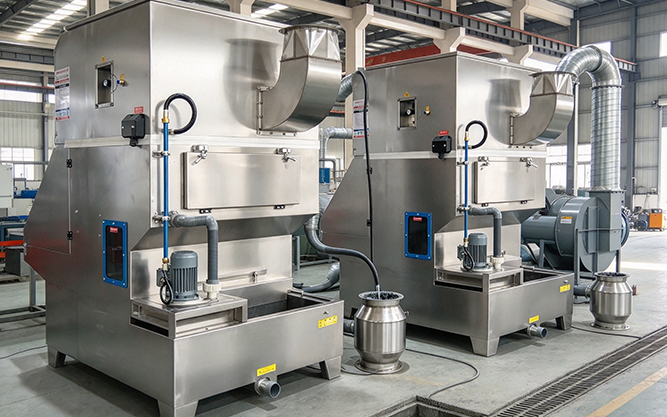
For dust-extraction workstations, the filter cartridges—available in options such as polyester, PTFE-membrane coated, or anti-static media—should be selected based on the specific type of dust. The choice of filter media must account for factors including dust particle size, moisture content (dry vs. wet), adhesiveness, and the temperature and humidity of the operating environment. According to the equipment specifications, the system is designed for ambient temperatures up to 60°C; notably, dust that is highly humid, contains significant oil or water, or is highly adhesive may cause the filter media to clog, making it unsuitable for direct processing. Routine maintenance includes regularly emptying the dust collection drawer, monitoring the equipment’s operating resistance, and scheduling inspections or replacements based on the condition of the filter cartridges. When handling aluminum shavings or other combustible dusts, it is essential to conduct a thorough assessment of anti-static and explosion-proof requirements tailored to the specific dust type and system conditions; relying solely on the replacement of filter cartridges is insufficient to ensure safety.
Related products
FAQs
Frequently asked questions related to this article.
View details
What are the dust removal efficiency and filtration method of the equipment?
For what types of dust and operating conditions are grinding and dust-extraction workstations suitable?
What are the available dimensions and workstation configurations for the workbenches?
How do sanding and dust-removal workstations collect and purify dust?
For which processes are grinding and dust-extraction workstations suitable?


Contact us
If you have questions or need help, contact our team for dedicated support.
We look forward to hearing from you
Submit
Online
Send email